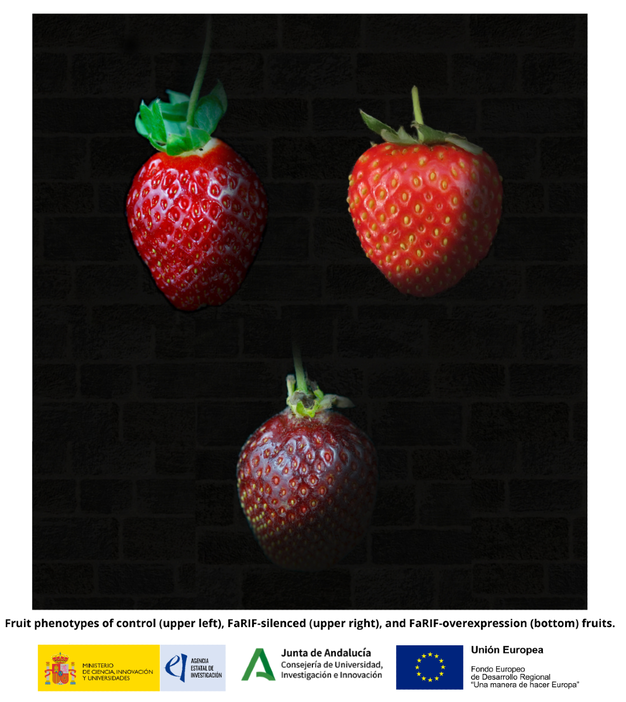
Fruit ripening in strawberry is a complex biological process that defines key quality traits such as texture, color, aroma, and flavor. A recent study published in Horticulture Research provides new insights into how this process is regulated at the molecular level by FaRIF, a ripening inducing transcription factor belonging to the NAC family.
Previous research had already shown that FaRIF is essential for strawberry fruit ripening, but its direct target genes in vivo and its protein interaction network had remained unclear. In this study, the researchers mapped the transcriptional network controlled by FaRIF through a combined approach that integrates genome wide target identification using ChIP seq with transcriptomic analysis of fruits in which FaRIF expression was silenced. This is the first time this dual strategy has been applied in strawberry.
The results show that FaRIF directly regulates key ripening related processes, including hormone biosynthesis and signaling, primary and secondary metabolism, and cell wall degradation associated with fruit softening. These pathways are central to the development of eating quality and postharvest behavior in strawberry.
In addition, the study pioneers the use of TurboID based proximity labeling in strawberry fruit to identify proteins that interact with FaRIF in vivo. This approach revealed interacting proteins involved in RNA and protein homeostasis, as well as other NAC transcription factors that cooperate with FaRIF to regulate shared target genes.
The research was led by Carmen Martín Pizarro and David Posé, with a significant contribution from María Florencia Perotti, all researchers at the Institute of Subtropical and Mediterranean Horticulture IHSM La Mayora, part of the University of Malaga and CSIC. The work stands out for its integrative and technically innovative approach, providing new molecular level knowledge of strawberry fruit ripening and establishing key tools for future research and breeding strategies in this crop.
 © IHSM
Source: ihsm.uma-csic.es