India's domestic raspberry demand far outstrips supply due to import barriers. All consumption must be homegrown since fresh raspberry imports face economic and regulatory hurdles, says Tanvi Karvat of Berryland by Parth Farms. Berryland, a Department of Biotechnology (DBT)-recognised tissue culture lab producing all saplings in India for climate adaptation. Based in Mahabaleshwar, India's berry capital, their five-acre nursery includes a one-acre demonstration farm, which tests varieties in up to 42°C and 120 mm of rainfall.
Karvat highlights four licensed varieties: RaNi, KalyaNi, PradhaNi, and RajNi, sourced from international breeders and hardened locally. "These bear fruit without chilling hours and handle monsoons well. Experienced farmers can plant all four for year-round supply due to staggered harvests, but beginners can start with RaNi and KalyaNi for early harvest and sweetness at 3 to 4 months, then add PradhaNi and RajNi for higher yields," she notes. Berryland's clientele comprises fruit farmers switching to high-value crops, village landowners leaving corporate jobs for agriculture, and nurseries supplying to hobby gardeners.
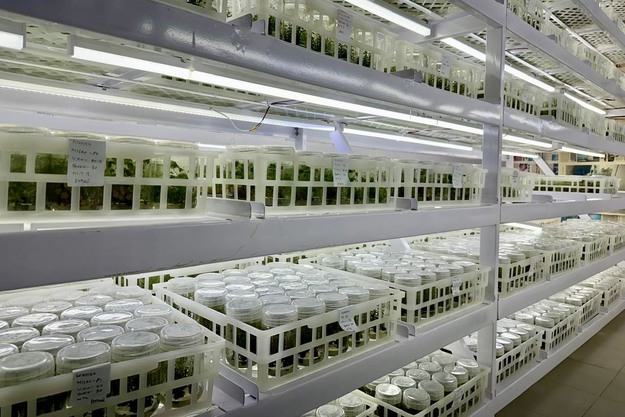 © Berryland by Parth Farms
According to Karvat, the plants yield fruit in 3 to 9 months, depending on the variety and climate, with RaNi and KalyaNi enabling double-cropping in the first year. "We supply single cane plants that rapidly multiply, so farmers see 100% yield increases after the first harvest by retaining new canes from the roots." By years two and three, allowing more canes brings about further yield jumps. "Raspberries prove versatile across temperatures and soil pH, thriving in most Indian regions except where overwatering creates wet feet. Maharashtra, Tamil Nadu, and Karnataka lead as first movers, but production remains nascent and limited to test acres as farmers assess yields, practices, and market pricing. Massive growth potential exists as more states catch up," she explains.
Handholding new farmers is proving time-intensive without local raspberry experts. "We are putting together a dedicated technical team to provide know-how as grower numbers rise. Capital scarcity also challenges growers, given the crop's year-round nature warranting rain-protected polyhouses or polytunnel structures. We are seeing horticulture departments offering subsidies to ease this," Karvat shares.
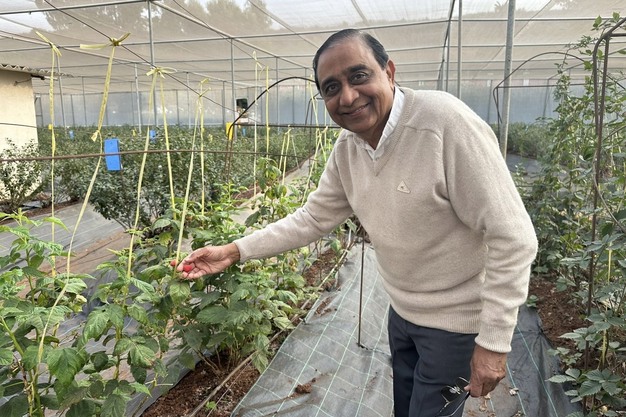 © Berryland by Parth Farms
Berryland's next trials target sweeter, larger premium varieties suited to Indian palates, making way for exports once domestic demand gaps close in 3 to 4 years. Karvat urges international breeders to prioritize post-harvest shelf life and fruit strength for India's developing cold chain and higher temperatures. On variety protection, she assures, "India's new laws combined with partnerships with reputable labs provide sufficient safeguards. Raspberry farmers prefer quality plants from trusted sources over risky propagation, which minimizes piracy during this early phase."
Berryland continues a 36-year family legacy started by Karvat's father, introducing U.S. strawberries to India in 1989, now extending to blueberries and raspberries.
For more information: © Berryland by Parth Farms
Tanvi Karvat
Berryland
Tel: +91 9372999731
Email: [email protected]