The production models developed in conditions of high radiation, water stress and high pest pressure, such as in southeastern Spain, have become an international benchmark, and the export of this agronomic knowledge is gaining importance as a strategic tool to guarantee stable, sustainable production adapted to international markets.
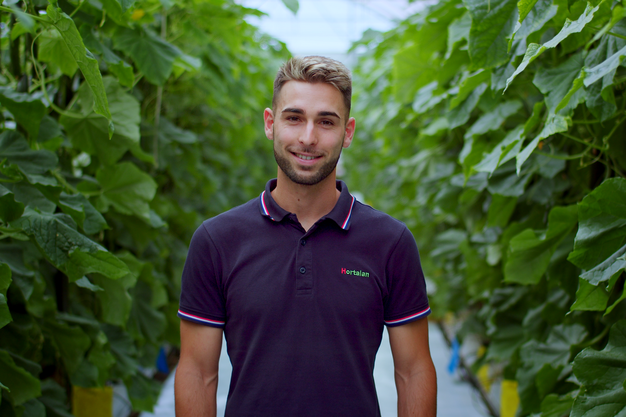
"In fact, the Almeria model is attracting increasing interest from all over the world," summarizes Francisco Tortosa, Marketing Director of Hortalan, a company specializing in technical advice, biological control and the production of biotechnological solutions, which is active in Spain and in various countries with challenging climatic conditions.
 © Hortalan
Senegal: fast growth and a gap in technical expertise
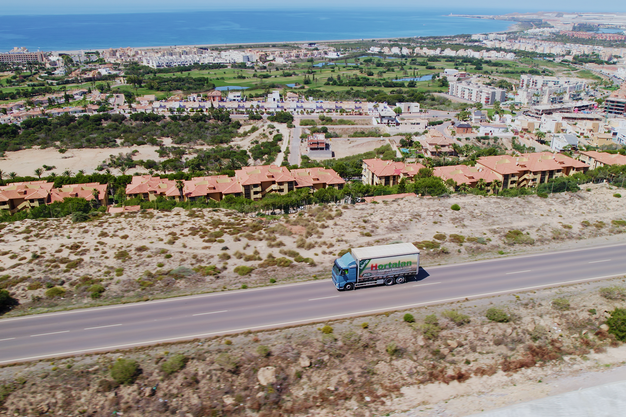
One of Hortalan's most recent projects is based in Senegal, where the company has opened an operational centre around 50 kilometres from Dakar. "Agriculture is expanding very quickly, particularly in crops like watermelon and tomato, while others such as onion continue to grow," Tortosa explains.
Climatic conditions and labor availability are favorable, but the main bottleneck is technical knowledge. "There is clear productive potential, but a lack of technical advisory support to achieve efficiency and standards compatible with exports to Europe," he says. Hortalan currently advises mainly tomato farms under netting and open field pepper operations, many of them run by Spanish growers established in the country.
"In biological control, adoption is still limited, but residue free biotechnological solutions are being introduced as a first step towards more sustainable production aimed at demanding markets."
 © Hortalan
A long standing presence in Morocco and Portugal
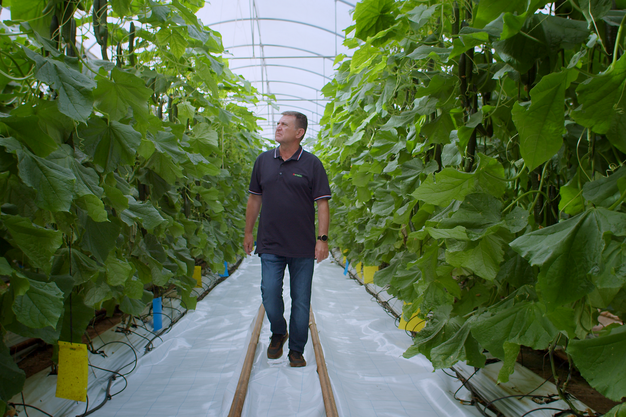
Hortalan's international expansion began more than fifteen years ago in the Agadir region of Morocco, an area with climatic conditions very similar to Almería. "It was our first step outside Spain. Protected horticultural crops dominate, and the production model is highly comparable," says Tortosa.
The company later opened an operational centre in Torres Vedras near Lisbon, focused on greenhouse tomato production. "In both cases, our approach has been to transfer the advisory model developed in Almería and adapt it to local conditions."
Beyond these markets, Hortalan has also exported technical expertise to countries such as Egypt, Qatar and Saudi Arabia, combining advisory services with the supply of solutions. "While most revenue still comes from Spain, there is a clear commitment to taking the Almería model to other regions with suitable climate and water availability," Tortosa notes, highlighting Morocco's strong potential due to ongoing investment in water infrastructure.
For Hortalan, knowledge transfer also has a social dimension. "Africa still faces food supply challenges. Increasing production in a clean and efficient way is essential both for local populations and for enabling growers to access export markets," he says.
 © Hortalan
Biological control as a global strategy
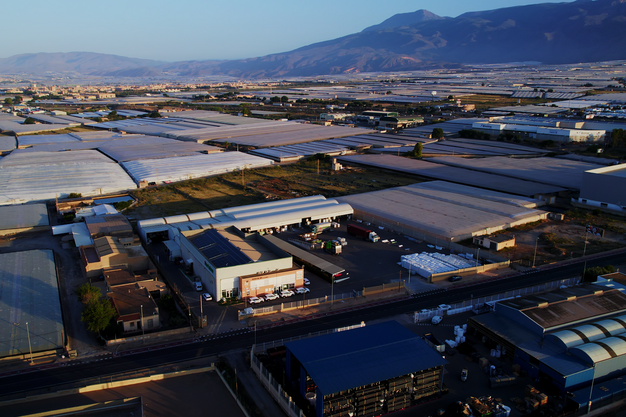
In addition to advisory work, Hortalan has a strong industrial base. The company produces its own range of biostimulation and biocontrol products, all residue free and suitable for organic farming, and operates a biofactory in Almería dedicated to rearing beneficial insects.
A key focus is Orius laevigatus, the beneficial insect in which Hortalan has invested the most years of genetic improvement, breeding and research. "It is a crucial tool against pests such as thrips, where no single universal solution exists," Tortosa explains.
 © Hortalan
"Although management remains complex, accumulated experience strengthens our commitment to biological control as the most effective and sustainable strategy. The knowledge generated in Spain will allow us to support other countries facing similar challenges in the future."
"The challenge of producing more and better under increasingly demanding climatic conditions is global," Tortosa concludes. "Technical knowledge and advisory services have become an exportable asset, and growing international demand for the Almería model confirms that."
 © HortalanFor more information:
Hortalan Spain
T. +34 950 58 02 29
[email protected]
Hortalan Morocco
T. +212 525 442 762
[email protected]
Hortalan Senegal
T. +221 775 376 683
[email protected]
https://hortalan.com