Vivipary is the premature germination of tomato seeds inside the fruit and is most often associated with overmature fruit, cool storage, and plant stress. This alert highlights contributing factors in greenhouse production and practical steps to reduce incidence.
Vivipary occurs when tomato seeds break dormancy and begin to germinate while still inside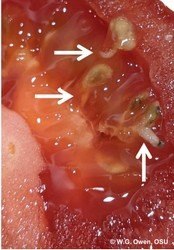 © W. Garrett Owen, OSU the fruit. When a tomato is cut open, vivipary is recognized by radicle emergence from seeds within the locular cavity (Fig. 1, right). Under normal development, tomato seeds remain dormant due to hormonal regulation, including abscisic acid. When dormancy weakens, the moist, carbohydrate-rich internal environment of the fruit can support rapid seed germination, particularly in fruit that are very ripe.
Vivipary is a physiological disorder and is not caused by greenhouse pests or pathogens. It is important to differentiate vivipary from internal decay. Internal decay is typically associated with tissue breakdown, discoloration, off odors, or fungal growth, whereas vivipary presents as germinating seeds in otherwise intact locular tissue. When vivipary is suspected, cutting a small, consistent sample of fruit from the affected block or cultivar is often the fastest approach to confirm diagnosis (Fig. 2) and estimate incidence.
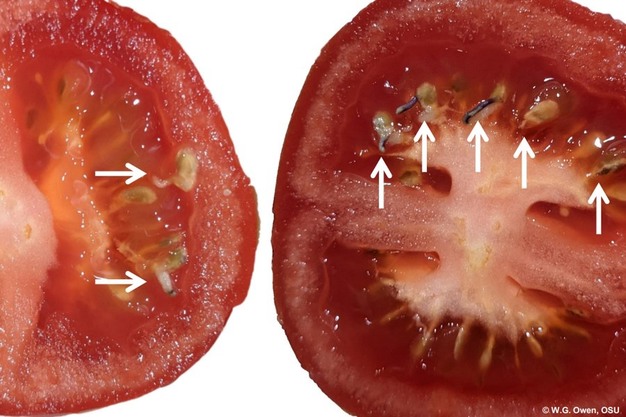 © W. Garrett Owen, OSUFigure 2
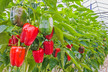
In greenhouse tomatoes, vivipary is most commonly associated with fruit that remain on the vine beyond the optimal harvest stage. Delayed harvest intervals, labor constraints, or extended cluster hang time can allow fruit to become overmature, increasing the likelihood of vivipary (Fig. 3).
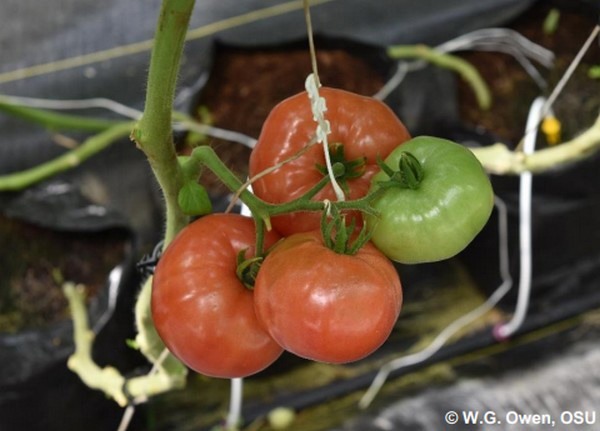 © W. Garrett Owen, OSUFigure 3
Storage conditions can also contribute to vivipary. Cool storage below 55 °F (13 °C), especially standard refrigeration at 33 to 40 °F (0 to 4 °C), can increase the risk of chilling-related quality problems and may be associated with vivipary in overmature fruit. For fresh-market greenhouse tomatoes, maintaining appropriate handling temperatures and avoiding unnecessary cold exposure are practical steps that support both quality and consistency.
Vivipary may also be more likely when plants experience stress. In greenhouse systems, stress can be driven by periods of high temperature, inconsistent irrigation, and rapid shifts in root-zone electrical conductivity (EC). In container or bag culture using peat- or coconut coir-based substrates, irrigation scheduling and fertigation uniformity are central to minimizing stress. When the substrate cycles between excessive dry-down and heavy re-wetting, or when EC increases substantially between irrigations, plants can experience avoidable stress that may indirectly increase the likelihood of physiological disorders related to fruit maturation and seed dormancy (Fig. 4). While vivipary is fundamentally a fruit and seed physiology issue, stabilizing the crop environment and the root zone is a practical prevention strategy.
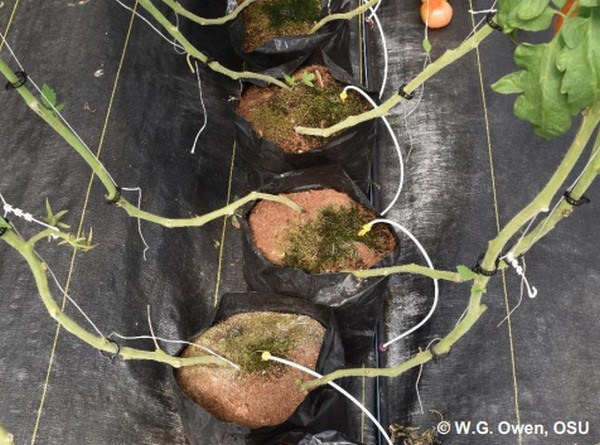 © W. Garrett Owen, OSUFigure 4
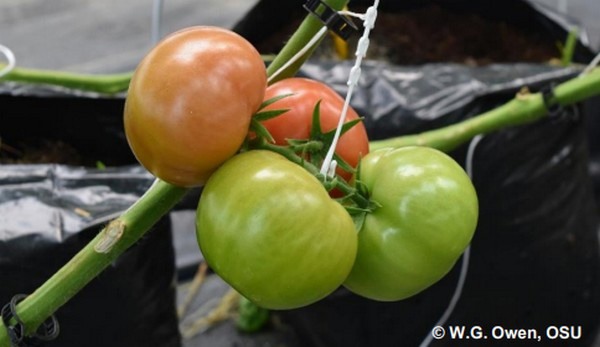
Management is primarily preventive and centers on harvest discipline and postharvest handling. If vivipary is observed, tighten harvest intervals and avoid allowing clusters to hang past the targeted maturity stage (Fig. 5), especially during warm, high-light periods of the year when ripening can advance quickly. For crops that have shown repeated symptoms, harvesting slightly earlier, for example at the breaker to turning stage, and ripening fruit under controlled conditions can reduce the proportion of fruit that become overmature on the plant. After harvest, avoid storing fruit at temperatures low enough to induce chilling injury, and keep handling practices consistent so fruits are not exposed to prolonged cold conditions.
 © W. Garrett Owen, OSUFigure 5
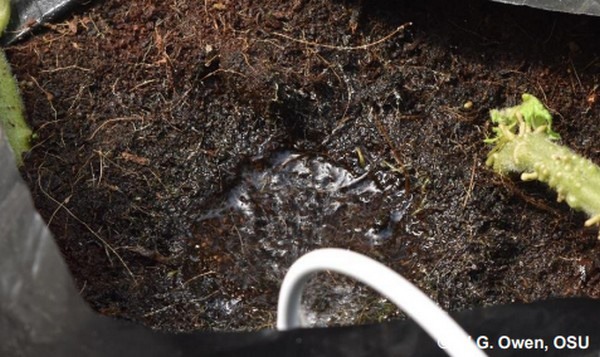
From a production standpoint, focus on reducing avoidable stress by maintaining stable water delivery and a consistent fertigation program, particularly in substrate-filled containers or bag systems. Monitor irrigation frequency, drain percentage, and EC trends so the root zone remains steady (Fig. 6) rather than oscillating between extremes. If vivipary is occurring with other fruit quality concerns, review late-crop nutrition for balance, including avoiding excessive nitrogen that promotes overly vegetative growth and confirming potassium is not limiting. Cultivar differences can also play a role, so recurring symptoms in a specific cultivar should prompt a discussion with your Extension Specialist or Educator and seed supplier regarding potential susceptibility and alternatives.
 © W. Garrett Owen, OSUFigure 6
Recordkeeping can help determine whether vivipary is linked to specific greenhouse zones, management events, or cultivars. When it occurs, document cultivar, greenhouse zone, harvest interval and stage, truss position if relevant, and any recent changes in irrigation scheduling, EC, or light and temperature management. These records can help identify whether vivipary is primarily associated with harvest timing, postharvest handling, or crop stress patterns that can be corrected through operational adjustments.
Vivipary is not a food safety issue, but it can reduce marketability because internal sprouting affects appearance and is often associated with overmaturity and softer fruit. When incidence is frequent, affected fruit may need to be diverted away from premium fresh packs. The most reliable long-term strategy is prevention through timely harvest, consistent handling, and steady greenhouse and root-zone management that minimizes stress and maintains uniform fruit development and ripening.
For more information:
Ohio State University 
W. Garrett Owen
Email: [email protected]
www.osu.edu