In classical crop science, improvement and management have traditionally focused on the plant genome and its direct interaction with the abiotic environment. However, the scientific evidence accumulated over recent decades is forcing a redefinition of what a crop actually is.
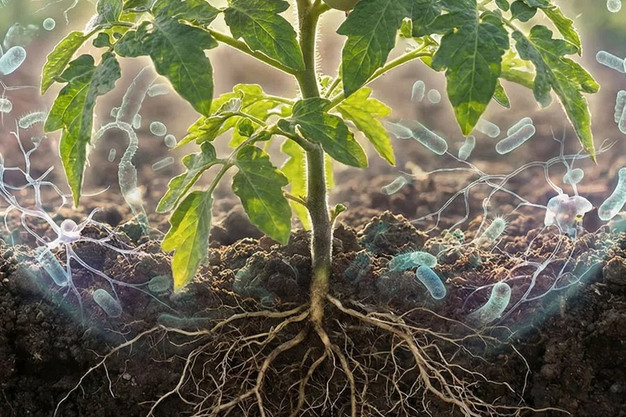
This is where the concept of the holobiont comes into play. Coined by biologist Lynn Margulis, the term proposes that a macroscopic organism, the plant, and the sum of its symbiotic microorganisms, its microbiota, are not separate entities, but together form a single biological, ecological and evolutionary unit.
 © AEFA
For agronomists, accepting the holobiont concept implies a radical shift in perspective when it comes to plant health and nutrition management. It means recognising that the phenotype observed in the field, vigour, yield and resistance to pests, is not solely the result of seed genetics, but the combined expression of the host plant and its associated microbial consortium. The plant does not live in the soil; it lives with the soil and its inhabitants, forming a continuous trophic and signalling network.
The hologenome theory
The agronomic relevance of the holobiont lies in the hologenome theory. While a plant's genome, whether wheat, maize or tomato, remains static throughout its life cycle and evolves only through slow selection processes over generations, the associated microbial genome is extraordinarily dynamic. Microorganisms have generation times measured in minutes or hours, allowing them to adapt almost immediately to environmental changes.
This gives the holobiont a much greater phenotypic plasticity. Faced with sudden stress events, such as heat waves or increased salinity, the plant cannot mutate its genes to survive. What it can do, however, is recruit or promote the rapid proliferation of specific microorganisms that possess the metabolic pathways needed to mitigate that stress.
As a result, a crop's resilience depends largely on the richness and functionality of its microbial component, which acts as an external genetic buffer.
Co-evolution and domestication as a challenge for today's agriculture
Over millions of years, plants and their microorganisms have coevolved. Plants have developed mechanisms to cultivate their own microbiome, selectively favouring those taxa that provide a benefit.
However, agricultural domestication and intensive breeding processes, focused primarily on yield under high input conditions such as inorganic fertilization and chemical crop protection, have unintentionally disrupted this ancient communication.
Many modern varieties may have partially lost their ability to recruit their microbial partners, or, when grown in soils that are functionally sterilized by aggressive management practices, they may simply not encounter the symbionts needed to complete the holobiont cycle.
This helps explain why, in some cases, varieties with high genetic potential show a strong dependence on external inputs and a low tolerance to both biotic and abiotic stress.
As highlighted by AEFA, the challenge for today's crop science is to rebuild these lost alliances, reintegrating the microbial component back into the productive equation.
For more information:
AEFA
[email protected]
aefa-agronutrientes.org