Protected agriculture in Egypt is expanding quickly, fueled by robust public and private investments, access to Nile water, and a favorable climate that gives it a competitive advantage over other Mediterranean nations. Paco García, an experienced agricultural consultant who has been advising pepper and tomato projects throughout Egypt for the last two years, comments on this development.
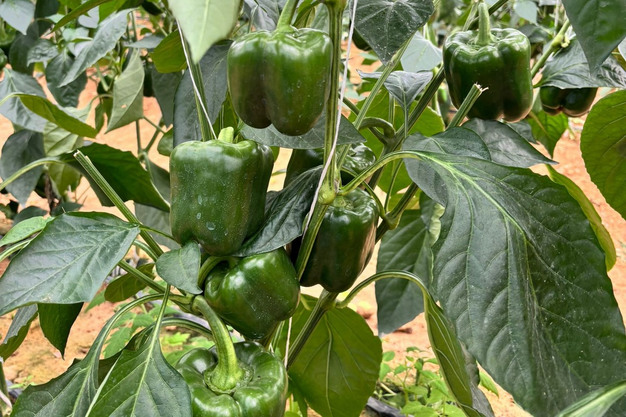
"Egypt is a country of contrasts: you can go from very primitive agriculture to projects covering hundreds or thousands of hectares in the middle of the desert," he stated. García works on a complex spanning 2,000 hectares of new greenhouses developed by Rufepa about 150 kilometers south of Cairo, in Faiyum. Originally designed as a set of multi-tunnel greenhouses with shading, localized irrigation, and advanced Rider climate-control technology, the project requires expert guidance to reach its full potential. "In the first year, everything was manual. There were no clear concepts of fertigation or climate control," he stated.
The project is divided into 10-hectare clusters, each with its own control center, water reservoir, storage, irrigation, and climate control systems. "Gradually, we incorporated automation, sensors, and technical management," he explains. "Today, the climate control functions effectively, leading to significant water and fertilizer savings. This qualitative improvement has also allowed us to phase out active materials that are banned in Europe and adopt a biological control model using auxiliary fauna," he added.
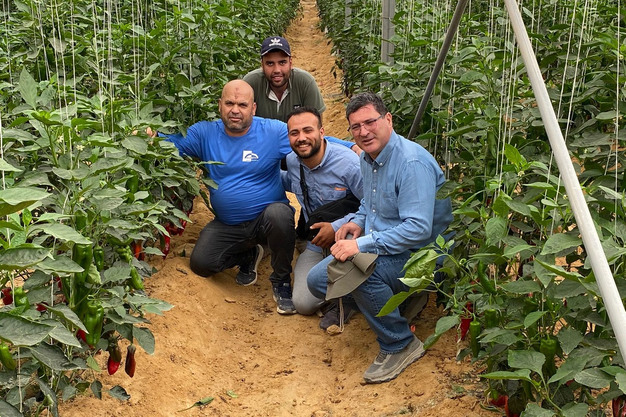
García currently offers advice through Hortalan on key topics like fertigation, climate, and plant health. The project manages 150 hectares of pepper production and exports up to four containers daily, meeting European quality standards. "Last year, we exported over 960 containers, showing strong results in the country. Thanks to advanced technology and expert guidance, we are nearing the standards seen in Almeria," he stated.
"A significant advantage"
Peppers, especially the California variety, are among the most promising crops. Last season, García managed around 600 hectares, 400 of which were devoted to this variety. "A significant advantage is that, currently, Thrips parvispinus is not present in Egypt. Being in the desert reduces pest pressure," he noted. However, he faces challenges like powdery mildew caused by humidity fluctuations that reach 90% at night and drop sharply during the day.
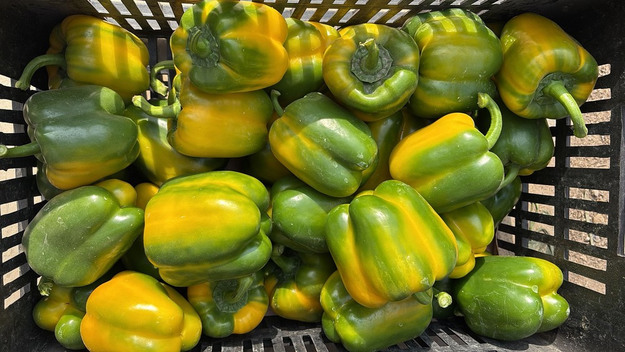
Water is vital for the country's agricultural development. "It hardly rains here; I haven't seen rain in two years, with an average of only about 10 liters annually. However, the water from the Nile is of outstanding quality," he stated. Access is tightly controlled by the government, which is promoting "pharaonic canal projects" to irrigate new farming areas where fruit and vegetable farming is expanding. Additionally, solar radiation exceeds that of traditional greenhouse regions like Almeria, "even during winter, when temperatures are ideal for peppers, cucumbers, and tomatoes."
"To achieve this development and fully unlock its potential, it is essential to consult experts and use genetics suited to the country's desert conditions, which will improve production, boost disease resistance, and extend shelf life during transport."
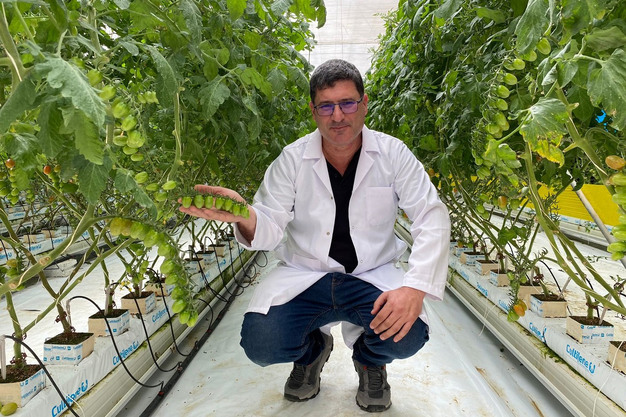
"We use the same varieties as in Spain," he stated, highlighting the strong performance of plant materials from companies like Ramiro Arnedo and Fitó. "However, international breeding firms are now developing varieties tailored to the Egyptian climate. There is significant potential for progress, similar to what was achieved in Almeria decades ago. It is also common to see sales representatives and managers from major European and Israeli seed companies in areas like Faiyum," he added.
García is certain that the greenhouse industry will continue to grow, driven by government projects such as the New Egyptian Delta Megaproject and private investments spanning thousands of hectares. These are located near Alexandria, where berry production is rising, and along the Suez Canal. "Egypt has tremendous potential. Its weather from December to February surpasses southeast Spain in sunlight, and with advanced technology—such as screens, fogging systems, and special plastics that advance planting to August and allow blanching—it's possible to grow peppers, tomatoes, and other greenhouse veggies even during peak heat months," he stated.
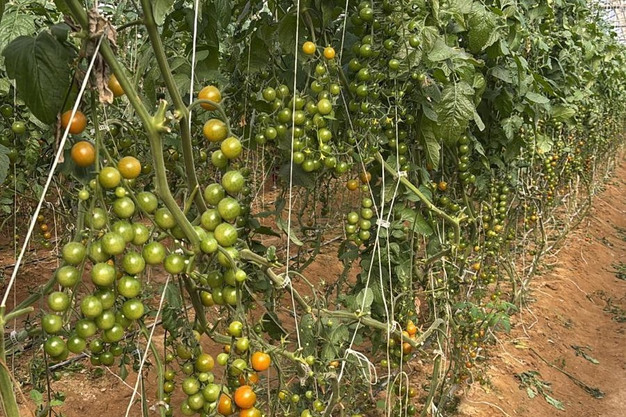
"The expansion is happening quickly, but replicating 50 years of Almeria's experience in only two seasons is impossible. Nonetheless, the groundwork has been laid. There's no doubt that Egypt's role in the global horticultural sector will continue to grow."
For more information:
Paco García
Tel: +34 637 076 165
[email protected]
Hortalan
Tel: +34 950 58 02 29
[email protected]