The Education Pillar of the Nkabom Collaborative at UG has hosted the fourth in a series of short courses intended to equip a select number of youth in vegetable farming, agri-business, and sustainable agriculture. The two-week intensive training, held at the University of Ghana, successfully empowered 43 young Ghanaians with modern skills for a transformative agri-food landscape. The participants included 21 males and 22 females.
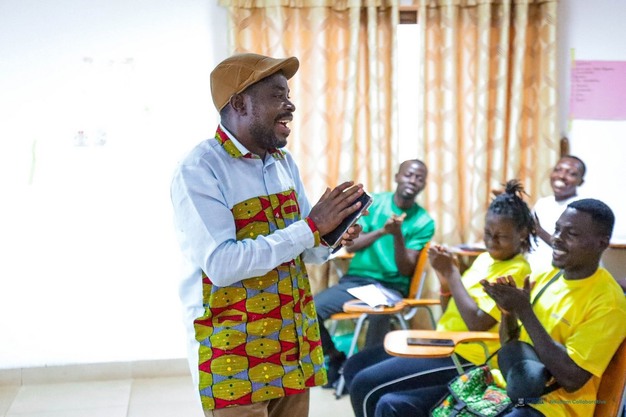 © Nkabom Collaborative
Opening the session, the Pillar lead, Dr. Hayford Ayerakwa, highlighted the introduction of a critical component which would equip the participants with practical agribusiness skills, in addition to the requisite knowledge in vegetable production.
"Given that our initiative centres the youth in our agri-food system transformative agenda, we found it imperative to introduce the 'Business Registration and Formalisation Module' that addresses this core need in order to make our training holistic and de-mystify the legal and regulatory steps required to establish a compliant agribusiness in Ghana."
A key experiential component was a field visit to a local market spcializing in indigenous vegetables. Here, participants engaged directly with market women to understand real demand, supply challenges, and opportunities. "The indigenous vegetable market is full of opportunities, but we need reliable production to meet demand," explained one market vendor during the interaction.
One trainee shared: "I didn't realize vegetables like Gboma and Alefu had export demand. This field visit has opened my mind and set me thinking about the immense market potential venturing into the production of these two vegetables, alone, holds."
"The business formalisation session clarified everything for me," shared another trainee. "Now, I know exactly how to register my business and what documents are required."
Beyond business skills, the course covered core agricultural techniques, including nursery management, trellising, and integrated crop management, complemented by a study tour to a poultry farm to broaden participants' exposure to allied agribusiness ventures.
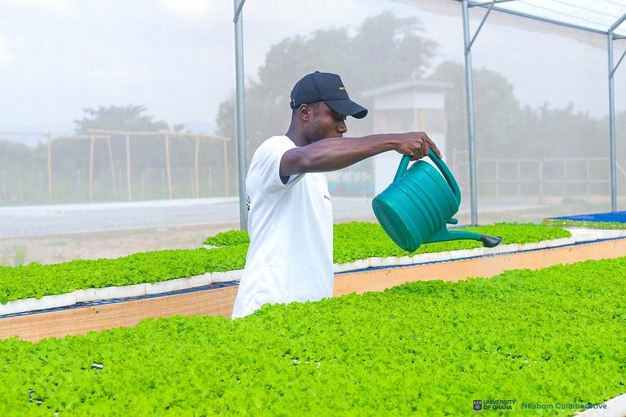 © Nkabom Collaborative
In a post-event interaction, the Education Pillar lead previewed the next steps, thus: "Our Collaborative will provide follow-up support to participants initiating their business registration processes."
"Their progress will be tracked over the next three to six months, via an alumni platform, with potential partnerships being explored between new agri-preneurs and market vendors for contract farming," he revealed.
It is anticipated that insights from this cohort would also guide the development of more specialised modules on indigenous vegetables for future training.
The Short Course Programme, being run in partnership with the University of Ghana's Life-Long Development Lab, continues to fulfill its mission of empowering youth with employable skills, thereby driving job creation and contributing to a more resilient and sustainable food system for Ghana. It constitutes a key component of a suite of offerings of the Education Pillar, in pursuit of its mandate to develop the skills and competencies of the human resource necessary to drive the desired change in Ghana's food systems
Source: Nkabom Collaborative