Organic greenhouse production in Europe takes a step forward with the launch of BIOGREENET, a new European project designed to strengthen the sector through knowledge exchange, innovation and direct support for growers and advisors.
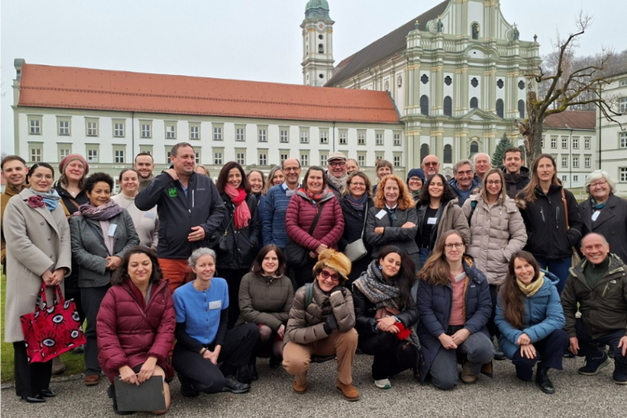
Project partners met on 4–5 December in Fürstenfeldbruck, Germany, for the official kick-off meeting, where the first operational steps of the Horizon Europe-funded initiative were outlined.
Tackling the key challenges of organic greenhouse production
BIOGREENET aims to address some of the main challenges facing organic greenhouse production in Europe, including soil health management, pest and disease control, and high infrastructure costs. At the same time, the project seeks to overcome the fragmentation of existing knowledge by promoting the adoption of innovative and sustainable practices.
The project follows a transdisciplinary and practice-oriented approach, collecting, assessing, adapting and sharing best practices in organic greenhouse production from across Europe and beyond. Through digital tools and close collaboration between farmers, advisors, researchers and policymakers, BIOGREENET aims to generate broad and long-lasting impact across the sector.
 © Coexphal - Biogreennet
Running from 2025 to 2029, the project brings together 16 European partners under the coordination of Naturland, the world's largest international organic farming association, based in Germany. Within this framework, COEXPHAL, the Association of Fruit and Vegetable Producer Organisations of Almería, will play a key role by coordinating and organising participatory technical workshops. These will focus on identifying best practices in organic farming and developing conversion and business plans, with the aim of supporting members in their day-to-day activities and in the transition towards more sustainable production models.
More than 3.000 growers and advisors involved
At local level, project partners and sector professionals will assess the collected knowledge, taking into account its technical, economic, social and environmental benefits and costs. The most relevant practices will then be transformed into practical, easy-to-use materials.
More than 3.000 growers and advisors are expected to take part in BIOGREENET through digital platforms and workshops, facilitating the uptake of best practices and promoting more efficient and sustainable organic production both within and beyond the European Union.
The BIOGREENET consortium includes: Naturland (Germany), IFOAM EU, Viaverda (Belgium), Delphy (the Netherlands), Aegilops (Greece), Crea, Firab, AIAB, CIHEAM (Italy), Inhort (Poland), UAL, COEXPHAL (Spain), CTIFL (France), ETO (Turkey), Bioselena (Bulgaria) and FiBL (Switzerland).
 © Coexphal - Biogreennet
The project is funded by the European Union's Horizon Europe Research and Innovation Programme (Grant Agreement No. 101182871) and by the Swiss State Secretariat for Education, Research and Innovation (Grant Agreement No. 25.00378).
Source: coexphal.es