While some growers prefer to focus entirely on cultivation and leave everything after harvest to their sales partner, Van Oers Fruit takes a different approach. In close cooperation with Coöperatie Hoogstraten, the company deliberately opts for fixed agreements regarding the sale of part of its production. According to Martijn van Oers, this is necessary to guarantee year-round production and certainty for both grower and buyer.
 © Arlette Sijmonsma | HortiDaily.com
 © Arlette Sijmonsma | HortiDaily.com
Growth and organization
Anyone who follows greenhouse horticulture around Breda, Netherlands will be familiar with the name Van Oers. Through several acquisitions, the company has grown to36 hectares, spread across nine locations. "Greenhouse horticulture companies are allowed to build a maximum of four hectares per site here," explains Martijn, who runs the business together with his sister Ilse and their parents.
This fragmentation runs counter to the current trend of centralization and scaling up, but has actually helped Van Oers to professionalize. "With many strawberry growers, organizational matters still rest on the entrepreneur's shoulders, but at Van Oers not only has the acreage grown, the organization has grown as well. Tasks are divided and specialization is high," says Marcel Biemans of Coöperatie Hoogstraten, Belgium sales organisation.
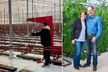
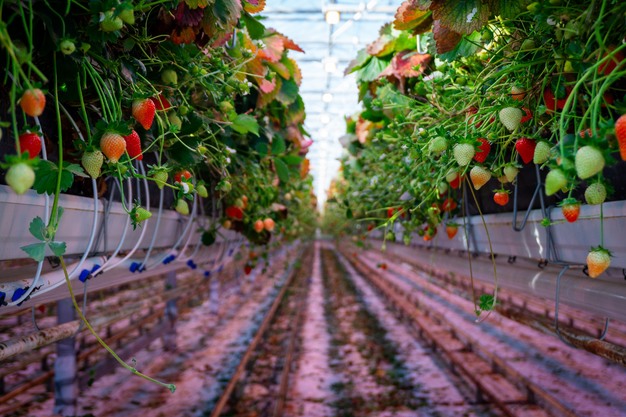
And that is necessary. Managing 36 hectares of strawberry cultivation requires tight organization. Part of the propagation of tray plants takes place in the company's own greenhouses, with some of those plants then going to fellow growers. For patented plant material, Van Oers in turn purchases tray plants. After propagation, the cultivation gutters are rehung and spring production begins.
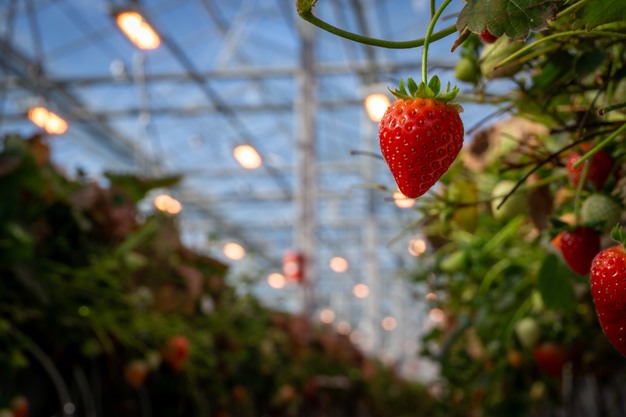
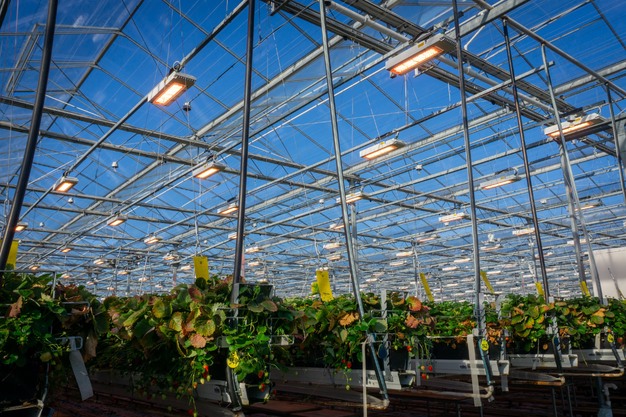
Of the nine locations, four greenhouses are now equipped with lighting, making year-round production possible. "We want stability and clarity for the customer, for ourselves, and for our staff," Martijn explains. "We prefer to grow for an agreed price, in consultation with Coöperatie Hoogstraten and the customer. Our product therefore goes to various end customers, with a portion sold via day trading/auction prices."
This also requires the right alignment of varieties and a combination of everbearers and June-bearers. Variety selection is increasingly done in consultation with Coöperatie Hoogstraten and the end customer. "For example, we grow Favori for a specific foodservice customer—up to the end of July. At the moment we have Elsanta, Karima, Florice, and Lady Emma," Martijn shows.
Organization
Thanks to the tight organization and customer-oriented cultivation, the route to the customer can be set up efficiently. "We harvest and pre-cool the product so it can be packed the next day. That evening the product goes to the customer's distribution center. At night, order picking takes place, and the fruit is in the store two days after harvest. If a last-minute order comes in, we can switch even faster," says Martijn.
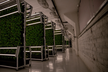
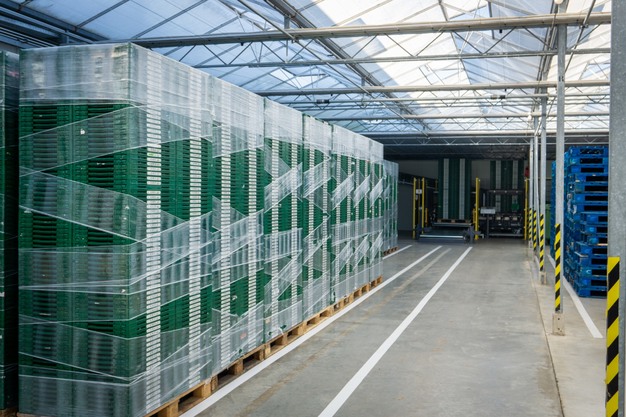
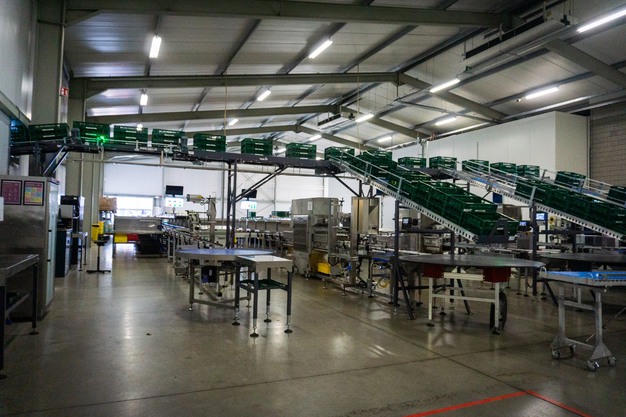
To maintain this high speed, as much as possible is packed directly into the final packaging. Product without a lid or top seal goes straight from the cultivation sites to the customer. Product that does need packaging goes to Prinsenbeek, where an extensive packaging line can process up to 180 pallets per day.
 © Arlette Sijmonsma | HortiDaily.com
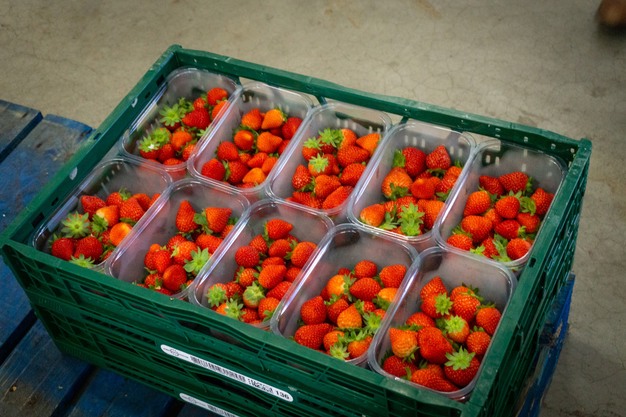
To keep the process transparent and manageable, every product is fully traceable. "All punnets are weighed during packing—always with a little extra, so the packaged fruit does not fall below weight due to shrinkage. Everything is scanned: foldable crates, punnets, pallets. This allows us to trace, per package, where the fruit came from, when it was harvested, and how much is in the package."
Careful planning in advance and control afterward prevent the need for continuous decision-making during cultivation. "We discuss potential scenarios in advance so we know what to do if they occur." A small example is that the lights are on during a sunny day in mid-September. "We steer based on weekly light input. Today may be sunny, but earlier in the week it was less so, so they get double now," Martijn explains. "Moreover, we need the CO₂ from the CHP and the electricity price is currently low."
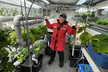
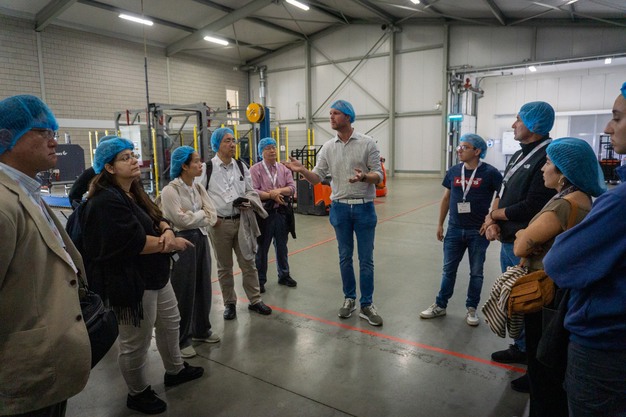
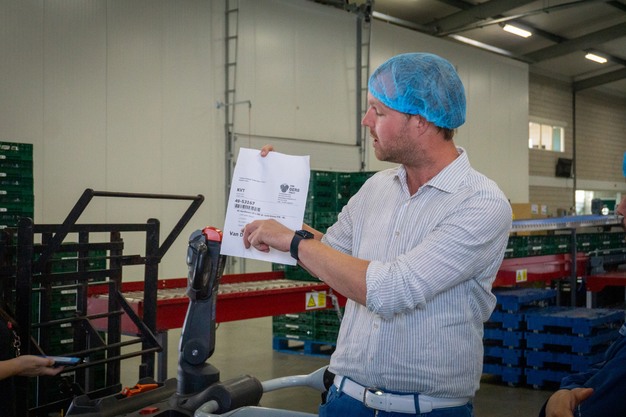 © Arlette Sijmonsma | HortiDaily.com Van Oers Fruit hosted participants of the International Strawberry Congress in mid-September. Martijn van Oers gave a guided tour.
Challenges: Labor, crop protection, and CO₂
Asked about future challenges, Martijn mentions the shortage of CO₂ needed for cultivation and the reducing range of crop protection products, which already poses a major challenge for strawberry growers. This further underlines the importance of good planning and organization. Crop protection is carried out as much as possible in an integrated manner, with close monitoring of the balance between pests and beneficial insects.
"We accept a certain level of harmful insects, because they serve as food for the population of beneficial insects. This allows us to get through the season with fewer chemical agents," Martijn explains. "Whitefly can be tricky: when you remove the crop from one greenhouse, they easily fly into another. But they don't damage the plant or the fruit, which helps." For disease control, biology also forms the basis, although it is not always sufficient in the fight against Botrytis.
 © Arlette Sijmonsma | HortiDaily.com
Labor is another bottleneck. "In the past you had enough skilled people; now you're happy if you have enough at all. You can't always be selective," says Martijn. This is one of the reasons the company automates wherever possible. The extensive packaging line is an example. Last year it was further expanded with a foldable crate unfolding machine and a palletizer. At the same time, automation in the greenhouse itself is still limited. "A harvesting robot? Gladly—but it has to be economically viable. We can now automate harvesting carts, but that only helps us marginally." He also sees limited value at present in UV robots, which are becoming increasingly popular in strawberry cultivation. "I see more potential in resistant varieties. Problems we don't have don't need to be solved."
This forward-looking attitude characterizes the young entrepreneur: prevention is better than cure. Each season is tightly planned and extensively evaluated afterward. "Which varieties performed well, where did production fall short? Why did we have more disease pressure in week 40? Was that due to IPM or the weather? We adjust our planning accordingly," Martijn explains. With nine locations, this is how the company maintains oversight. "We try to organize things so that there are no unanswered questions anywhere."
 © Arlette Sijmonsma | HortiDaily.com
New sales channel alongside the popular auction clock
In 2019, the first Van Oers Fruit location joined Coöperatie Hoogstraten after the company took over a greenhouse from a Hoogstraten grower. Since January 1, 2024, all locations have been affiliated. In terms of company size and facilities, Van Oers Fruit is not a standard grower for Coöperatie Hoogstraten. The options used by the Dutch grower are also available to other growers—this is the result of developments Coöperatie Hoogstraten has gone through in recent years.
A total of 120 strawberry growers are affiliated with Coöperatie Hoogstraten. For many growers, the auction clock remains the primary sales channel, notes Marcel Biemans, Manager Grower Development at Coöperatie Hoogstraten. "That's where we still achieve the highest price. Our clock is very well known and remains our most important sales instrument, but we also have growth ambitions. We are the market leader in strawberries and want to remain so."
 © Arlette Sijmonsma | HortiDaily.com
 © Arlette Sijmonsma | HortiDaily.com
That is why the range of options for growers has been expanded in recent years, enabling them to make fixed agreements with buyers through their cooperative. "We have offered mediation for some time. Initially only for autumn cultivation aimed at the UK. Nowadays it is increasingly a year-round option, also for other markets. On both the grower side and the buyer side, we saw a need for a sales channel other than the auction clock—one more based on fixed agreements. That's what we started to develop."
This development took place in consultation with growers, Marcel emphasizes. It resulted in a "playbook" that is still evolving and can be adapted to a grower's wishes. Van Oers Fruit became fully affiliated with Coöperatie Hoogstraten in 2024 partly because of this expanded range of options, Marcel explains. "With their company size and facilities, Van Oers Fruit is a special grower with whom we have a good collaboration. But all 120 of our strawberry growers are unique in their own way. As a cooperative, we provide our growers with tools to optimize their business operations."
For more information:
Coöperatie Hoogstraten
[email protected]
www.hoogstraten.eu