Peppers aren't just a colorful staple on America's plates—they're a financial powerhouse for farmers across the Southern U.S. From bell peppers in Georgia to fiery Carolina Reapers in South Carolina, this crop fuels a regional economy worth hundreds of millions of dollars.
But a microscopic fungus is putting that success at risk.
Clemson University scientists have confirmed that green fruit anthracnose, caused by the fungus Colletotrichum scovillei, is spreading across the eastern U.S., threatening yields and livelihoods.
"Peppers are one of the most valuable specialty crops in the Southeast," said Anthony "Tony" Keinath, a plant pathologist at Clemson's Coastal Research and Education Center in Charleston, South Carolina. "Losing even part of a harvest can mean losing thousands of dollars per acre."
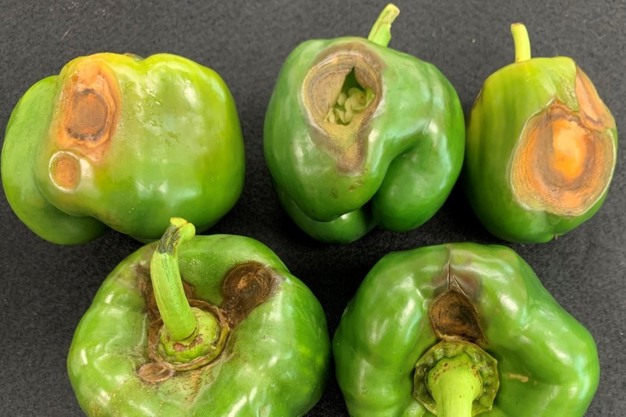 © Clemson UniversityLarge lesions, such as those on these bell peppers, are typical of green fruit anthracnose on bell peppers.
New culprit on the scene
Green fruit anthracnose isn't new, but the culprit behind recent outbreaks is. Colletotrichum scovillei, first identified in Asia, has been detected in South Carolina, Ohio and New York since 2019. This fungus causes a disease that attacks peppers while they're still green, leaving sunken, rotting lesions that render the fruit unmarketable.
Keinath's team tested 16 pepper cultivars over a two-year period. The results were sobering. Bell peppers and other Capsicum annuum types were the most vulnerable, with fruit disease incidence (FDI) exceeding 80% in some cases. Jalapeños and Italian frying peppers also suffered heavy losses.
"We've seen disease incidence jump from 0% to nearly 100% in just weeks under the right conditions," Keinath said. "Rainfall and overhead irrigation accelerate the spread, as fungal spores splash from plant to plant."
Winners and losers
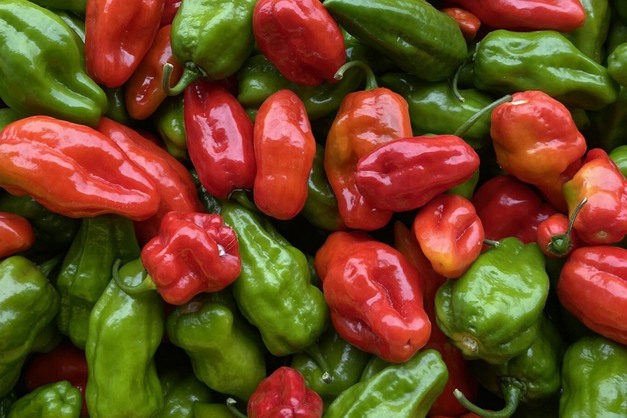
Not all peppers are equally doomed. The study found that certain hot varieties—such as the Carolina Reaper (C. chinense) and Tabasco (C. frutescens)—showed remarkable resistance. In fact, Tabasco and Malagueta peppers had less than 1% of their fruit rot, even under heavy disease pressure.
"These cultivars could be lifesavers," Keinath noted. "They offer genetic resistance we can potentially breed into more susceptible types like bell peppers."
Roulette, a sweet habanero, also stood out.
"Roulette is unique because it combines sweet flavor with resistance," Keinath said. "That's rare and promising for future breeding."
 © Clemson University
Fungicides: a partial fix
For now, chemical control remains essential. But fungicides aren't a silver bullet.
"They work, but they're costly and require careful timing," Keinath cautioned. "And resistance can develop if we rely on them too heavily."
Keinath is applying for grant funds to support research related to fungicide control for this new outbreak.
Breeding hope
The long-term solution lies in genetics. By crossing susceptible bell peppers with resistant species, breeders aim to create varieties that can withstand anthracnose without sacrificing flavor or yield.
"It's not easy," Keinath admitted. "But the consistent resistance we've seen gives us hope. If we can transfer those traits, we can protect this industry."
Source: Clemson University