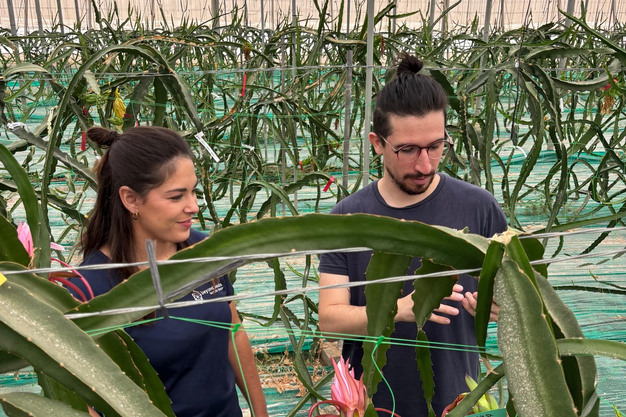
During the past few years, pitahaya has shifted from exotic curiosity to strategic option for growers in southeast Spain. Its visual appeal, its potential for added value and its reputation as a low water crop have driven interest. They have also exposed a structural gap: the lack of varieties truly adapted to the Mediterranean climate and to greenhouse production. That is why Hylogens, the pitahaya breeding division of the Beyond Seeds group, has set out to bring genetic rigor to a crop long dominated by artisanal selections and a general lack of varietal uniformity, explain project leads Edgar Garcia and Malen Escanez.
 © Hylogens
"Pitahaya is great at catching the eye, but getting consumers to come back is much harder. It lacks flavor, it lacks balance and it lacks plants adapted to our climate and production structures". Until now, Edgar notes, growers relied on spontaneous selections and informal exchanges of plant material, a system that created confusion and almost no traceability. Faced with that reality, Hylogens decided to apply professional breeding methods and in vitro cultivation to deliver stable materials adapted to local climate conditions and free of viruses.
Malen, who directs the breeding program, describes it as a hybrid between horticulture and fruit growing. "Pitahaya behaves like a fruit tree. Crosses are slow, the cycle is long and selection must be very strict. We are not looking for plants that fit a short crop cycle like cucumber or tomato. We need materials that will stay in the greenhouse for years, with controlled growth and stable production". The first step, she says, was to cross well characterized American and Asian varieties to create genetic diversity and combine key traits such as greenhouse adaptation, lower vegetative vigor, more regular flowering, self compatibility and balanced flavor.
 © Hylogens
One of the biggest challenges is growth management itself. Some varieties push vegetative vigor to the extreme and overload pruning crews, Malen notes, while others are prone to burns or rots caused by sudden temperature shifts, a common issue in Almeria and other Mediterranean areas. The tight restrictions on crop protection tools in Europe complicate matters further, especially since pitahaya has no regulated list of authorized products. For this reason, Hylogens has prioritized materials that show natural resistance, do not exude excess sugars which attract ants and aphids and maintain a healthy and stable cladode.
Nuanced flavours and identity
"Flavor is another pillar of the program. A high brix does not always equal good flavor", Malen stresses. "We have seen very sweet fruits that taste like sugar water. What we want is balance between sweetness and acidity, with nuances and identity".
 © Hylogens
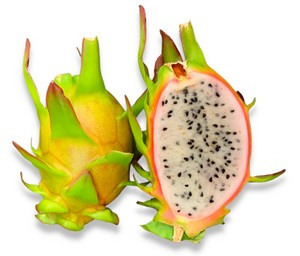
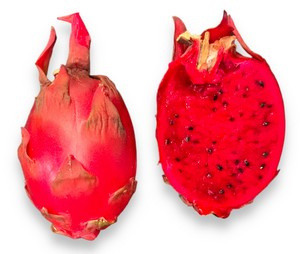
Hylogens works with a broad range of genetic backgrounds, from fully green materials to bicolors and selections with almost orange tones. Even so, the final filter is never about looks alone. If a candidate does not deliver on yield, post harvest performance, self pollination or sensory quality, it is discarded.
One of the most important breakthroughs is self compatibility. "Traditional pitahaya needs manual pollination at specific hours and depends heavily on labor, which has limited its viability inside the greenhouse. To make cultivation easier we developed materials that set fruit with bumblebees and other common greenhouse pollinators. This reduces costs and allows a more practical and sustainable approach". According to Edgar, this opens the door to real expansion not only in Almeria but also in Valencia, Huelva and even inland areas of Spain where commercial fields are already producing without greenhouses.
 © Hylogens
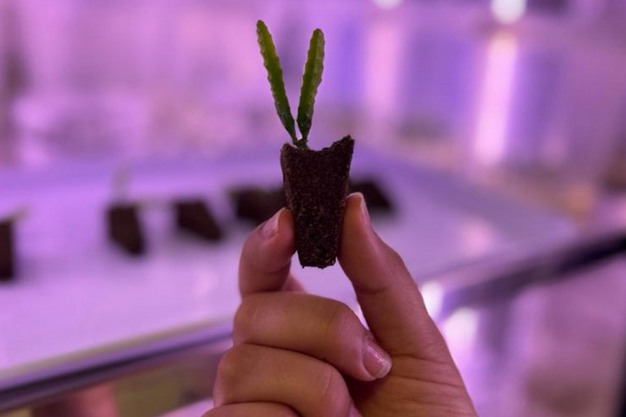
Traceability is another priority. "All material we commercialize is produced through meristem culture and in vitro propagation. This guarantees exact cloning, uniformity and, above all, virus free plants. In a crop that is usually propagated through informal cuttings and where uncontrolled imports may introduce unknown pathogens, this system represents a qualitative leap and real protection for local agriculture".
Commercial launch is planned for 2026
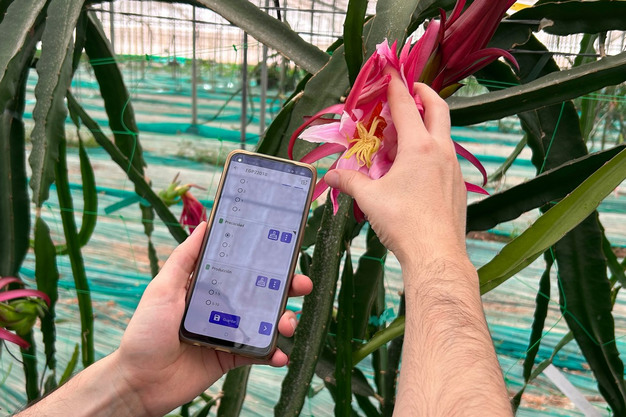
Hylogens proprietary varieties are now in advanced trials across Spain as well as in Guatemala and Vietnam to observe performance under different conditions. The commercial launch is scheduled for 2026. In the meantime, the company is already supplying cleaned up classic materials that are free of viruses, which is pushing many berry and fruit growers to approach pitahaya with a more professional mindset.
 © Hylogens
The market, Malen and Edgar agree, is entering a more mature phase. Early enthusiasm has given way to a more rational attitude as growers now look for real guarantees. "Many growers entered pitahaya because it was trending, just like with other crops. Now the focus is on proving that production can be profitable, stable and technically sound".
"We want pitahaya to stop being a crop of frustrations and become a real opportunity", Edgar concludes. "That is what we are working toward: plants that are adapted, reliable and productive so that the crop can consolidate in Spain and in other Mediterranean regions".
 © HylogensFor more information:
Hylogens
PITA Scientific Headquarters
Campus of the University of Almeria
04120 Almeria - Spain
[email protected]
https://hylogens.com/