For FoodVentures, the start of each tomato season hinges on strong preparation, coordinated planning and the discipline of consistency. Senior Grower Ceyhun Cihan describes the early phase as the foundation on which the entire year rests. "We try to start with a clear crop plan, a clean and disinfected greenhouse, and climate and irrigation settings that we have already checked and discussed as a team," he says. A structured start, paired with hygiene and well-defined responsibilities, allows the operation to prevent avoidable issues later in the cycle.
"When the season begins, everyone knows their timing and responsibilities, and the work flows much more smoothly." This planning not only clarifies workload but also supports accurate yield expectations and more reliable sales commitments.
In the first weeks, the technical focus is on maintaining plant balance. Ceyhun and his team monitor climate parameters (temperature, humidity and light) alongside root-zone factors such as EC, pH and moisture. "The goal is not to push the crop too hard and correct later, but to guide it with small adjustments since the beginning," he notes. Close observation helps maintain stable generative–vegetative development and prepares the plants for long, productive cycles.
 © FoodVentures
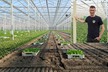
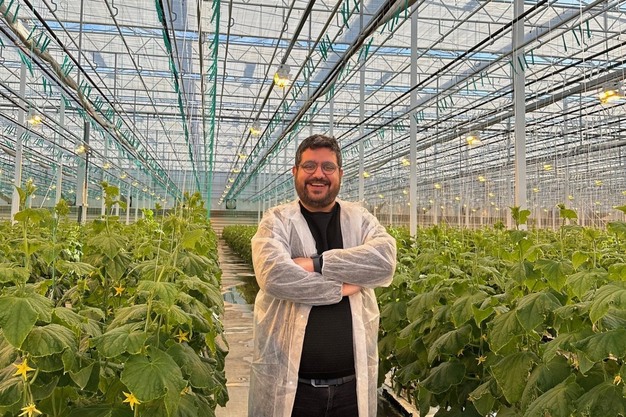
Ceyhun Cihan, Senior Grower at FoodVentures
Learning from last season's challenges
Among the more disruptive difficulties last season were unexpected electricity cuts, especially during cold periods. Even short interruptions caused noticeable temperature drops, stressing crops at sensitive phases. "A few degrees' drop inside during such a short interruption is enough to put the plants under serious stress," he explains.
To prevent recurrence, FoodVentures upgraded to a higher-capacity generator and implemented automatic switching, testing procedures and clear response protocols. "With these changes, we expect to keep the greenhouse climate much more stable during short power cuts," he says, adding that improved resilience also strengthens winter production planning.
Consistency in basic techniques
He emphasises that strong greenhouse results depend less on breakthroughs and more on doing foundational tasks consistently well. Hygiene and sanitation are central pillars. Cleaning walkways, equipment and plant residues reduces disease pressure and supports biological control strategies. The company also grows much of its own young plant material, enabling uniform standards from the earliest stages. "This helps us control quality from the start and reduces the risk of bringing in diseases and pests from outside," he says.
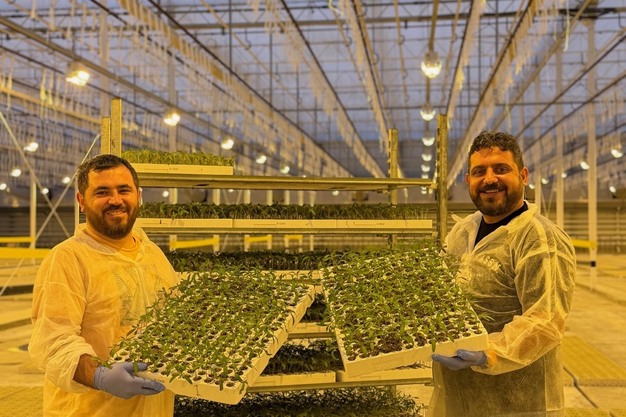 © FoodVentures
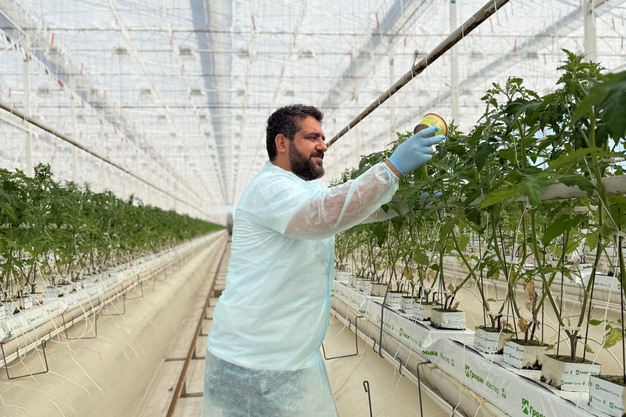
Scouting remains systematic and structured. Recording observations allows more targeted interventions, while timing is treated as a decisive factor in crop success. "We know that a one-day delay can sometimes create issues that last for a week or even a month." This urgency extends to irrigation management, where data and visual assessment are combined to maintain a healthy root zone through small, frequent irrigations and close monitoring of EC, pH and drainage.
Crop-handling tasks such as pruning, leaf removal and twisting are also given priority to maintain airflow and internal canopy light distribution. At the end of each season, climate, irrigation, growth and yield data are compared to refine the strategy for the following year.
 © FoodVentures
Varieties for future projects
FoodVentures is evaluating several potential new varieties, with a focus on resilience and market alignment. "We do not look only at yield; we also consider plant health, adaptation to our climate and market expectations," he explains. Stress tolerance, particularly during colder periods, and strong resistance packages are key criteria. Trial blocks allow direct comparison with current varieties, enabling evidence-based decisions on which materials should scale up.
Taste, appearance and shelf life also weigh heavily. "We want a product that catches the eye but is also remembered for its flavour."
Market conditions and emerging trends
He describes the current market as "quite volatile," with rising costs and competitive pressure. Delivering consistent quality at precise timings has become essential. Despite imports from neighboring countries occasionally pushing prices down, he says the company is less affected thanks to reliable standards and strong relationships. "Our customers value not only price, but also reliability, quality and communication."
Two trends are shaping decision-making: demand for consistent, season-long quality, and growing attention to sustainability and residues. This is pushing the company to use biological solutions more actively and document production practices in greater detail. On the consumer side, flavour and freshness are increasingly important, influencing variety selection and harvest strategy.
For more information:
FoodVentures
foodventures.eu