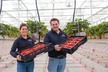
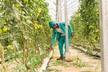
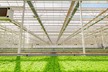
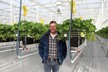
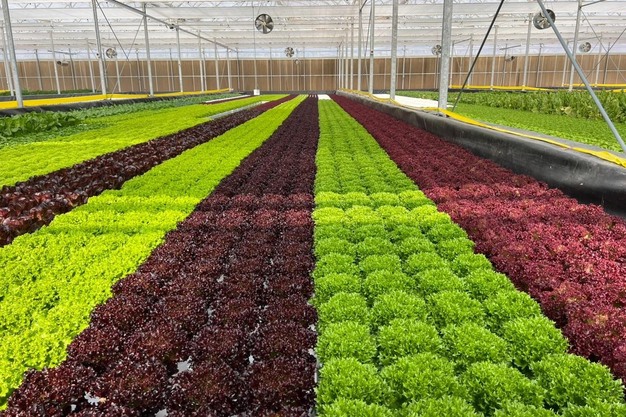
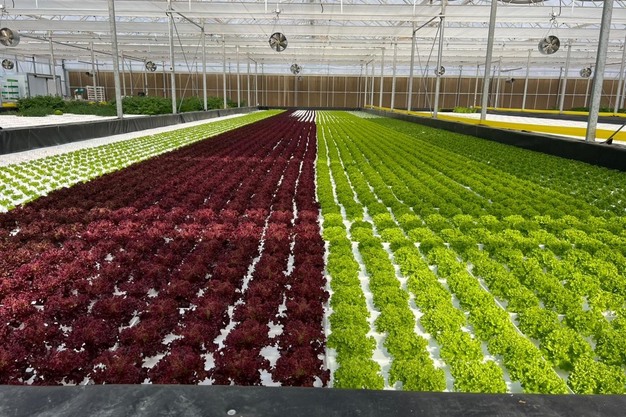
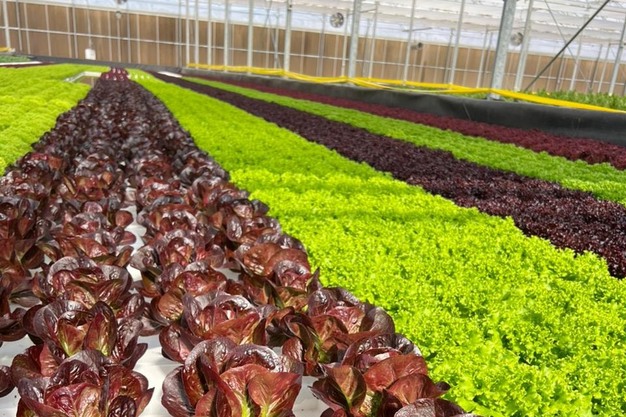
A new hydroponic greenhouse project in the Sharazur district of Sulaymaniyah is contributing to the development of controlled-environment agriculture in Iraq. Operated by Gardenia Company under the Green Fresh brand, the facility produces 1.1 million heads of lettuce annually using Dutch-designed hydroponic systems. According to Adriaan IJsselstein, Consul General of the Kingdom of the Netherlands in Erbil, the greenhouse operates year-round with a 55-day production cycle and incorporates technologies considered among the most advanced currently used in the country.
 © Gardenia
Integrated technology and adapting to the climate
All core greenhouse materials and systems, including the steel structure, growing equipment, climate components, sensors, and automation technology, were designed and supplied by Dutch greenhouse manufacturers in cooperation with Gardenia's technical team. Gardenia completed the installation, commissioning, and operational management locally.
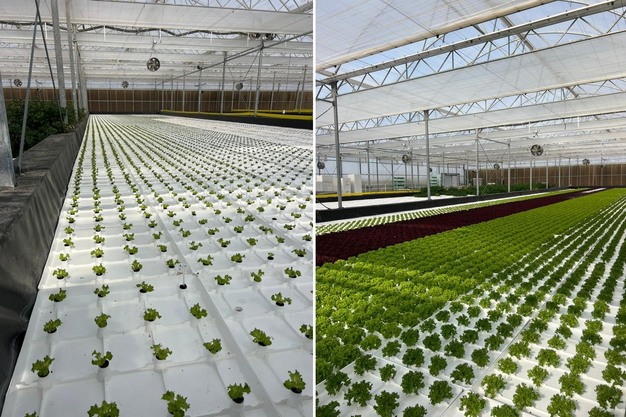
"The project introduced multiple Dutch innovations that are new to the region: a hydroponic raft system, a 70% water-saving recirculating irrigation loop, advanced climate-control software, a pad-and-fan cooling system adapted to low-humidity environments, and precision fertigation with Dutch fertilizers," Adriaan shares. "Together, these technologies have raised productivity, improved product consistency, and enabled high-quality lettuce production across all seasons."
 © Gardenia
A partnership built on experience and support
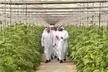
The collaboration between Dutch suppliers and Kurdish partners developed through facilitation by the Dutch Consulate in Erbil, which has actively supported agritech partnerships in the region. Gardenia's owners previously lived in the Netherlands, giving them early exposure to modern horticultural systems and an established network of suppliers and experts.
Adriaan adds that the project demonstrates how well Dutch technology aligns with local opportunities. "This lettuce project is a great example of what can be achieved when combining local opportunities with Dutch technology and expertise," he said. "It shows that today's Kurdistan Region is very different from the image many entrepreneurs and investors may still have."
 © Gardenia
Adaptation to Iraq's climate
To ensure optimum performance under Iraqi conditions, the greenhouse design was adapted using 50 years of local climate data. Adjustments included a reinforced structure to manage extreme temperature fluctuations, an optimized pad-and-fan cooling system, and solar-powered operations to reduce electricity costs. Rainwater harvesting from the roof and solar panels further lowers the facility's environmental footprint, enabling the greenhouse to operate with less energy and water than a typical household.
Sustainability and food security
The project contributes to regional sustainability goals by lowering water use, eliminating soil dependency, and reducing reliance on imported vegetables. With high local demand for fresh produce, shortening supply chains helps reduce transportation emissions and strengthens food security.
"The opportunities are great," he emphasizes. "There is a clear market, sufficient labor, and a government that encourages investment. Water scarcity means people must look for sustainable ways to grow food."
 © Gardenia
Impact on local growers and communities
Gardenia also positions the greenhouse as a knowledge hub, regularly hosting training sessions and demonstrations for local growers. The company shares expertise on hydroponics, modern cultivation practices, and greenhouse management, helping growers gradually transition from traditional methods to more efficient systems.
"Local reception of this concept has been highly positive," Adriaan shares. "Consumers value the freshness and cleanliness of the produce, while growers and investors have shown growing interest in adopting similar technologies." According to the consulate, the project has already become a regional reference point for modern horticulture.
Expansions and further projects
The success of the lettuce greenhouse is encouraging further investment. Gardenia plans to expand production into strawberries and tomatoes, and discussions are underway to establish similar hubs elsewhere in Iraq. The Dutch Consulate continues to support these efforts by connecting Dutch suppliers with Iraqi companies, facilitating market exploration, and encouraging joint ventures in agritech.
"We work hard to promote sustainable, modern agriculture in the Kurdistan Region of Iraq and broader Iraq," he adds. "This project shows what is possible, and we are seeing more positive examples, including recent visits by agricultural delegations and Dutch dairy companies."
For more information:
Consulate General of the Kingdom of the Netherlands, Erbil
www.netherlandsworldwide.nl
Adriaan IJsselstein
[email protected]
Gardenia Company
+964 0771 170 9991
gardenia-centre.com