Vanilla cultivation is taking root in India as a high-value but complex agricultural undertaking, with agronomists like Vijay Kumar Thammali betting on protected environments to produce premium beans.
He reflects on his time at Sprout India where he was responsible for setting up modern vanilla cultivation in Nepal. "The decision to focus on vanilla came from its unique status as a high-value, high-risk crop. After witnessing the unpredictability of open-field farming, a controlled environment model with shade nets and climate-controlled poly houses was chosen to assure stable yields and bean quality."
 © Sprout India Pvt. Ltd.
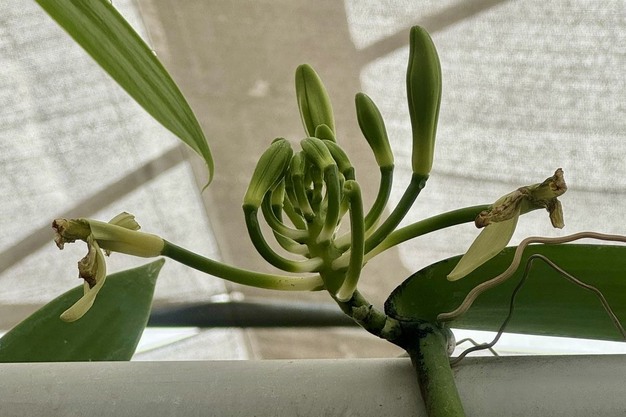
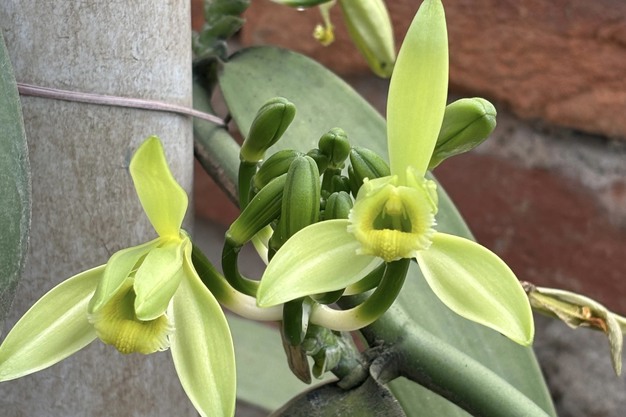
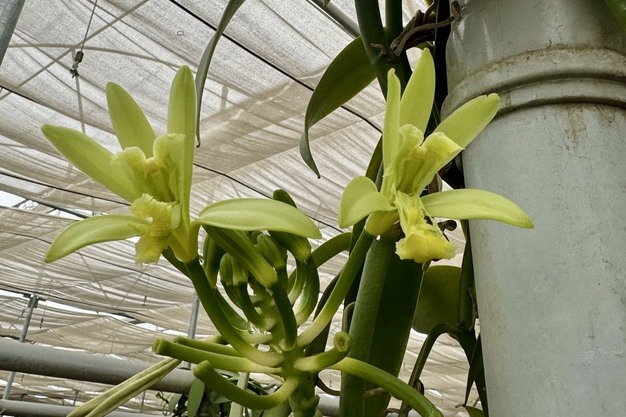
Thammali's team concentrated on Vanilla planifolia, the Bourbon type known for its rich, creamy aroma and vanillin content above 2%. "Planifolia enjoys high demand worldwide, but is also more sensitive. We face issues like fruit shedding from environmental shocks, or bean shriveling due to hot, dry winds even inside protected structures. Keeping humidity above 80% and temperatures between 21°C and 32°C is non-negotiable. The precise climate control seems daunting, but it pays off with consistently superior beans," he notes.
According to Thammali, the competitive landscape, both globally and regionally, is intense: "Madagascar and Indonesia dominate in scale, while smaller growers in South India and Nepal often use traditional, low-cost, inter-cropping methods." However, Vijay points out, "The opportunity lies not in competing on volume, but in offering traceability and certified quality. With most vanilla flavors still synthetic, customers want natural, traceable beans with year-round supply."
 © Sprout India Pvt. Ltd.
Thammali observes demand for pure vanilla rising across food and cosmetic sectors, yet expansion is checked by the labor-heavy pollination process, "a job requiring trained hands and perfect timing within a brief morning window." Location matters less than advanced microclimate systems, says Thammali. "The real advantage is keeping the orchard stable, no matter the weather outside. High humidity means fungal risks like Fusarium, so running strict sanitation and integrated pest management is necessary to protect the vines."
Cultivators also face long timelines with vanilla taking about 3 to 4 years just to flower and another eight to nine months for a bean to mature post-pollination, Thammali explains. "Setting up requires patience and significant capital. The economics only add up by targeting export markets, where cured, high-vanillin beans command top prices and the curing process captures most of the value."
 © Sprout India Pvt. Ltd.
Pricing continues a steady upward trend for quality beans, with a two-tier market segmentation. "One market welcomes lower prices for inconsistent beans and another commands a steep premium for grade A, traceable vanilla." Thammali is optimistic about demand for natural vanilla growing further, alongside a focus on authenticity.
Looking ahead, he plans to trial stronger hybrids like Vanilla pompona for better root-rot resistance and resilience to humidity and temperature fluctuations. "If breeders can solve the pollination barrier, advances in self-pollinating varieties could boost vanilla cultivation globally."
For more information:
Vijay Kumar Thammali
Tel: +91 99 63 563 994
Email: [email protected]