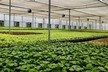
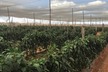
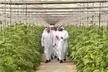
The cultivation of papaya in Andalusian greenhouses, especially along Almeria's coast, demonstrates that climatic limitations can be overcome through technical expertise, careful planning, and the selection of appropriate varieties. A technical agricultural engineer from an Almeria cooperative, experimenting with this tropical fruit under glass in southeastern Spain, comments on this.
"Papaya adapts well to common scrape and shading greenhouses in this region. However, choosing the right variety and considering the sowing date are crucial. Unlike other subtropical crops, papaya tolerates ambient heat but is highly sensitive to high temperatures during flowering. That's why ventilation and maintaining high humidity levels are key," he stated.
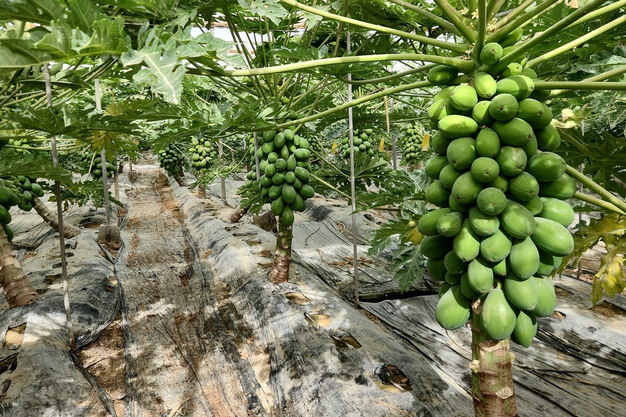
A low-cost crop with great potential
The technician says the labor cost is comparable to that of a tomato or a pepper, though there are some differences. "It doesn't have much foliage and is easy to handle. A typical cycle lasts 18 to 24 months, producing about 20 kilos per square meter, but some crops last up to five years," he said.
"In my experience, I recommend planting in February or March, with harvest starting about six months later. Production peaks usually occur between January and May. Typically, it has been harvested when ripe, but in recent seasons, an increasing share of the crop has been harvested for green cutting at the request of marketers. People have started to consume it this way, as seen in Asia or Indonesia, for salads and other savory dishes," he stated.
"Green papaya has actually created a new market niche, providing producers with an extra outlet beyond the traditional ripe fruit market. Typically, papaya has a mild, not overwhelming flavor, and when green, it becomes a very versatile fruit," he noted.
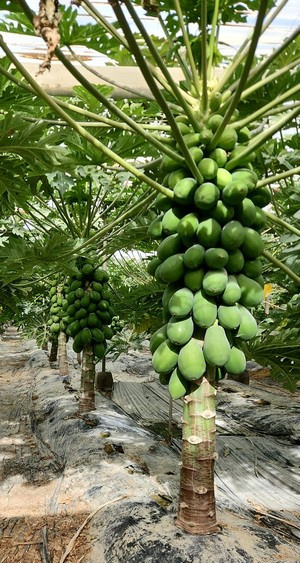 Adapted varieties and ecological management
The success of the crop depends on selecting varieties with a short growth cycle and good heat tolerance. "To date, we have been working with the Sweet Sense variety, which is locally developed and suited for the semi-arid climate of the southeast. It produces medium-sized papayas weighing 1-2 kg, and it sets fruit well as temperatures increase. This variety also matches the preferred fruit profile in the European market. However, we are currently testing other varieties that delay ripening and can be harvested while still green, which is beneficial given the current consumption trends," he explained.
Regarding pests, papaya encounters no major issues, and in recent years, the absence of registered phytosanitary products for this fruit has even led the cooperative to switch some of its crops to organic management. "There are no authorized products apart from some brands of wettable sulphur, so we have decided to certify 4 hectares directly as organic; there is practically no difference in handling, except for traceability, and we have this added value for the fruit produced," he said.
From tropical fever to technical realism
Papaya cultivation in Almeria had its "golden age" a few years ago. "A dedicated company was even established to oversee it. Many believed that planting was enough to generate profits. However, despite being a relatively simple crop, it demands specific techniques," he said. The absence of technical guidance caused many growers to fail. "They tried to apply tropical methods in a place that reaches zero degrees in winter. "After six years, the only producers that continue to grow papaya are the few of us who understood we needed different approaches to grow it," he concluded.
Having experience with other tropical crops, like okra, the engineer emphasized that the key is not to replicate existing models but to tailor calendars, management practices, and investments to local conditions. "In summer, under plastic, we reach 50 degrees; in winter, 3 or 4. You need to adjust sowing times and enhance climate control—humidity, automatic ventilation, roof openings—all of which incur costs, and not everyone is willing to invest," he explained.
Nevertheless, the economic outcomes remain promising: "If a farm yields 20 kilos per meter in 18 months, it earns between 9 and 10 euros per meter. That's good, but we could achieve much more with additional technology," he added.
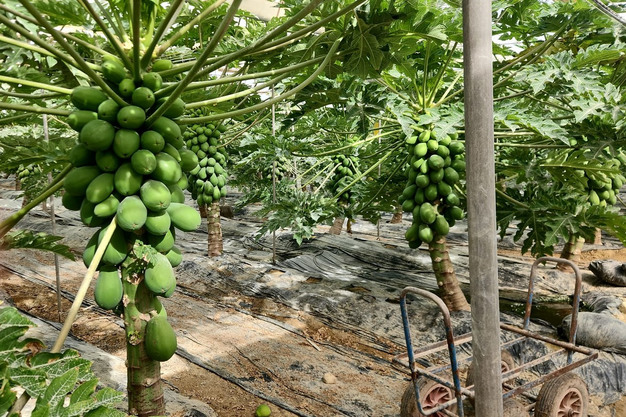
Andalusian papaya looks to the future
Although the cultivated area of papaya remains small—just a few dozen hectares between Almeria and Granada—interest is increasing again. This renewed focus is driven by Europe's demand for exotic fruits and efforts to diversify traditional greenhouses. "New growers are already interested. Papaya is a delicate plant that can yield very high levels if its physiology is well understood and climate conditions are properly managed. It is well-suited to the Almeria greenhouse; however, without proper technical guidance, the sector might make the same mistakes as before," he warned.