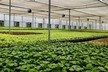
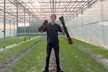
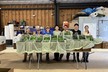
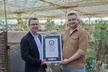
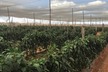
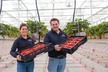
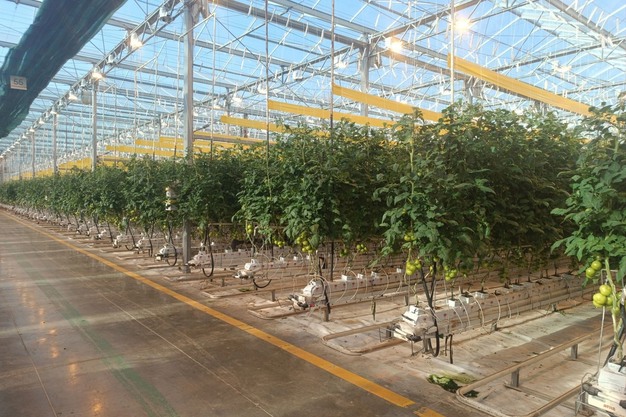
The team at Aras Tarla Amin has entered a new production season with optimism and a clear focus on improving greenhouse yields despite ongoing challenges. Located in the agricultural region of Jolfa city in Iran, the company operates several modern greenhouses for controlled conditions vegetable cultivation.
"Every year we face new challenges due to the variable factors in crop production," says Reza Tahmani, Production Manager at Aras Tarla Amin. "But despite all this, we pursue the main goal of producing more crops. I hope we have a good season."
This season, the company's main crops include cluster and cherry tomatoes, grown across several greenhouse units. In addition to overseeing tomato production, Reza also provides technical advice to the cucumber greenhouse, where similar environmental and pest management practices are applied.
"We have grown cluster and cherry tomatoes in the greenhouse, and I also provide advice in the cucumber greenhouse," he explains.
 © Aras Tarla Amin
Pest management and seasonal pressures
Like many greenhouse operations in the region, Aras Tarla Amin faces persistent pest pressures, particularly from the Nesidiocoris tenuis population. This mirid bug, while known for its potential benefits as a biological control agent, can also become a serious pest of tomato crops when its population exceeds threshold levels.
"We have challenges with the Nesidiocoris tenuis population in this area every year," says Reza. "And we fight them through methods such as mechanical control."
Mechanical control methods form a key part of the company's pest management program, focusing on non-chemical strategies such as physical removal, trapping, and improved ventilation. These efforts are supported by careful monitoring of pest activity and the timely implementation of control measures to minimize crop damage.
Managing the greenhouse climate
Climatic conditions in Jolfa vary considerably across the year, presenting both opportunities and constraints for greenhouse production. According to Reza, temperature, humidity, and light levels are generally favorable in spring, fall, and even winter. However, the summer period poses significant challenges.
"We don't have much of a problem with temperature, humidity, and light in the spring and fall, and even in the winter," he says. "We have hot days in the summer and early fall, when the temperature rises to 46 degrees, and in these conditions, watering and regulating the temperature inside the greenhouse is very difficult."
To manage these extreme conditions, the company relies on precise irrigation scheduling and temperature regulation systems to prevent plant stress and maintain fruit quality. Only during the winter season, artificial lighting is used to compensate for the reduced natural light levels.
The new production cycle at Aras Tarla Amin Company is already in progress, with the first tomato harvest scheduled to begin immediately. Despite the challenges of pest management and climate control, the company remains committed to consistent improvement and achieving higher production standards each year.
For more information:
Aras Tarla Amin
Reza Tahmani, Production Manager
[email protected]
+989375525409
www.atavita.com