The HortiDemoCentre at Stellenbosch University continues to focus on applied greenhouse research and advanced training, bringing together academia, industry, and students in hands-on agricultural innovation. Following the launch of its latest cucumber and tomato initiatives, the centre has seen a season marked by rapid growth, data-driven experimentation, and meaningful collaboration.
Research and production in practice
In partnership with Rijk Zwaan, Delphy, and other industry leaders, the HortiDemoCentre's most recent cucumber trial began earlier this year. The project aims to explore variety performance, nutrient strategies, and stress management under controlled environment conditions.
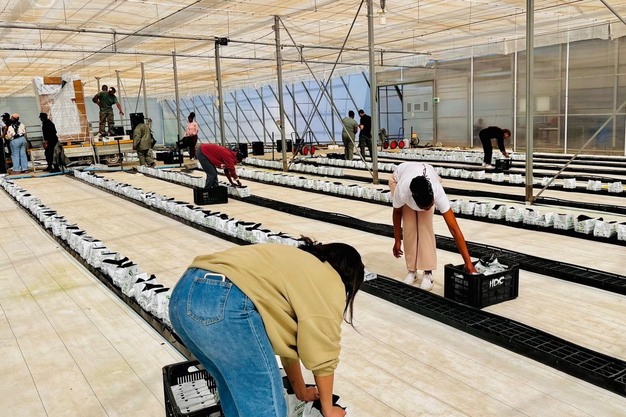
"About a week into planting, students from the Faculty of AgriSciences joined us to install Cocogreen pop-up bags from Glencairns — a soilless cultivation system designed to optimise root health through efficient watering and aeration," the team shared. The collaboration with Delphy, who manages the daily production operations at the centre, merges practical expertise with academic research in a way that directly supports commercial grower needs.
 © HortiDemoCentre
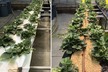
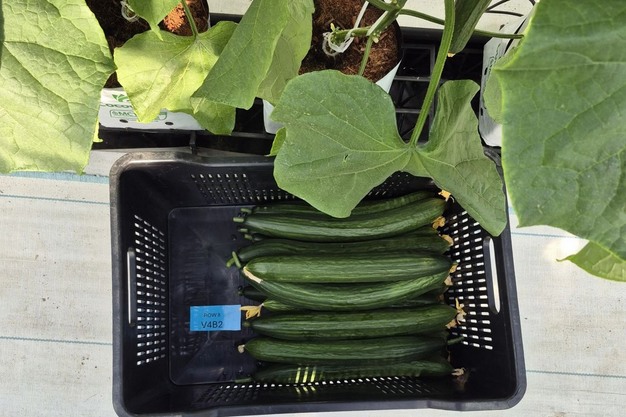
By week five, the cucumbers had set fruit, and soon after, the first harvest took place on 9 October. MScAgric student Kirsten Cherry shared that the milestone reflected weeks of student involvement and careful crop management: "The cucumbers are growing rapidly, with the first successful harvest completed on 9 October. Thank you to the students who dedicated their time and effort to help with the harvest."
 © Kirsten Cherry
Measurable results and data-driven insight
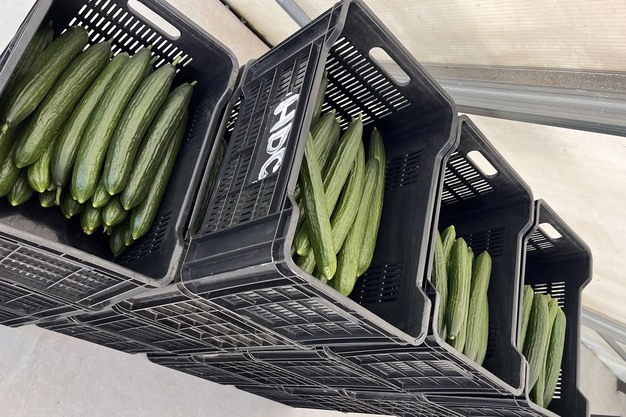
As the trial advanced, detailed crop monitoring provided valuable data for refining production practices. Postgraduate agronomist Mat Allwood reported that by week eight, the team was harvesting three times per week, achieving single-harvest counts of around 3,400 fruit with a low unmarketable percentage of 3–5%.
"Plant height, leaf area, and fruit count data are taken every week to determine the effects of different nitrogen and potassium ratios across the four cultivars in the greenhouse," he explains. "We're looking forward to the rest of the season and the valuable data it will produce."
These continuous observations align with the HortiDemoCentre's broader objective — to translate experimental results into practical strategies that support more efficient and sustainable protected cropping systems.
 © Mat Allwood
Training the next generation
In addition to research, the centre continues to serve as an ongoing training platform. Recent short courses, including the Tomato Production Course hosted by Delphy, have built on the success of the previous greenhouse programs launched earlier in the year. These courses target advanced growers and technical specialists, focusing on bridging scientific knowledge with real-world application.
Delphy's global perspective on horticultural consultancy ensures that participants benefit from proven practices adapted to South African conditions. "With a strong focus on bridging science and practice, Delphy empowers farmers, agribusinesses, and stakeholders worldwide to achieve profitable and resilient production systems."
Expanding collaboration and exposure
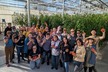
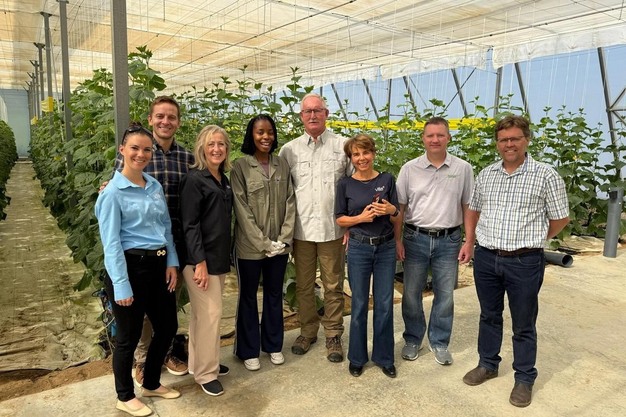
Over the past month, the team welcomed students and staff from West Texas A&M University and the University of Fort Hare, as well as representatives from Villa Crop Protection and WinField United.
 © HortiDemoCentre
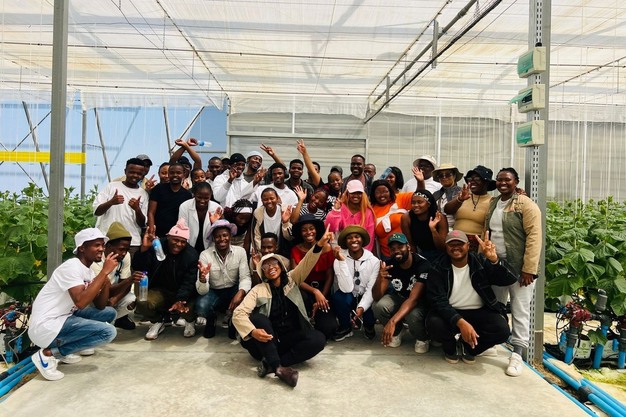
During the Fort Hare visit, students toured the greenhouse and mid-tech tunnels, gaining exposure to research and production systems in operation. They also viewed the HortiMax fertigation machine, an integrated platform combining climate and irrigation control for precise environmental management. Discussions included potential internship opportunities and future collaboration between institutions.
 © HortiDemoCentre
"The visit was engaging, insightful, and rewarding for everyone involved," the HortiDemoCentre team reflected. "At our core, we're passionate about building connections and contributing to the future of agriculture."
As Dr. Estelle Kempen of Stellenbosch University emphasized earlier this year, "Greenhouse farming in South Africa is on the rise, but growers need to navigate challenges such as energy consumption, water management, labor, and input costs. However, there is enormous potential for those who are willing to adopt innovative solutions."
For more information:
Horti Demo Centre
[email protected]
www.hortidemocentre.co.za