The German Agri-Food-Innovation Tour brought together ideas, innovation, and visions for the future in a day dedicated to exploring how research, entrepreneurship, and sustainability drive progress in the agri-food sector.
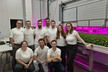
As part of the IMPACT E3 joint project, representatives from FAU Erlangen-Nürnberg, Hochschule Weihenstephan-Triesdorf, Hochschule Ansbach, ANsWERK Digitales Gründerzentrum, and cooperation partners NKubator and LZE GmbH visited the Weihenstephan campus in Freising. The tour included 35 students and colleagues eager to see how academic and entrepreneurial collaboration can lead to tangible innovation.
 © FAU-Gründungsberatung
The first stop focused on the journey "from food idea to innovation." Dr. Veronika Hannus and Eva Martell provided an in-depth look at the start-up initiatives SUN and the Food Startup Inkubator Weihenstephan (FSIWS). These programs offer creative spaces where students, start-ups, and researchers work side by side to develop sustainable food solutions. The incubator has already supported more than 50 start-ups in bringing innovative, eco-conscious food products to life, serving as a prime example of how structured support can transform ideas into viable ventures.
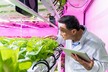
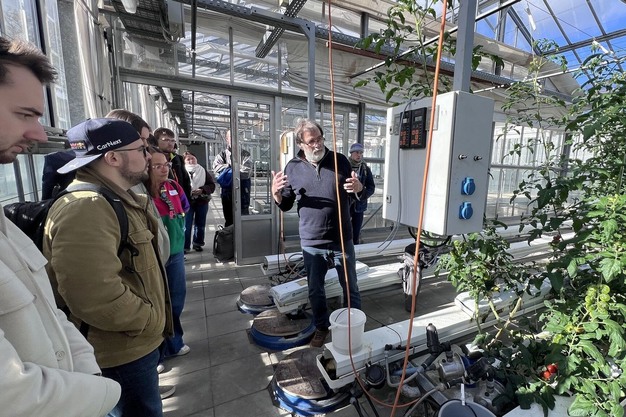
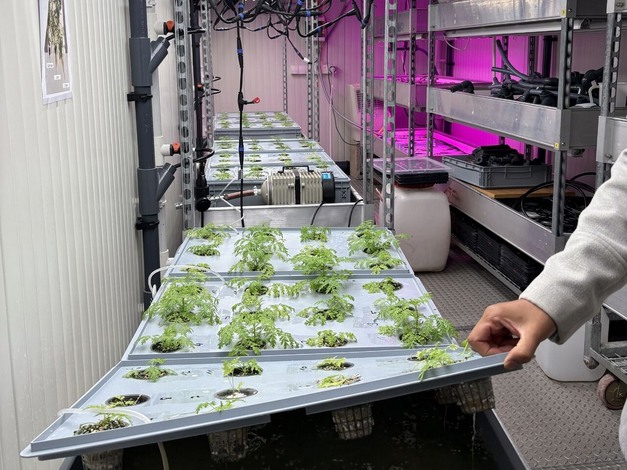
The second station turned attention to the "agriculture of the future." Professors Michael Beck and Heike Mempel from the Faculty of Horticulture and Food Technology presented the indoor farm at Hochschule Weihenstephan-Triesdorf, showcasing how crops can thrive in closed, controlled environments. This approach aims to ensure efficient, safe, and sustainable production of plant-based materials—an important step toward more resilient and independent food supply chains.
 © FAU-Gründungsberatung
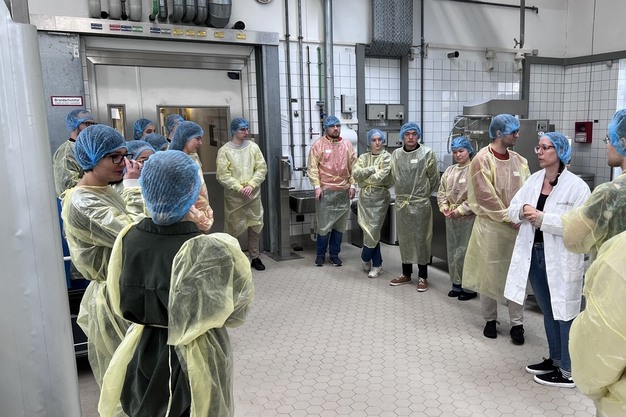
The tour concluded with insights into how innovation reaches the market. At the TUM Venture Labs, Pascal Mayer explained how start-ups are equipped with resources, networks, and expertise to successfully turn their ideas into commercial success.
 © FAU-Gründungsberatung
The Agri-Food-Innovation Tour demonstrated the power of interdisciplinary collaboration and the shared commitment of academia, industry, and entrepreneurship to shaping a more sustainable and innovative future for food and agriculture.
Source: FAU-Gründungsberatung