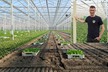
In Mexico's agricultural heartland, Finka has become a benchmark for innovation and efficiency in greenhouse horticultural production. From its facilities in Querétaro, the company led by Jorge Manuel del Toro Chávez has managed to transform the traditional high-tech greenhouse concept into a smart model focused on data, sustainability and labor welfare.
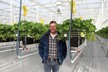
"We went from a high-tech greenhouse (with heating and active windows) to a greenhouse that integrates information for decision-making," says the CEO. "Today we don't just produce vegetables; we produce information that allows us to be more efficient, sustainable and humane."
A growing production structure
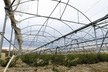
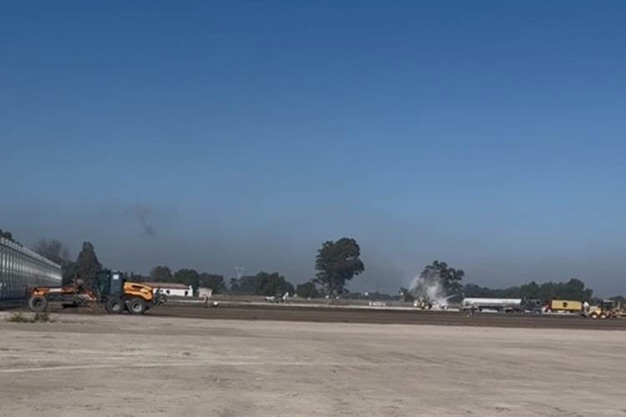
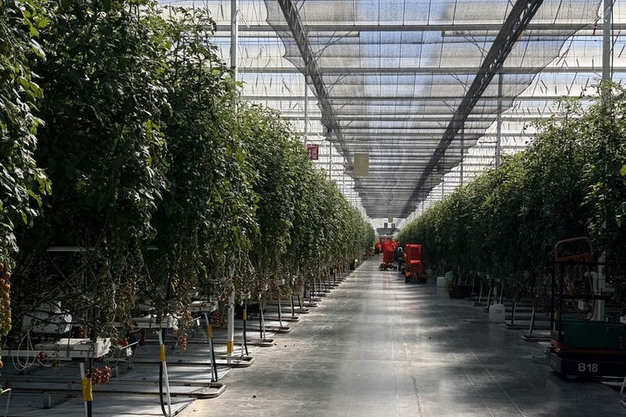
Finka currently operates on two main sites: Agropark, where it has 31 hectares of greenhouses (10 glass and 21 plastic), and an additional 21 hectares of diffuse glass near San Juan del Rio, with another 7 under construction and expected to become productive in November 2026.
 © FINKA
"These new diffuse glass facilities are 7.5 metres high and feature misting (or fogging) systems, as well as digital climate control software, and they use AI for data analysis and smart algorithms. This has allowed us to increase our production volume by 18.5% while using 18% less energy resources such as gas and electricity. Above all, it has allowed us to reduce the use of irrigation water by 18%. The platforms are ready for the next stage and we'll continue with the construction process next week in order to take advantage of the dry season for a clean, fast and accurate installation," says Jorge Manuel.
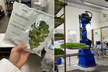
The most profound change at Finka has not been structural, but digital. The company has adopted an ecosystem of technological tools integrating data analysis, artificial intelligence and ERP platforms connected to Business Intelligence (BI) systems.
"Today we have real time data on consumption, sales and rotations of materials. This allows us to make accurate and fast decisions in all areas, from irrigation to logistics," he says. "Thanks to this, we have increased our productivity by 18.5%, reduced water use by 22% and energy consumption by 19%.
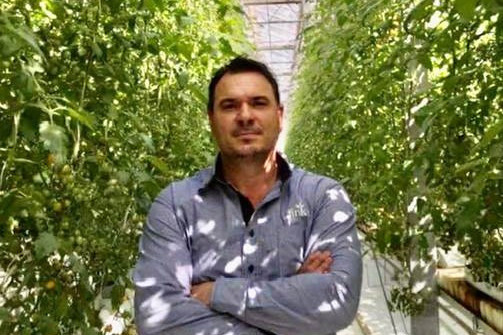 © FINKAThe use of algorithms in the shaping of climate policies, the experience of growers and the crop management strategies determine strategic actions such as opening windows at the right time, or switching the irrigation on, thus achieving total synchronization between plant, climate and energy. "In the past, we worked on the basis of intuition, or feeling. Today, data combined with the experience of our engineers has made us more efficient."
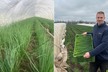
The international context has also made it necessary to adapt. With the imposition of tariffs on Mexican tomatoes, Finka decided to reorganize its crop portfolio. "Faced with the situation of tomatoes, we realized that we had to diversify. On the one hand, we expanded our tomato line to produce all specialties (on the vine, cherry, grape, medley of all colors...), and we also launched new lines of sweet seedless mini peppers, hot peppers (Thai Chili, Habanero, Scotch Bonnet, Scorpion) and mini cucumbers," says Jorge Manuel. "The goal was clear: to offer higher value-added products to our customers in the medium term and seek to protect profitability in a volatile market doing what we do best: deliver quality crops grown in a highly efficient manner. The market response has been very positive, so we plan to stick to this strategy and continue expanding our portfolio with new products in the coming months."
Phytosanitary protocols and ToBRFV handling
These new crops have required new agronomic management methods at Finka's greenhouses, as each vegetable and variety requires specific techniques; nevertheless, the biosecurity protocols established by Finka to tackle ToBRFV, one of the greatest challenges of the last decade in tomato cultivation, have been replicated for pepper and cucumber crops, ensuring guaranteed plant health in all their productions.
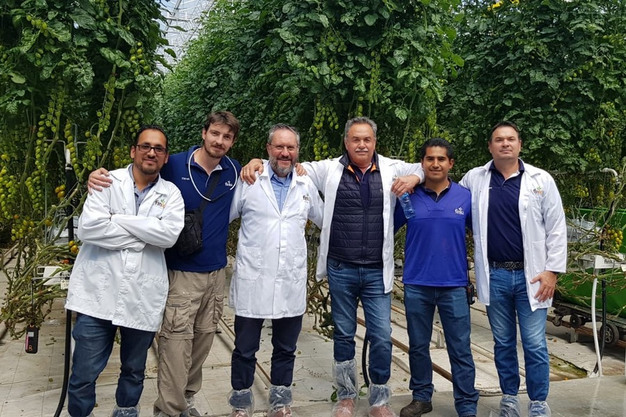
"All tomato varieties, even the high resistance ones, are still vulnerable to infection, which is why we are still applying the protocols that we implemented four years ago, when the problem with the tomato brown rugose fruit virus started. The workers will disinfect their hands with each plant, instead of doing so by blocks; this is the only way to minimize the spread of the virus," he says, "and these same protocols have been extended to peppers and cucumbers, as the tobamovirus can also affect these species."
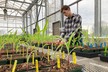
The strategy includes continuous training, monitoring at critical points and rational use of biological products in peppers. "We used to apply preventive phytosanitary products; now we are increasingly monitoring, allowing us to use fewer agrochemicals and in a more targeted manner, using also digital platforms for their registration. This is helping us avoid toxicity in the plants," says Jorge.
 © FINKA
"Workers are not a resource, they are our greatest asset"
But beyond technology, the key to Finka's success has been its human vision model.
In recent years, the company has reduced labor turnover from 150% to 38% per annum by focusing on training, stability and integral wellbeing, which demonstrates the success of its philosophy. "We believe that workers are not a resource, they are our greatest asset," says the director. "Each employee has an individual record of performance, attendance and training, which allows us to identify potential leaders and offer second chances."
And because time is sometimes worth more than money, the company has an excellence recognition program. If 100% of the work is carried out at 97% quality, those workers can take Saturdays off. The company also provides on-site medical services, and it is Fairtrade certified. "We don't only care about the workers, but also about their environment. And if we want the next generation to be interested in agriculture, we have to be a generous, responsible and humane company with the capacity to attract talent to this sector."
Talent evaluation is, in fact, a valued part of Finka's model, as it promotes vertical mobility of its workers. There are operators who have gone from being mere collaborators to supervisors and even trainers helping new employees get up to speed.
"For those who don't know, we have trainers who lead them every step of the way until they reach their efficiency curve. With this system of training and talent promotion, we managed to go from 16 workers per hectare in grape tomato crops to just 9.5 effective workers, without productivity being compromised," says the director.
 © FINKA
"This model results in fairness, recognition and a sense of belonging. When people feel that there is fairness and opportunity, they work better, and in this way we have managed to bring together something very valuable: quality, well-being and stability."
"As a final thought, I believe that sharing our working models, our experience with digital tools, and the problems and solutions found for each of the sector's common challenges would be very useful, especially in contexts of great uncertainty and complexity such as the current one. This is why we need spaces (webinars, forums, meetings) allowing us to share experiences that can help the Mexican sector as a whole become stronger in the face of adversity."
Jorge Manuel has issued an invitation from Finka's facilities to build a more united agricultural community, where technology and solidarity go hand in hand. "In these times, without efficiency and collaboration, there is no chance for sustainability."
For more information: Finka Agropark
Carretera Estatal No. 100
Querétaro - Higuerillas Km. 28.5
"Agropark" C. P. 76280
Ajuchitlán Colón,
Querétaro. (México) © FINKAFinka San Antonio
Carretera Estatal No. 122
La Estancia - La Llave km 4+100,
"San Antonio" C.P. 76815
San Germán, San Juan del Río,
Querétaro. (México)
https://finka.mx/