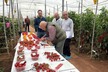
Peru has taken a historic step in the preservation of its agricultural wealth. For the first time, its Ministry of Agrarian Development and Irrigation (MIDAGRI) has arranged for the National Institute for Agrarian Innovation (INIA) to deliver autochthonous chili pepper seeds to the Svalbard Global Seed Vault in Norway, known as the "Ark of the world's seeds."
This vault will not only ensure the preservation of Peruvian chili peppers in the future, but also guarantee that, should a global cataclysm or disaster occur one day, it will be possible for the seeds to be reproduced again. In this way, the flavor, color and history of Peruvian chilies will live on for generations to come.
"The deposit we have made today symbolizes a vision for the future. To protect our seeds is to protect the life, identity and food of tomorrow. Our chilies will be safe even in the face of the greatest disasters. Thanks to this step, the taste of Peru will never be lost," said Jorge Ganoza Roncal, executive president of INIA, stressing the importance of protecting the seeds that sustain our food.
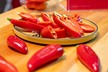
The 25 samples sent belong to four species of the Capsicum genus (C. chinense, C. frutescens, C. baccatum and C. annuum), recognized for their diversity of flavors, colors and levels of pungency. This variability is key to developing new varieties that are more resilient to climate change.
This milestone has been achieved with the support of the Nordic Genetic Resource Center (NordGen), an international center dedicated to the preservation of genetic resources, which provided assistance to Peru throughout the process of shipping and safeguarding its seeds in the Svalbard Global Vault.
The Global Vault
More than 130 meters up a mountain, on an Arctic island, lies the Svalbard Global Seed Vault, also known as the "Ark at the end of the world." This place was built to withstand everything: earthquakes, volcanic eruptions and even solar radiation. Thanks to the natural cold of the permafrost, the seeds are preserved without the need for electricity.
More than 1.3 million seed samples from almost every country on the planet, corresponding to more than 6,000 crop species, are stored there. It is literally the backbone of world agriculture.
Source: gob.pe