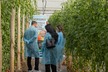
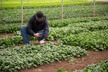
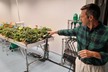
High quality seed performs even better with a little help. Thanks to technology, growers today can count on seed that is infection-free, germinates easily, and leads to uniform sprouting and plant growth. Non-chemical treatments are getting better every day, and new developments are on the way.
Quality untreated seed does fine in healthy fields where the soil life is in balance, says Liesbeth van der Heijden, a Senior Researcher in Seed Pathology Research at Bejo. "But the soil isn't always perfectly in balance. Every grower sometimes encounters setbacks. That's why it's better to give the seeds a little help." Bejo does all its processing at its headquarters in Warmenhuizen, the Netherlands. The seed is sent here directly after being harvested at production sites on several continents. It undergoes a range of tests and treatments in our high-tech facility. We test for germination capacity and fungal, bacterial and viral infections. Where necessary, disinfection and cleaning are carried out.
Physical decontamination
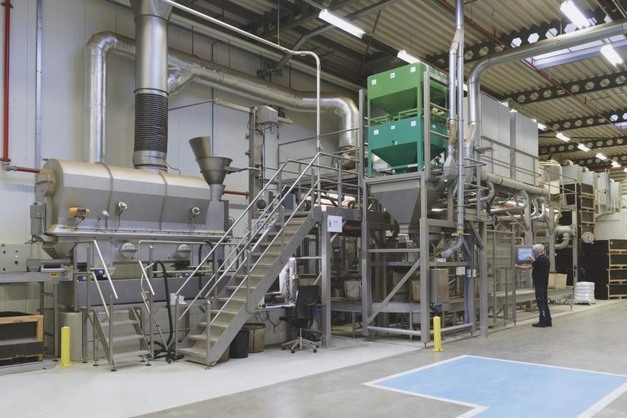
For conventional crops, chemical agents can still be used to remove seed-borne pathogens. For organic crops, seeds must be non-chemically treated. Bejo has been working for more than 20 years to optimize nonchemical treatments and is constantly researching new methods. Hot water treatment came first. The combination of water and heat has been further refined with the development of the steam vacuum method. "The challenge is to choose the appropriate action, since every treatment can affect seed quality," Van der Heijden says. "You don't need to kill a fly with a hammer when a newspaper will do the job." Steam vacuuming is the most refined method, she says. "Steam is less hot in a vacuum, and that combined with a pulse application lets us treat the seed effectively without penetrating the seed coat. We've developed crop-specific recipes for various crop-pathogen combinations."
 © Bejo Zaden
A boon for conventional crops
Our efforts to develop non-chemical treatments have had a useful side effect. Chemical disinfection of conventional crop seeds is becoming more difficult as fungicides are withdrawn. Treatment methods originally developed for our organic crops are serving as alternative solutions. Bejo continues to research further improvements to existing techniques as well as entirely new methods. Plasma and electron beam treatment technologies may prove useful, Van der Heijden says, since they allow seed to be treated without water.
Additives
After the cleaning and decontamination process, treatments are applied to support seed performance. We finish the seeds by coating, encrusting or pelleting them. Additives such as micronutrients and crop protection agents can be incorporated in the shell. Conventional crop seed coatings commonly contained chemical agents to prevent damping-off diseases like Pythium, Fusarium and Rhizoctonia. While non-chemical antifungal agents do exist, in organic crops they are certified only for field use. "When it comes to seed coating there's hardly anything available," Van der Heijden explains. "The seed treatment market is too small for the producers to start an expensive authorization procedure." Bejo is expending a lot of time and effort in this area. The application procedure for one substance has begun.
Beneficial micro-organisms
Meanwhile, Bejo's researchers are hard at work looking for alternative solutions. Harnessing helpful micro-organisms found naturally in healthy seed could prove to be a fruitful approach. They play a role in germination and resilience at the beginning of a plant's growth. Seed disinfection can unintentionally remove some of these useful flora, however. "We're looking at whether we can isolate these good flora and restore them to the seed coat after disinfection to preserve the natural balance," says Van der Heijden.
 © Bejo Zaden
Priming
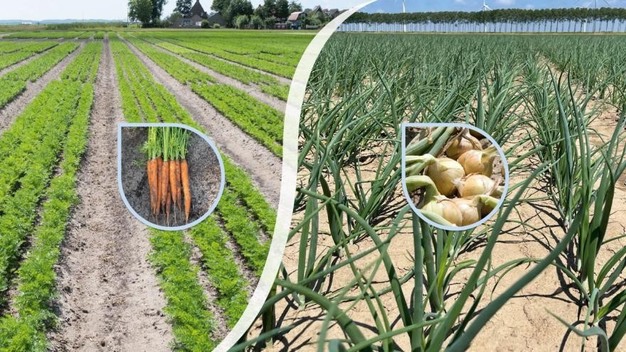
Along with coating, priming is another seed enhancement method. Primed seed germinates faster and is less sensitive to stressors such as drought and other extreme weather conditions. In this area of seed technology, too, innovation continues. In 2017, Bejo introduced B-Mox®, a unique technology for carrots and parsley root. "Two years ago, we introduced this technology for onions," says Van der Heijden. "And we will continue our research because in the long term we also see potential in other crops".
Clean, disease-free, germinable seed
Processing and treatment give high-quality seed its final touch. "Quality really starts in the fields, with our specialist seed producers in the production areas," Van der Heijden says. "After that, processing and treatment ensure that growers can count on clean, disease-free, germinable seed."
For more information: Bejo
Bejo
Email: [email protected]
www.bejo.com