As part of the EU-funded EcoNutri project, researchers from the Laboratory of Agricultural Constructions and Environmental Control at the University of Thessaly are pioneering a cutting-edge approach to sustainable agriculture through cascade hydroponic systems, a novel, nature-based method designed to minimize nutrient losses and environmental impact while maximizing resource efficiency.
 © ECONUTRI
The EcoNutri project, comprising 24 European partners, aims to develop, optimize, and validate integrated solutions that address some of the most pressing agricultural challenges: reducing nitrate (NO3-N) and phosphorus (P) leaching, controlling nitrogen losses via ammonia volatilization, and mitigating greenhouse gas (GHG) emissions.
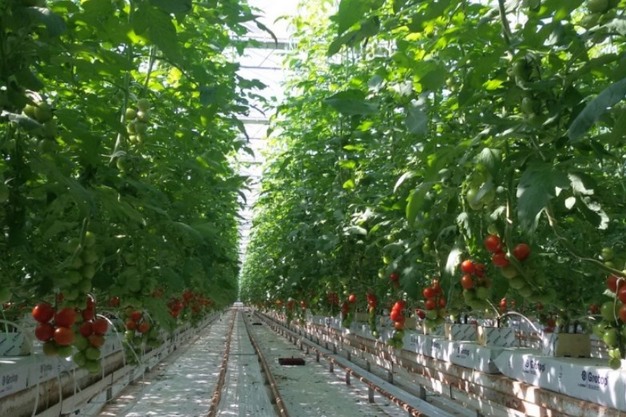
At the forefront of this effort, the University of Thessaly's research focuses on cascade hydroponics, a system that reuses the nutrient-rich drainage solution from a primary (donor) crop to feed secondary (receiver) and even tertiary crops capable of tolerating higher salinity levels. This cascading approach ensures that valuable nutrients and water are recycled multiple times, drastically lowering waste compared to traditional monoculture hydroponics.
"The cascade system marks a significant advancement toward circularity in controlled-environment agriculture," said Sofia Faliagka, representative of the University of Thessaly. Ioannis Naounoulis added, "By reusing nutrient solutions across multiple crop levels and employing real-time nitrate monitoring with adaptive fertigation using ion-selective electrodes, we are simultaneously protecting the environment and enhancing crop productivity."
Nikolaos Katsoulas emphasized that this innovative approach aligns seamlessly with the European Green Deal and the Farm to Fork Strategy, supporting the transition to climate-resilient, resource-efficient food systems. The trials have demonstrated a substantial reduction in discharged nutrient volumes, alongside improved fertilizer and water use efficiency.
For more information:
ECONUTRI
https://econutri-project.eu/el/