Researchers at Taiwan's Academia Sinica have developed plants capable of capturing up to 50 percent more carbon dioxide and producing up to three times more seeds than conventional ones. The discovery, published in Science, marks a milestone in modern agricultural biotechnology and could have a direct impact on farming nations such as Chile, where efficiency and sustainability have become urgent priorities.
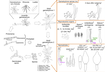
The team led by James Liao, president of Academia Sinica, designed a synthetic biochemical circuit that works alongside natural photosynthesis, allowing plants to fix carbon more efficiently.
The innovation was tested on the model species Arabidopsis thaliana. The genetically modified plants not only grew faster but also increased their biomass and oil production in both leaves and seeds.
Scientists have dubbed them "magic plants" because they provide the first evidence that it is possible to double the carbon-fixing systems within a single organism. The advance combines genetic engineering, biotechnology, and sustainability in one major leap forward.
Liao emphasized that human activity emits around 9.6 billion tons of carbon dioxide each year, compared to the 220 billion absorbed by natural ecosystems. "If we could increase the carbon fixation capacity of crops by just 10 percent, we could offset a significant share of global emissions," he said.
For Chile, a country facing prolonged droughts, water stress, and increasingly degraded soils, this type of innovation offers a tangible path toward a more resilient and competitive agriculture—one that produces more with less water and actively contributes to national climate goals.
Miguel Ángel Sánchez, executive director of ChileBio, highlighted the strategic value of such progress: "This discovery shows how biotechnology can complement natural photosynthesis to achieve higher yields with the same cultivated area. In a country like Chile, where we must produce more food with less water and fewer emissions, technologies like this are key to the future of the agricultural sector."
While commercial applications remain in early stages, researchers are already working to adapt the technology to high-value crops such as rice, corn, wheat, and tomatoes. The next step will be to validate its genetic stability and performance under real-world conditions.
Source: opia.fia.cl with information from Diario Frutícola.