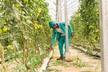
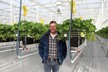
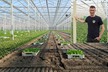
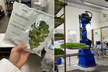
"Our greenhouse runs without its own heating central," says Simon Hansen, grower, propagator, and production manager at Norwegian Miljøgartneriet AS (a name that translates to "The Environmental Greenhouse"), painting a picture of their uniquely integrated facilities. "Instead, we rely entirely on the surplus heat and CO₂ from the dairy next door."
The dairy, a cheese and milk producer, sends its hot water through a shared rail system where it's cooled before returning to their operation. For Simon's team, this "waste" heat – along with carbon dioxide – is an essential input, drastically cutting fossil fuel reliance.
"We are a cooling tower for the dairy. Their waste is our treasure."
"It's a cooling liquid for the dairy, but a heating source for us," he explains. "It's a symbiotic relationship. They save on cooling costs, and we get a low-cost, sustainable energy source. It's a win-win."
This system gives Miljøgartneriet a unique edge in reducing its environmental footprint while maintaining cost-effective operations. "Compared to a gas boiler setup, our heating costs are significantly lower, and it aligns with our environmental profile."
 © Miljøgartneriet AS
Rethinking energy use in lighting and dehumidification
Miljøgartneriet has embraced advanced climate control technologies that further reduce energy needs, especially in the cold, dark Norwegian winters.
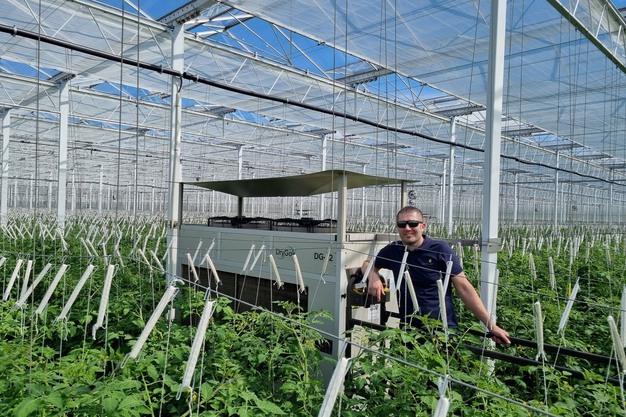
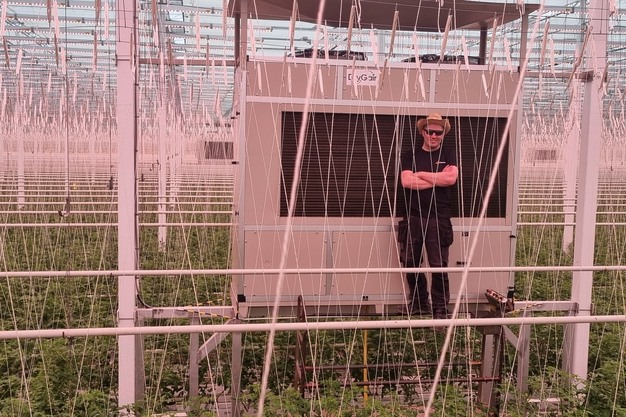
"When we switched half the greenhouse to full LED and added dehumidifiers from Drygair, we saw a huge impact," Simon shares. "Not just on energy consumption, but also on the climate management inside the greenhouse. We don't need those extreme heating spikes anymore."
The dehumidifiers help maintain optimal humidity levels without needing to raise temperatures drastically , important for energy efficiency and plant health in sub-zero conditions.
"If we relied only on heating pumps and didn't have dehumidifiers, we'd need massive buffer tanks and very hot water, which is neither efficient nor sustainable. It's much better for the plants and for our bottom line."
 © Miljøgartneriet AS
On-site propagation and what it means
Another defining feature at Miljøgartneriet is its in-house propagation facility, becoming increasingly scarce in Scandinavia, where Simon and his team raise their own young plants.
"It gives us flexibility and control," he says. "We can grow specialised plants which are larger, leafed differently, or even treated with beneficial insects like Macrolophus, without needing to justify the cost to a commercial propagator."
Having their own propagation also allows them to manage timing more effectively. "If we're not ready to plant because someone's off sick or disinfection is delayed, we can just stall the young plants by lowering light and temperature. That's impossible with outsourced propagation."
"You don't calculate ROI on in-house propagation; you just know the benefits as a grower."
However, it comes at a price. "It's a lot of extra work and I never sleep well in winter. Labour can become a bottleneck, and you need skilled workers for grafting and pinching, hands that are hard to come by."
"Labour is the bottleneck from top to bottom. Finding a CEO or a tomato picker, both are equally hard these days."
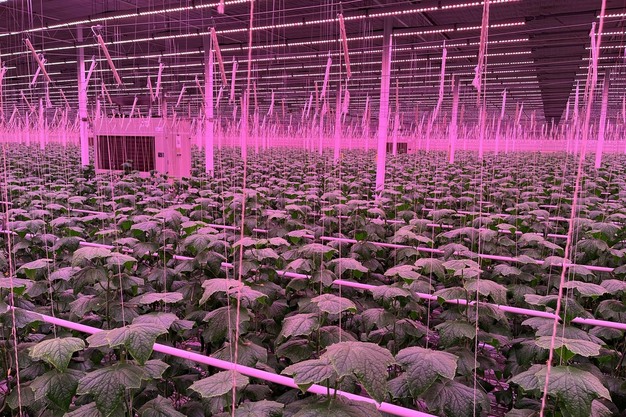
Still, the team is doubling down. "Next year, we're taking out the HPS and going full LED in propagation too. We're also investing in new screening solutions to match. We're not giving up as we see real value."
 © Miljøgartneriet AS
Biosecurity and the path to vaccination
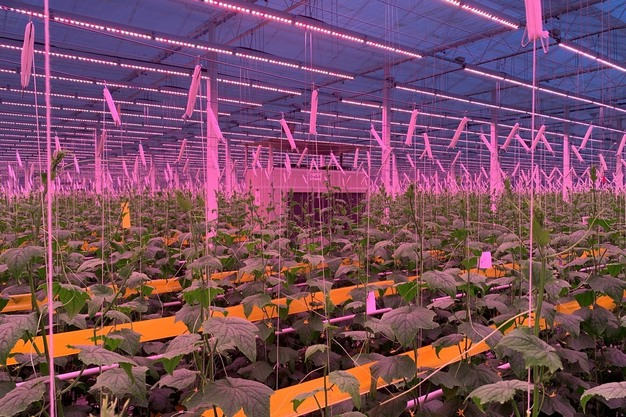
Several years ago, a virus scare changed everything. "We had to stop propagating for neighbours because we caught the Pepino mosaic virus," Simon recalls. "We were honest with our customers, told them the risks, and most decided to source their plants elsewhere."
Today, Miljøgartneriet is part of a national vaccination program using DCM's vaccine against the virus. "It doesn't eliminate the virus, but it weakens it. The plants all have it from the start, but it's milder and easier to control."
The collaboration with DCM has been more than transactional, according to Simon. "They really care. It's not just about selling us a product. They want to make it work for us."
 © Miljøgartneriet AS
A shift toward resistant varieties
Looking ahead, Simon is preparing for what many consider inevitable.
"In 2026, we're moving more of our production over to high-resistant tomato varieties," he says. "It's necessary. ToBRFV isn't in Norway yet, but it's coming. We need to be ready."
But growing resistant varieties isn't without trade-offs. "They're often too vegetative with a likely higher energy demand- or more susceptibility to powdery mildew," he explains. "And over here, powdery mildew is more of a risk than the virus right now."
He elaborates that you can't defend 20% higher energy use for plants that are too vegetative, unless the virus pressure is high, and in Norway, it's still low. But that won't last."
"Plus, breeders are getting better. The material is catching up with the challenges we face."
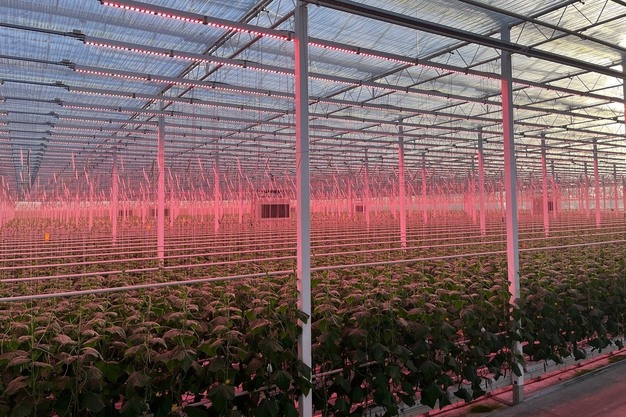
One of the most promising new varieties is Marisara from De Reuter Seeds. "It's highly resistant to ToBRFV, and we just started a real winter production with it," he says. "It's a new chapter for us."
The team is also working closely with De Ruiter Seeds to test new versions of their popular Strabini variety, including coded versions 9051 and 9053. "All respect to De Reuter, as they've really listened to grower feedback and improved their high-resistance lines."
 © Miljøgartneriet AS
A grower's passion: beyond the job
Despite the sophisticated tech and large-scale systems, Simon remains deeply rooted in the personal, tactile nature of growing.
"If I didn't grow in the winter, I'd go winter-depressed."
He jokes, but there's truth in it. "Sometimes I go to the greenhouse at five in the morning on a Sunday just to look at the plants. I can spend hours talking to people about them. I can't stay away."
He offers a clear example: stay flexible, stay curious, and never lose sight of the plants.

For more information:
Miljøgartneriet AS
Simon Hansen, Head Grower
[email protected]
+47 916 10 424
https://miljogartneriet.no
Næringsvegen 13
4365 Nærbø
Norway