To their own surprise, Rick Gitzels and Esmée Boerdijk recently found themselves on the front page of the newspaper. Their idea, which started as a bit of a wild plan — a pop-up restaurant inside a greenhouse — turned out to be a real hit. "This went a step further than just telling the story of our sector," Rick recalls, thinking back to how Served By Nature came to life.
Over six evenings in Wervershoof, around 300 guests enjoyed delicious food, but for Rick and Esmée, the most important part wasn't just what was on the plate. They wanted to shine a light on the stories behind the growers and farmers who make it all possible, and to tell those stories in an authentic way — without it turning into a self-promotional pitch.
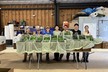
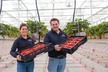
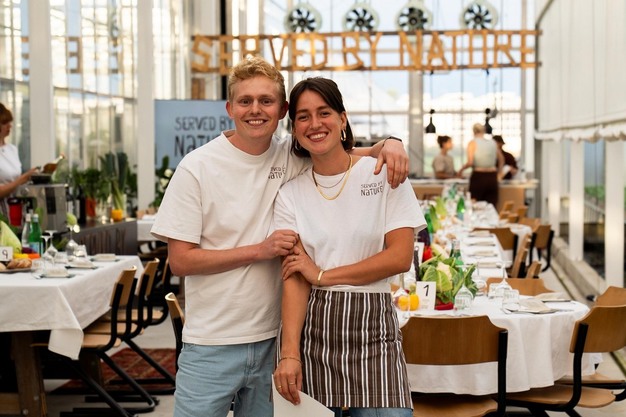 © Anouk Branding & DesignRick and Esmée prior to one of the dinners.
Story behind food is unknown
Over the past six months, Rick took part in the academy of the Slow Food Youth Network (SFYN) Netherlands. Through that program, he not only deepened his knowledge of greenhouse systems and open-field vegetable growing — the sectors his family business, Plantenkwekerij Gitzels, is active in — but also got to know many other parts of the food chain. And that's where the spark began to grow.
"What I took away from the academy," Rick explains, "is that the story behind how vegetables are grown often remains invisible. As a consumer, I don't even think about it for a second. Buying vegetables at the supermarket is so easy. Sometimes you'll see a smiling farmer on the packaging, and producers are slowly becoming more visible, but it's still nowhere near enough."
Not just 'a simple bite in the greenhouse'
Rick decided to act on that realization, together with his girlfriend Esmée. She works at the no-waste food start-up Yespers and also runs her own graphic design studio. They both love storytelling, and earlier this year Rick officially joined the family business as a grower, giving him a new perspective on food production.
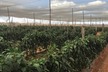
One day, while in the greenhouse in Wervershoof, Rick stumbled upon an old kitchen setup, some tables, and a few chairs. To him, it looked like the perfect foundation for a restaurant. "At first, the idea was simply to let people enjoy a nice meal in the greenhouse," he says, "but we soon realized it had to be about more than that. Once you've got people sitting in your greenhouse, giving you their time and attention, you should use that opportunity to tell a meaningful story."
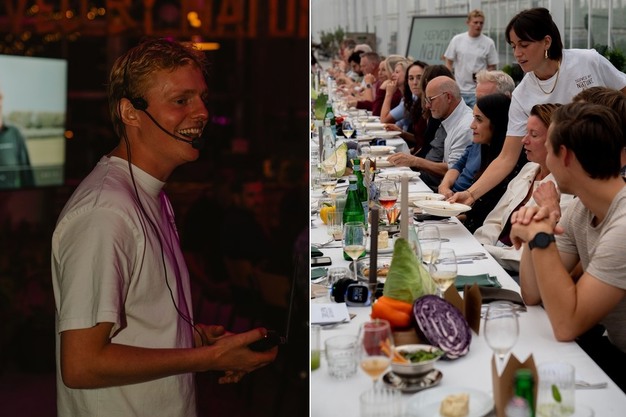 © Anouk Branding & Design
Collecting stories
With no background in hospitality whatsoever, Rick and Esmée dove headfirst into gathering everything they needed to make their pop-up dream come to life. That so-called "restaurant inventory" in the greenhouse turned out to be less complete than they'd hoped, so they began collecting all the essentials — and, of course, finding people to help. Soon, a team of chefs, sommeliers, and creative minds came together to join the adventure.
Rick and Esmée also set out into the fields themselves, looking for the real stories behind the food. Their efforts led to four short documentaries, which were shown to guests during the dinner evenings. "At first, we thought we could just record a few short videos in an hour or so," Rick laughs. "But we quickly realized that when you show genuine interest, farmers and growers are more than happy to share their stories. The idea that the agricultural world is closed off is really a misconception."
Real stories
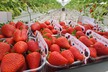
As they dug deeper, Rick and Esmée ended up visiting a grower who was struggling with wild animals damaging his crops. That visit led them to a local hunter, and both stories became part of the project. One of the dinner courses even revolved around the question: Who does the harvest really belong to? "Is it ours, or the goose's? Do we want to save our vegetables, or do we not want to shoot animals?" Rick explains.
He believes the project's success lies in the authenticity of those stories. They were told in the local West Frisian dialect, straight from the field, giving guests a taste of real life in horticulture.
But weren't they worried the evenings might spiral into heated debates? "Not at all," Rick says. "People came to the greenhouse with an open mind. They didn't really know what to expect — just that they were in for a full evening of stories about the food system." By presenting those stories in a sincere, documentary-style way, they actually encouraged thoughtful listening rather than confrontation. "People really paid attention and were free to form their own opinions afterward. Our goal was never to create a pro-horticulture fan club."
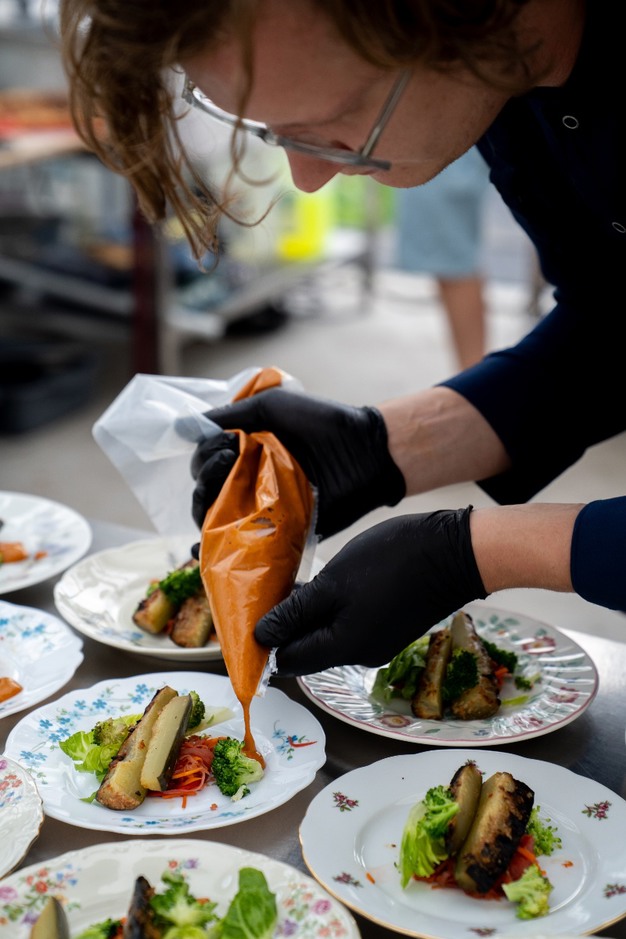 © Anouk Branding & Design
Script and new ideas
The response was overwhelming from the start. As soon as Rick and Esmée announced the pop-up greenhouse dinners on Instagram, messages started pouring in. When seed-breeding company Enza Zaden shared the post on its internal network, things really took off. "In the end, we hosted about a hundred Enza Zaden employees over two evenings," Rick recalls. "They enjoyed a four-course dinner prepared by chef Pepijn Schmeink from Eendracht Catering."
The September dinner series set the whole idea in motion. Now that everything's been packed away, what remains is a detailed playbook — and two heads full of new ideas. "For now, we're happy to catch our breath," Rick says with a smile. "We pulled this off alongside our regular work, and it was a pretty hectic month. But we're already brainstorming for next spring."
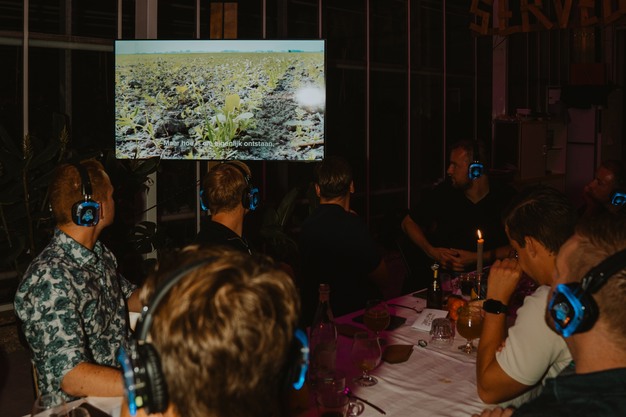 © Anouk Branding & Design
Traveling
Guests from the first dinner series are already asking when the next edition will be, Rick and Esmée say with a smile. "This time, our focus was on open-field vegetables. Next time, we could zoom in on another part of the food chain. We'd also love to collect stories on a broader scale, inspired by Resilient Food Stories. How does the global food system really work? What challenges do farmers face in other countries? And how is food intertwined with culture? What we find amazing is that so many people have now heard these stories, it really opens their eyes."
Later this year, Rick and Esmée plan to travel and gather new stories from growers and producers elsewhere. In the meantime, they're encouraging colleagues in horticulture to start similar creative projects, though Rick admits it's not always easy. "I have the freedom to be creative and do what I enjoy. I live in the city and don't have to run the company on my own. We also chose to hold the dinners in September, when things are a bit quieter at our nursery."
He realizes not everyone is in the same position. Still, he believes there are many ways for people to contribute to telling the story of horticulture. It's a topic that's becoming increasingly important, especially when the sector faces criticism. "The key is to build bridges," Rick advises fellow growers, "especially with people outside your own bubble." He says the Slow Food Youth Network helped him make those connections, and for anyone who doesn't yet have such a network, his door is open. "Anyone can always send me a message," he says. "And in 2026, we're also open to new ideas from growers and companies who'd like to organize dinners of their own."
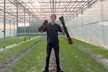
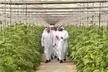
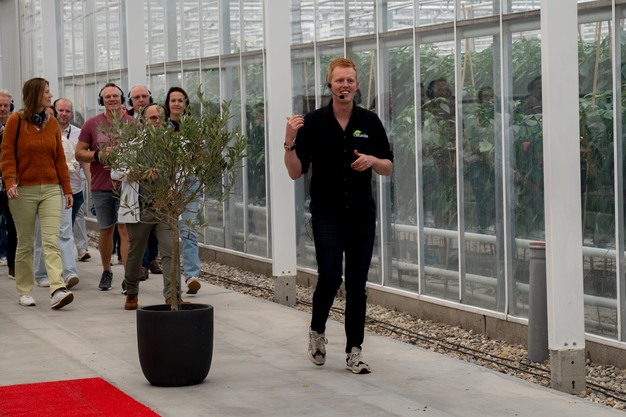 © Anouk Branding & DesignTour through the greenhouse by Rick's brother Mike
Photos: Anouk Branding & Design
For more information:
Served By Nature
[email protected]
https://servedbynature.carrd.co/