The ultimate goal in lettuce cultivation is high yield of fresh, disease-free lettuce with desirable color, shape, and crunch. To achieve this result, the grower has to take into account multiple aspects. One could compare it to a complex puzzle that has to be solved.
In this article, Cultivators will focus on two crucial parts: the variety choice and the chosen plant density.
Variety puzzle
Often, growers will hear about companies that started the construction process and are building their facility, but when asked "what are you going to grow?", the answer is insufficient; leafy greens or lettuce is too vague of an answer. Knowing your lettuce type is so important, as your facility design and system choice should go hand in hand with your production.
Once the growing facility is set up, the next big question is, "Which variety should I grow?". It sounds straightforward, but the reality is more nuanced; there are many aspects to consider.
 © Cultivators
Choosing a suitable variety
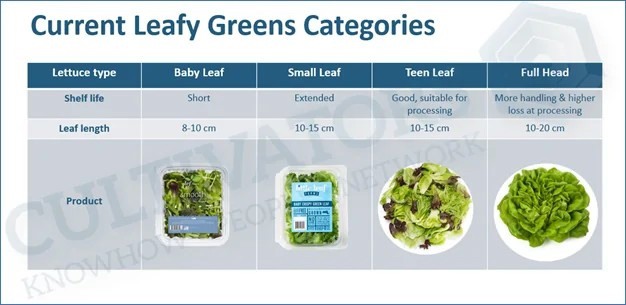
Firstly, a grower should want to grow something they can sell. Market demand should guide growers' choices, including whether the lettuce will be sold as full heads, processed products, or tender teen leaves. "Where do I sell to? Who is my buyer? What are their demands?" These are the questions each company has to have the answer to before deciding on what they are going to grow at their facility.
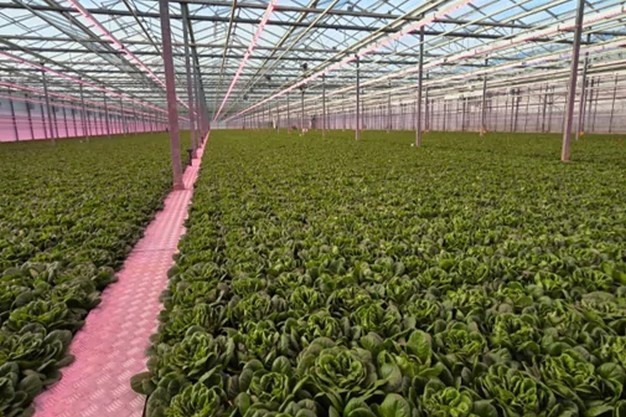
Next, for a new facility, assuming a variety choice was taken into account during the design phase, growers should have all the needed conditions and tools to cultivate high-quality production of their chosen variety. Nevertheless, what if you grow in an existing greenhouse? In this case, the grower has to think backwards: 'What varieties can I grow with the setup I have?' Meaning, it will be needed to review whether the chosen/desired varieties are compatible with their facility type. For example, if the market demands red leaf lettuce, keep in mind that not all red varieties thrive indoors. Without specialized low-iron glass, a greenhouse roof may block UV light, resulting in less vibrant red coloring and, therefore, not the high-quality production one wants.
 © Cultivators
Of course, diversity in our growing portfolio is valuable. However, even within a facility where climate can be steered, maintaining too many varieties can be very tricky for growers. Then, many other critical cultivation aspects need to be considered, such as pest and disease resistance, tipburn sensitivity, crop cycle, potential yield, and last but not least, seed cost.
Plant density: Striking the right balance
Another key factor in the lettuce puzzle is plant spacing, and to make it more difficult, it goes hand in hand with the chosen varieties. Do more plants grown within the same area equally mean a higher yield and sufficient quality? In fact, growers might face many risks with an overcrowding plant density. Therefore, choosing the right density per growing stage is not only beneficial but, in fact, crucial.
When plants are put too close together, they will start to stretch toward the light, producing misshapen, eventually unsellable heads. Moreover, a high plant density can decrease the size of individual plants, impair air circulation, and raise the risk of diseases caused by bacteria or fungi. Additionally, in the conditions that encourage overall plant development (i.e., high light, high CO₂), low transpiration rate (poor air circulation, high humidity) due to high density is known to increase the risk of tipburn. The next risk would be leaf discoloration when plants are too close together.
Lastly, manual harvesting would be challenging and might easily damage the lettuce head. Also, often a head of lettuce grown in too dense an environment will have to be stripped of more leaves than usual due to yellowing/wilted leaves at the base of the head, which will result in a smaller head weight than originally planned. Moreover, the post-harvest efforts to sort and regulate the crop quality would increase the overall expense of production per head, which would have an impact on the initially calculated business plan and, therefore, the profit.
Decisions on plant spacing
Finding the optimal plant density (per stage) requires knowledge about the variety and its growth habit, end products, growing environment, and last but not least, facility setup. In open field cultivation, plant spacing is determined at a very early stage. After the lettuce is planted in the soil, there is no turning back during the planting season. While for the deep float technique (DFT), plant spacing can be changed 2-3 times every time the plants are transplanted to a new float, which has a designated space. On the other hand, a gutter system offers the highest flexibility. Plant spacing can be done every few days, depending on the growers' decision.
Plant spacing can be considered the art and science of optimizing space to get the highest yield with the best quality. Unfortunately, existing studies on plant density are often outdated or specific to certain varieties, limiting their real-world applicability. This leads to a reality where not many people or companies have a deep and thorough understanding of how to optimize these aspects.
For more information:
Cultivators
Email: [email protected]
cultivators.nl/