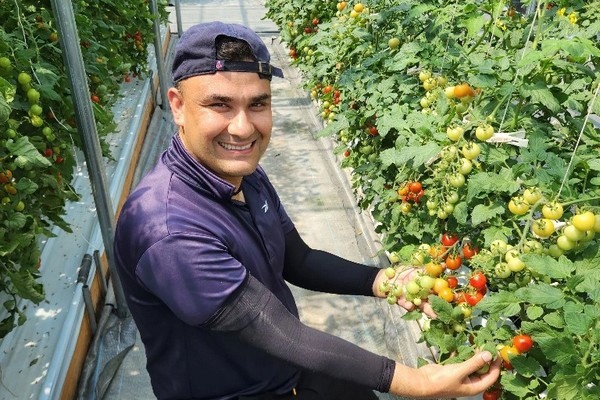
At the Kagawaken Nogyo Shikenjyo Research Institute in Japan, Dr. Sanjaya Khanal is focusing on developing practical and sustainable methods for greenhouse tomato production. His work centers on improving the cultivation of mini tomato varieties while addressing key industry challenges such as labor intensity, climate impact, and market trends.
He currently works with several Japanese mini tomato varieties, including Kayaroru Moon (カヤロルムーン), TY Miwaku (TYみわく), and Chika (千果). His selection criteria emphasize high sweetness levels (Total Soluble Solids of 9), low acidity, uniform fruit shape, and strong resistance to common diseases.
"For me, tomatoes should not only taste great but also be easy to cultivate," he notes. These characteristics aim to balance consumer preferences with ease of production for growers.
 © Dr Sanjaya Khanal
Market trends in Japan
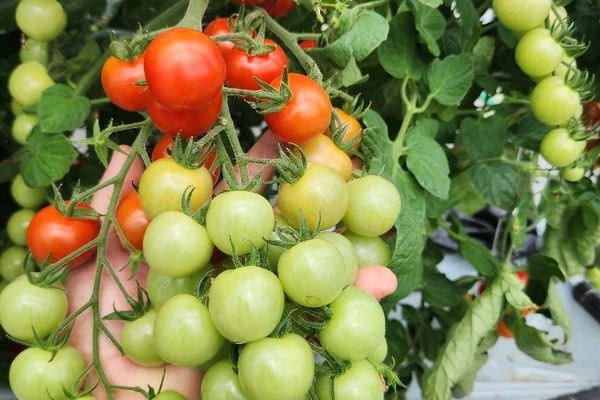
According to Dr. Khanal, there is a noticeable shift in the Japanese market towards mini and cocktail tomatoes. These are popular for their convenience, sweetness, and suitability for salads and snacking. Additionally, there is increasing interest in high-Brix premium tomatoes.
On the production side, he observes a trend toward hydroponic systems and sustainable cultivation practices. This shift is largely driven by consumer demand for pesticide-free and environmentally friendly produce.
 © Dr Sanjaya Khanal
Cultivation style and techniques
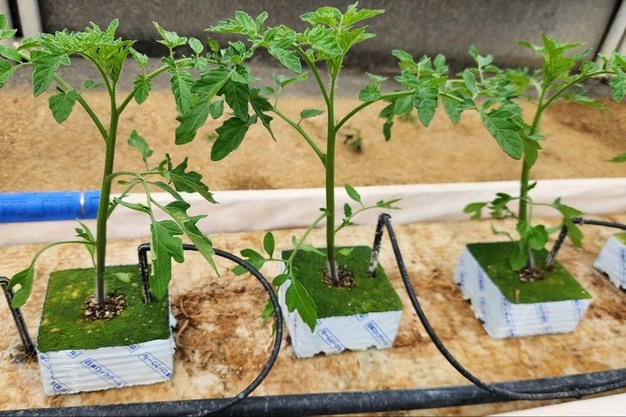
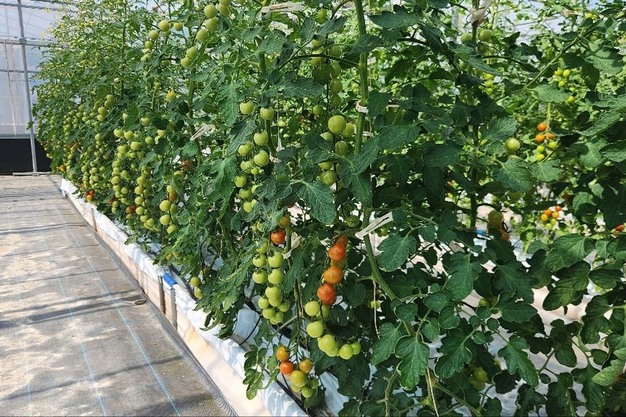
To address labor challenges and improve manageability, he has developed a unique cultivation method that differs from the more commonly used elongated plant systems. Instead, he uses shorter plants trained with soccer systems, which require less space and are easier to manage, particularly during Japan's hot summer months.
His setup involves rockwool-based hydroponics combined with a custom fertilizer blend, optimized to produce tomatoes with consistent sweetness and low acidity.
"The idea is always to think from a grower's perspective: How can cultivation be simplified?" he says.
 © Dr Sanjaya Khanal
Climate and greenhouse management
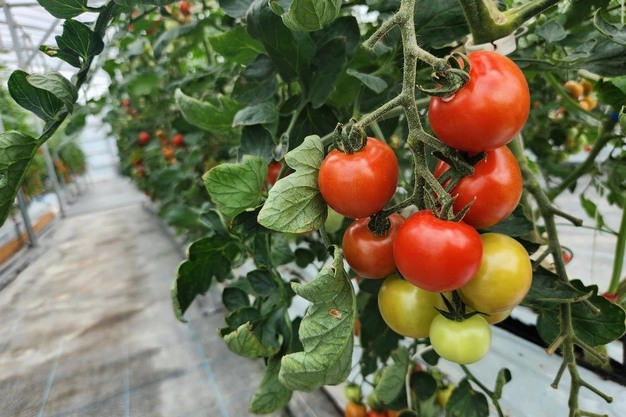
Dr. Khanal highlights high summer temperatures and humidity as key challenges, which can lead to fruit cracking and reduced quality. He emphasizes the importance of climate control in greenhouse environments, particularly to maintain consistent fruit set and sugar content.
One of the practices he implements is the use of white shading nets, which he reports as being more effective than black nets for scattering light and enhancing photosynthesis.
"White shades scatter light more effectively, which enhances photosynthesis and improves fruit quality," Dr. Khanal explains.
In addition, he employs ventilation and precise irrigation management to support both yield and fruit quality.
 © Dr Sanjaya Khanal
Focus on simplicity and sustainability
Dr. Khanal's research is directed toward creating low-cost, small-scale cultivation systems that can be managed without reliance on heavy machinery. His goal is to design systems that are accessible not only to professional growers but also to retired growers or individuals working on a smaller scale.
"Real sustainability starts when farming becomes easy, low-cost, and enjoyable," he shares.
While his primary market remains within Japan, Dr. Khanal believes the systems and practices he is developing have potential applications for growers globally, particularly in areas with similar climate conditions and production challenges.
 © Dr Sanjaya Khanal
Practical recommendations for growers
Dr. Khanal emphasizes several key practices that contribute to successful and sustainable tomato cultivation. He notes that precise irrigation management plays a crucial role in enhancing fruit quality; applying slight water stress at specific growth stages can effectively increase sweetness. In addition, the selection of appropriate rootstocks is important for promoting plant vigor and improving tolerance to environmental stress, both of which support more consistent yields.
Light management is another area of focus. Dr. Khanal recommends the use of white shading nets, which he finds more effective than darker alternatives for diffusing sunlight, thereby enhancing photosynthesis and contributing to overall fruit quality. Finally, he advocates for the simplification of cultivation systems, suggesting that streamlined, easy-to-manage approaches not only reduce labor demands but also contribute to long-term sustainability.
For more information:
Kagawaken Nogyo Shikenjyo Research Institute
Dr Sanjaya Khanal
Profile. sanjayarajkhanal