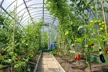
Circular economy principles are key to enhancing agricultural sustainability and efficiency. In this context, a tri-trophic circular system comprising three types of organisms (plants, insects and fish) that feed each other has been implemented. The nutritional loop involved: i) fertilizing cucumbers with water containing fish metabolic waste through a recirculating water system known as aquaponics; ii) feeding black soldier fly larvae plant pruning residues and fruit; and iii) feeding tilapia fish insect larvae after they have been transformed into insect meal and incorporated into aquafeed.
This study aimed to comprehensively evaluate cucumber production in this circular system by investigating key physiological, growth, and yield parameters, and assessing resource use efficiency. Researchers implemented in total three treatments, comparing conventional hydroponics (HP) as control, and two aquaponics variants: a) conventional coupled aquaponics (CAP), where water recirculates between crops and fish tanks, so crops receive only fish-derived nutrients; and b) decoupled aquaponics (DCAP), where fish-derived water is enriched with fertilizers to meet the crops' nutritional needs. DCAP showed similar performance to the HP control, and both outperformed the CAP in terms of plant physiological/functional traits, fruit yield, and biomass accumulation. CAP treatment reduced total aerial biomass accumulation by 57% compared with the HP control, while DCAP increased it by 14%. The enhanced performance exhibited by DCAP can be attributed to its efficient photosynthetic apparatus and optimal leaf nutrient status. Conversely, CAP resulted in a decline in nutrient levels in irrigation water relative to HP and DCAP, which led to significantly decreased leaf concentrations of potassium and phosphorus (2.5 and 1.5 times lower than HP, respectively, by the end of the experiment). This triggered a series of responses, including a down-regulation of the photosynthetic process and a reduced photochemical activity. DCAP exhibited increased fertilizer use efficiency by 76% over HP, achieving a similar fruit yield with reduced fertilizer inputs.
In conclusion, DCAP proved to be highly productive, overcoming the limitations observed in CAP, while offering increased environmental and economic advantages compared to HP. The circular tri-trophic system's performance demonstrated its efficacy in harnessing synergies to optimize resource use and ensure high productivity and self-sufficiency.
Levizou, E., Mourantian, A., Chatzinikolaou, M., Feka, M., Karapanagiotidis, I., Mente, E., Athanassiou, C., Kormas, K. A., & Katsoulas, N. (2025). A circular tri-trophic system incorporating plants, fish, and insects turns waste into a resource: Case study with the cultivation of cucumber. Frontiers in Plant Science, Section Crop and Product Physiology, 16. https://doi.org/10.3389/fpls.2025.1638443
Source: Frontiers In