Pressure on water resources and the need to produce food more sustainably as populations grow are driving the search for alternatives to conventional farming systems. According to the FAO, aquaponics is among the most promising, leveraging the natural synergy between fish and plants by transforming waste into organic fertiliser. The result is a closed, sustainable, agrochemical-free cycle.
 © Green in Blue
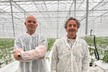
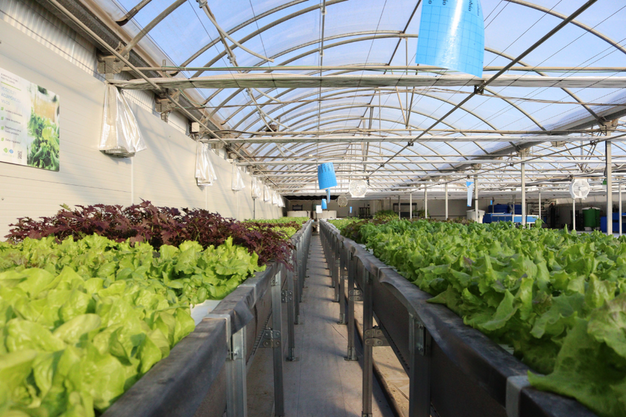
"Aquaponics is essentially a circular production method that grows fish and plants at the same time, generating its own organic fertiliser. Unlike hydroponics, the system biologically transforms fish waste into natural nutrients for crops, cutting water and fertiliser use by around 90% compared to conventional agriculture, while increasing productivity per square metre three- to fourfold," explains Loïc Le Gouëff, founder of Green in Blue.
 © Green in Blue
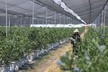
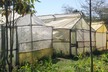
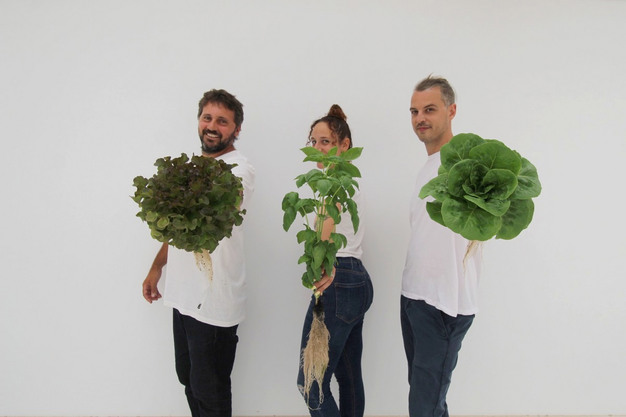
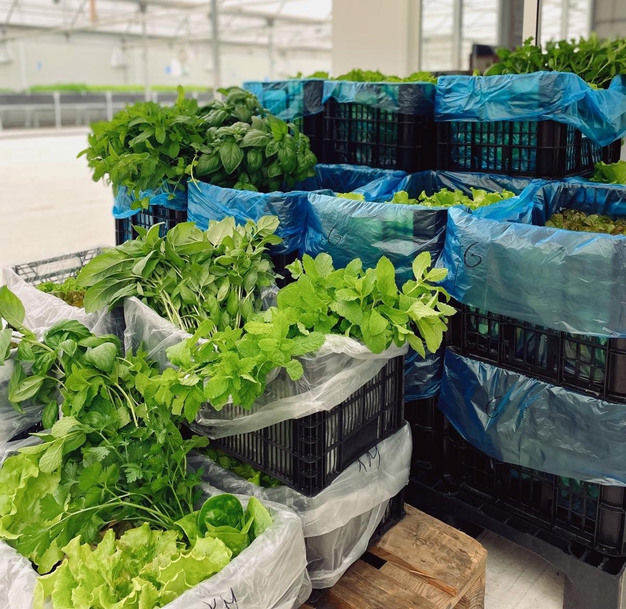
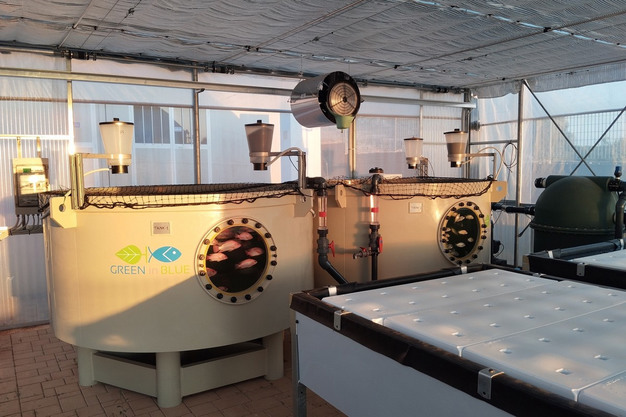
From its base in Vilassar de Mar, near Barcelona, the company operates along two lines: the development of modular aquaponic systems and the commercial production of crops in its own greenhouse, Granja Blava. "We chose to grow our own crops to prove that the system works in practice, and it does. Today, we supply around 700 plants a week to restaurants and shops in the Barcelona area, mainly different varieties of lettuce and aromatic herbs," says Le Gouëff.
 © Green in Blue
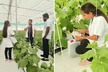
The company's technology is structured around cultivation modules called Blue Farm, designed to be scalable and adaptable. Each module produces between 35,000 and 40,000 plants per year. "With a single module, a farmer can manage production independently and generate a sufficient income from their activity; from there, more modules can be added as needed in turnkey installations," he explains.
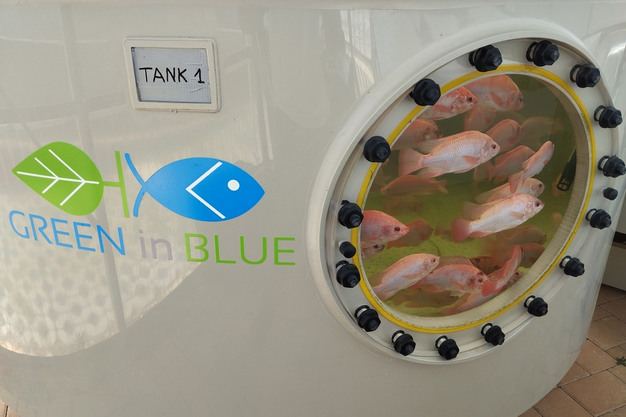
Fish are, of course, central to aquaponic systems. Tilapia, freshwater fish native to Africa and the Middle East, are most commonly used thanks to their fast growth, low production costs, and high adaptability. "In colder climates, such as in parts of Colombia or the Pyrenees, we've also worked with trout, which are better suited. That said, it's important to remember that the plants are the main focus of aquaponics, accounting for 80–90% of the system in terms of space and revenue," Le Gouëff notes.
Green in Blue wants to position aquaponics as a viable and replicable solution for food security and local production worldwide. "Our goal is for our greenhouse to serve as a flagship project that demonstrates aquaponics works in Spain, while also being a showcase for replicating the model in other regions. We're already scaling up production to meet growing demand," he says.
 © Green in Blue
The company has already contributed to projects in Italy, Mauritania, the United States, and Colombia, alongside its work in Spain, and is seeing increased interest in the Mediterranean and other regions under water stress. "If we want to feed more than 10 billion people by 2050, we can't keep doing more of the same. We need to change the way we produce, and aquaponics is one of the possible answers. Our vision is for Green in Blue to be at the forefront of this transition," Le Gouëff concludes.
 © Green in Blue
 © Green in BlueFor more information:
Green in Blue
Cases de Camp, 10, 08340 Vilassar de Mar, Barcelona
Tel.: +34 606 859 968
[email protected]
https://greeninblue.es/