A team led by the Spanish National Research Council (CSIC) has developed a new compound that helps plants resist drought more effectively than their own natural hormones. According to CSIC, the discovery represents "a milestone in the fight against the effects of climate change in agriculture."
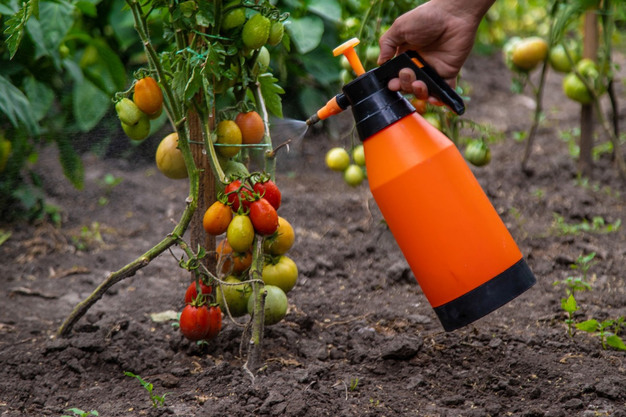
The molecule, called inverted cyanobactin (iCB), mimics abscisic acid (ABA), the plant hormone that regulates drought resistance. Applied as a foliar spray on tomato leaves, iCB allows plants to withstand severe drought without compromising photosynthesis recovery, helping them maintain productivity. The findings, published in Molecular Plant, have already been patented in collaboration with a Spanish company.
Most water loss in plants occurs through transpiration in the leaves. To cope with water deficits, plants close tiny pores on their leaves, known as stomata, a process regulated by ABA. The newly developed iCB activates this same drought-stress response, reducing water loss through direct foliar application.
In addition to lowering water consumption, iCB also protects the photosynthetic system and improves recovery after drought. This is linked to the activation of stress-related genes, including those that synthesize protective molecules such as proline and raffinose. "This molecule not only regulates transpiration but also activates the expression of many drought-adaptation genes," explains Pedro L. Rodríguez, CSIC researcher at the Institute for Plant Molecular and Cellular Biology (IBMCP, CSIC–UPV), who co-led the work.
 © CSIC
Trials in wheat and grapevine
Using molecular design techniques and X-ray structural analysis originally developed for drug discovery, the researchers engineered iCB to adapt to different ABA receptors found in a wide range of plants, including Arabidopsis thaliana and tomato. "Preliminary studies in wheat and grapevine suggest this molecule could also be active in other crops," Rodríguez notes.
Unlike ABA itself, iCB activates all three ABA receptor subfamilies, producing a broader response. This includes ABA-driven reactions in roots, such as hydrotropism (growth toward moisture) and root protection during drought. In germination trials, iCB also proved more potent than natural ABA, opening potential applications for preventing pre-harvest sprouting in cereal crops—a recurring problem in humid regions or areas with late rains.
"The results are spectacular," says Armando Albert, CSIC researcher at the Blas Cabrera Institute of Physical Chemistry (IQF-CSIC), who co-led the project. "Plants treated with a foliar spray containing iCB withstand severe drought and are able to recover photosynthesis after stress," he adds.
No genetic modification required
The same researchers previously developed another molecule, iSB09, designed to protect genetically modified plants against drought. In contrast, iCB does not require any genetic modification of treated plants, making it suitable for conventional crops and avoiding regulatory and social barriers associated with GMOs.
According to the team, the molecule not only boosts drought resistance but, in extreme cases, "would allow plants to survive until irrigation is restored." The patent for iCB is jointly held by Spanish biotech company GalChimia, CSIC, and the Polytechnic University of Valencia (UPV). The project also involves collaborations with researchers at the University of Santiago de Compostela and the University of Tartu (Estonia).
Reference:
Mar Bono, Cristian Mayordomo, Alberto Coego, Jonatan Illescas-Miranda, Maria Rivera-Moreno, Lourdes Infantes, Pablo López-Carracedo, Mayra Sanchez-Olvera, Constanza Martin-Vasquez, Gaston A. Pizzio, Javier Merino, Javier Forment, Ebe Merilo, Juan Carlos Estevez, Armando Albert, Pedro L. Rodriguez, Structural insights into ABA receptor agonists reveal critical features to optimize and design a broad-spectrum ABA signaling activator, Mol Plant. DOI: https://doi.org/10.1016/j.molp.2025.07.014