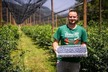
Dr. Sanjaya Khanal, a researcher originally focused on strawberry breeding and greenhouse management, is now pioneering greenhouse-grown figs in Japan. His work is gaining attention for both its technical innovation and commercial potential, particularly in addressing seasonal production gaps.
"I moved from strawberries to figs because of the summer production gap in Japan," he explains. "Strawberries are cultivated from October to late May, leaving few greenhouse crops in summer."
Figs, as it turns out, offer a solution. "I wanted a crop that is easy to grow, low in disease risk, requires minimal labor, and can generate good income," he says. Drawing on his background in strawberry breeding, he applied the same principles of optimizing substrate, fertigation, and environmental controls to fig cultivation, with impressive results.
 © Dr Sanjaya Khanal
Why grow figs in greenhouses?
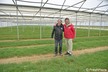
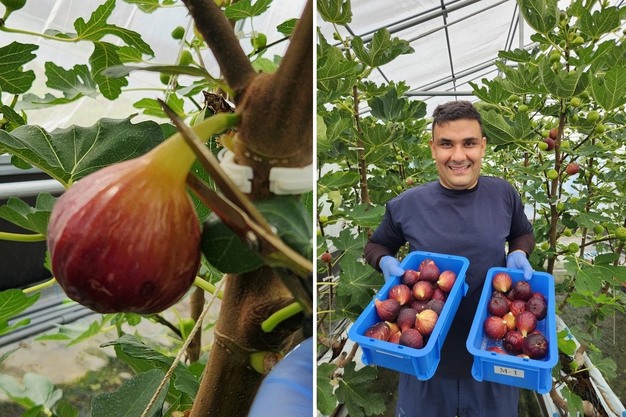
Dr Khanal elaborates that in greenhouses, he can precisely manage both water and nutrient application, improving efficiency and crop performance when it comes to figs. To reduce pest pressure, he uses a fine 0.4 mm insect-proof net, which effectively blocks even the smallest pests without compromising airflow.
Perhaps most importantly, the move indoors has nearly eliminated root diseases, which is a common issue in open-field fig cultivation. And unlike traditional systems where growers wait up to three years for a tree to fruit, Dr. Khanal's method delivers harvestable figs just 70 days after planting. "Overall, greenhouse figs under my system are higher-yielding, cleaner, and more profitable than open-field production," he notes.
Managing figs in hot, humid conditions
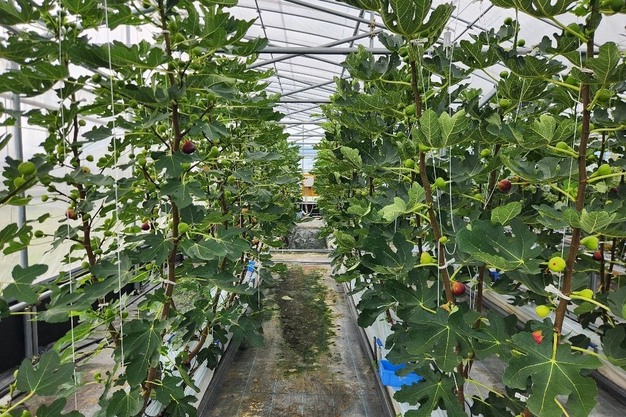
Operating in uncooled summer greenhouses in Japan means dealing with high heat and humidity. While temperature and humidity are not actively controlled, Dr. Khanal carefully manages other critical variables to ensure healthy growth and fruit quality. Frequent irrigation helps to reduce heat stress and maintain fruit development, while nutrient solutions are adjusted throughout the growth cycle to promote both strong vegetative growth and high sugar accumulation in the fruit.
He also pays close attention to light management, adjusting shading and plant positioning to balance photosynthesis and avoid leaf burn. These practices enable the plants to thrive even under intense summer conditions, yielding large, sweet, and visually appealing fruit.
 © Dr Sanjaya Khanal
Solving practical challenges organically
To mitigate heat stress, he focuses on maintaining osmotic balance through irrigation and fertilization. Root health is preserved by using well-drained substrates such as rockwool and perlite, which prevent waterlogging and promote oxygenation.
Managing tree size is also essential, especially in container systems. Through pruning and container selection, he keeps plants compact and productive. And when it comes to disease and pest prevention, he relies on good airflow, physical barriers, and strict sanitation protocols, eliminating the need for chemical pesticides entirely. "My system is pesticide-free and fully organic," he proudly affirms.
Pollination without pollinators
Pollination is a major hurdle for fig production, particularly in regions where fig wasps are absent or where heat stress affects pollinator activity. Dr. Khanal bypasses the problem altogether by selecting parthenocarpic, self-fertilising fig varieties. These cultivars do not require pollination from insects, eliminating associated costs and risks. "This makes the system simple, low-cost, and accessible to any grower," he adds.
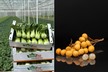
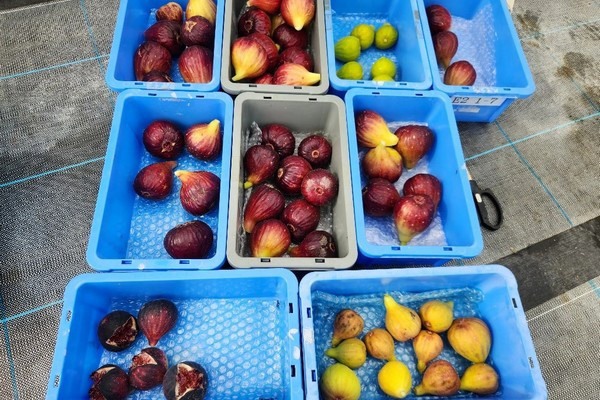
One variety that consistently performs well in Dr. Khanal's trials is Dauphine (also spelled Dophine). Known for its large fruit size and impressive sweetness, with total soluble solids (TSS) regularly exceeding 19 °Brix, it also offers a compact growth habit ideal for container culture. The variety fruits early, grows vigorously, and holds up well post-harvest, making it a strong candidate for commercial greenhouse production.
In parallel, Dr. Khanal is actively breeding new selections aimed at improving traits such as sugar content, yield, color, compactness, and heat tolerance, all with the summer greenhouse environment in mind.
 © Dr Sanjaya Khanal
Fruit quality exceeding field standards
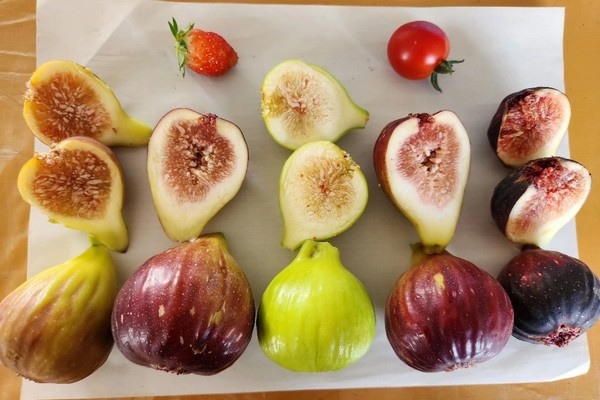
According to Dr. Khanal, the figs produced in his greenhouses consistently outperform their open-field counterparts. The fruits are sweeter and contain higher levels of sugar thanks to precise nutrient management and consistent irrigation. They also tend to be larger and more uniform in size, making them more attractive to consumers and easier to pack.
Because the plants grow in a protected, pest-free environment, the fruit is visibly cleaner and virtually free of insect damage. Moreover, the healthy, disease-free condition at harvest extends shelf life, which is a critical factor for both domestic and export markets. He adds that under his management, total yields are approximately double what is typically achieved in field production.
Fertigation strategies for high temperatures
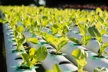
Managing water and nutrients effectively is central to Dr. Khanal's approach, especially under intense summer heat. His preferred substrates, including rockwool and perlite, provide excellent drainage and root oxygenation. Fertigation is delivered frequently in small volumes to avoid stress, and nutrient composition is carefully adjusted: nitrogen is emphasized during early vegetative growth, while potassium and calcium take precedence during fruiting to enhance sweetness and firmness.
Moisture levels are monitored closely, either with sensors or manual inspection, to avoid both overwatering and drought stress. "Water and nutrient management is critical under high summer temperatures to maintain growth and quality," he emphasizes.
 © Dr Sanjaya Khanal
A profitable summer crop with year-round potential
Although Dr. Khanal's system could theoretically support year-round fig production, his current focus is on the summer season. "Market timing is important as profitability depends on supplying premium fruit when demand is high," he says. By offering figs during a period when other greenhouse crops are less common, growers can target a premium niche with limited competition.
Innovation in every layer
In addition to breeding improved fig cultivars for greenhouse conditions, he's exploring labor-saving techniques for pruning and harvesting, particularly for container-grown and espaliered systems. He's also investigating the role of the root microbiome in improving nutrient uptake and stress tolerance, with the goal of supporting fully organic production systems.
Dr. Khanal extends an open invitation: "I want to appeal to fruit growers around the world to explore and adopt my fig cultivation methods," he says. "The system is simple, easy to implement, and provides high income in a short period."
"Traditional fig cultivation typically requires increasing space as the years progress, but my system eliminates this need. Within the same space and under the same conditions, it allows us to achieve consistently high yields with exceptional fruit quality and flavor in greenhouse management."
He welcomes collaboration, joint research, and knowledge-sharing to further enhance sustainable fruit production worldwide. For growers looking to fill seasonal gaps and diversify their greenhouse offerings, figs might just be the next big opportunity.
For more information:
Dr Sanjaya Khanal
Profile. sanjayarajkhanal