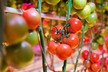
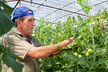
Rijk Zwaan's trial with the pepper rootstock Bedrock RZ is nearing the end of the season, and the final balance sheet is almost ready. The results already look promising. On average, yields are about 2 kilograms higher per square meter, fruit numbers increase, and average fruit weight drops slightly.
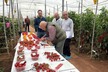
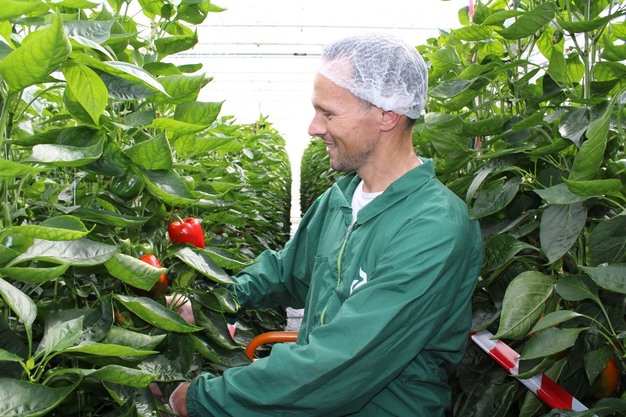
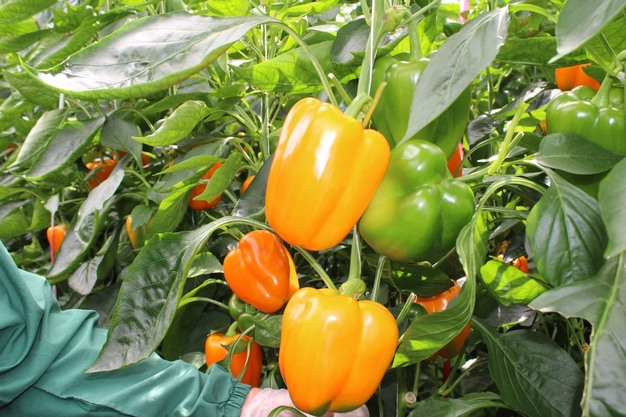
The trial can be seen at Rijk Zwaan's Trial Centre High Tech in De Lier, Netherlands, where different combinations with Bedrock are on display. For this test, the peppers were grafted onto Bedrock using varieties such as Silverstone RZ F1 (orange), Alzamora RZ F1 (red), and Camier RZ F1 (yellow). Each week, fruits are counted, weighed, and measured, and the results are carefully compared.
 © Rijk Zwaan
According to crop coordinator Erwin Weerheim: "If you're looking to give the plant extra vigor, steer it towards a slightly more generative habit, and you don't mind a lower average fruit weight of around 5–10 grams, then this seems like a strong solution. So far, the grafted Silverstone is showing the best results."
Rijk Zwaan has been developing pepper rootstocks for more than 20 years. The work started with soil-grown crops, where the main focus was achieving a consistent fruit set and stronger roots. In recent years, however, the interest from substrate growers has grown, especially with today's frequent root problems in peppers.
Lazy teenager
In recent years, interest from substrate specialists has grown as well. With the increasing number of root-related problems in peppers, many growers are looking for more reliability and robust root systems.
Keeping roots healthy, however, takes a lot of attention. "During times of high energy prices, growers reduced heating from the very start and used lower minimum pipe temperatures," Erwin explains. "That means the plant was less active from the beginning and evaporated less."
The result is weaker root development. When spring arrives with stronger light and a drier outside climate, the plant isn't ready for the change. Erwin compares it to a lazy teenager: "These plants never learned to be active, to transpire, at a young age. They're not in 'work mode,' and when the time comes to perform, they simply don't feel like it."
 © Rijk Zwaan
Costs versus benefits
Whether or not grafting is worthwhile always comes down to weighing costs against benefits. Does it pay off? A propagator charges about €1 extra per grafted plant. That extra cost comes from the additional seed, some grafting losses, and a few more days in propagation. With an average density of 2.3 plants per square meter, the added cost quickly comes to about €2.30 per square meter. "In today's market conditions, that means you need about 2 kg more yield per square meter to break even," says Erwin. "And those results are showing up in the trial."
What's next
The first trials were done with red, yellow, and orange varieties, which makes sense since these are the largest market segments in the Netherlands. Already, 50 hectares of grafted peppers are being grown in the country this year.
Next year, the trial will also include a green variety, Bastianini RZ F1. Green peppers are notorious for their tricky setting rhythm, as the plants quickly become unbalanced due to early harvesting. With Bedrock as rootstock, Erwin expects the crop to remain calmer and more stable.
For more information and to schedule an appointment:
Erwin Weerheim
Rijk Zwaan
+31 6 83 57 72 93
[email protected]
www.rijkzwaan.nl