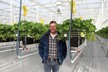
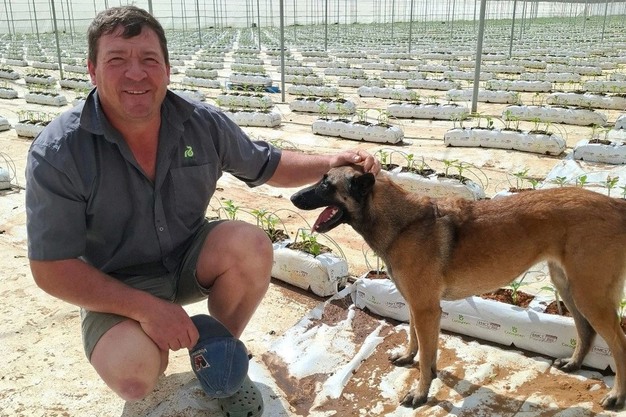
In Jeffreys Bay, South Africa, better known for its surfing than horticulture, Handrey du Plessis is building a name for high-quality pepper production. As the new planting season begins, he is once again investing in innovation, varietal trials, and key partnerships to ensure another successful cycle.
"We're excited to start the new season with the Massilia variety from Rijk Zwaan," he says. "It's a consistent, high-quality pepper, and we're optimistic about what's ahead."
 © Nocton Acht Agri
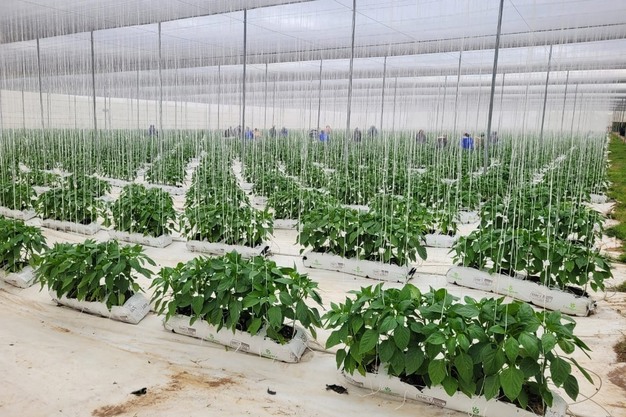
The Massilia red blocky pepper, known for its uniform shape, firmness, and long shelf life, aligns well with the focus on market-driven production. "We've had success with Rijk Zwaan peppers before. We've been able to sell them consistently at good prices."
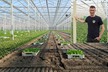
This year, the farm continues its approach of trialing four new pepper varieties: three red and one yellow pepper, with 100 plants per variety. "It's very important to us. We trial every year, and those results help us decide what to scale."
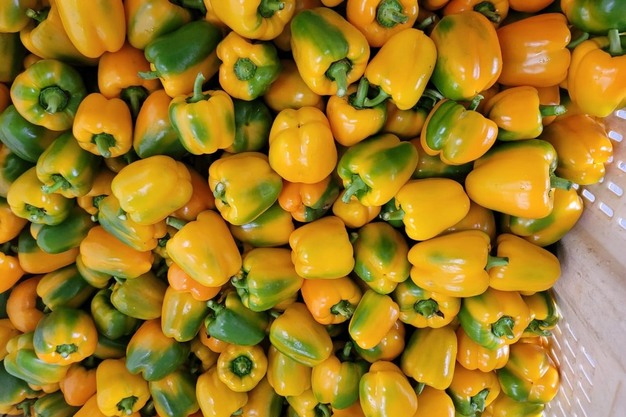
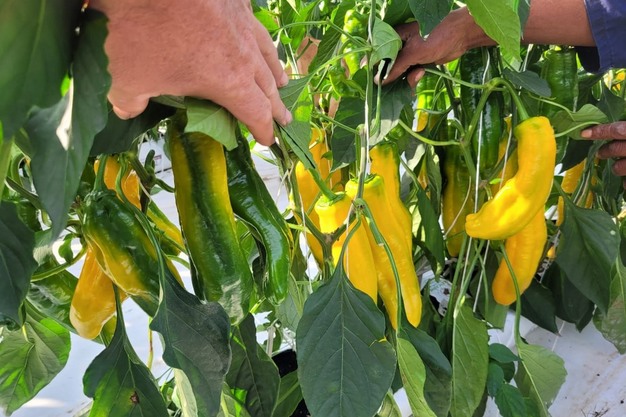
In addition to Massilia, the commercial varieties this season also include Sensei and Masami (both red blocky peppers from Syngenta), as well as the yellow varieties Kaamos (Syngenta) and Reggaeton (Rijk Zwaan). "We're always comparing performance: fruit quality, yield, plant health, and market feedback all matter," explains Handrey.
 © Nocton Acht Agri
Quality starts at the seedling stage
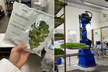
The season wouldn't begin without the support of local partners. "A special thanks goes to Mooreland Seedlings," he mentions. "Their healthy, well-prepared seedlings set the foundation for the entire season."
That relationship is more than transactional; it's neighborly. "They're literally next door. I can walk there weekly to monitor my own seedlings, and can come and go as I please. It's an important relationship, as this is where the season really begins, so we are very grateful for that."
 © Nocton Acht Agri
Growing under nets: Balancing risks and realities
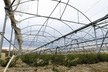
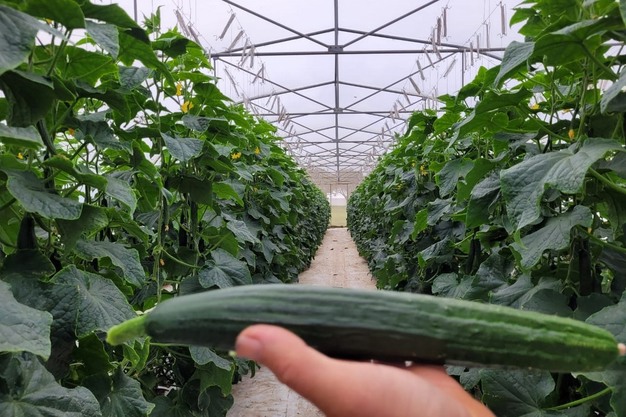
Unlike controlled glasshouse environments, the peppers are grown under plastic tunnels and nets, which is a common practice in the region. "That setup makes pest pressure a real risk," he notes. "We don't have the same level of climate control, so we have to stay ahead with monitoring and response."
To optimize the growing system, he uses coco peat grow bags supplied by Glen Cairns, which help improve water retention and root development. "Their specific grow media gives us uniformity and better control over irrigation, especially in our climate," he adds.
Support also comes from Omnia and Langplaas Organics, who assist with fertilizers and biostimulants, enhancing plant health and resilience throughout the season.
When it comes to Integrated Pest Management (IPM), BioBee plays a vital role by supplying all the necessary biological control species. "We rely on their expertise and consistent quality to keep our pest levels in check without overusing chemicals."
 © Nocton Acht Agri
Adapting to market demands
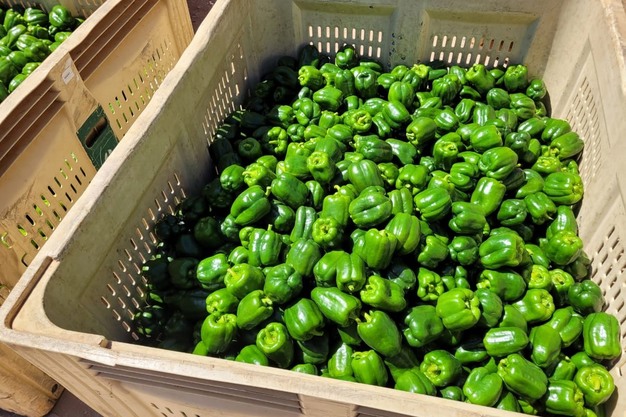
Production is tailored to serve both domestic and export markets. "Medium-sized fruit is usually preferred. Sometimes slightly smaller, depending on the retailer," he explains. Deliveries currently go to the full range of local supermarkets, including Woolworths and Checkers, via a nearby packhouse.
The Acht Farming packhouse located in Patensie, is a major packhouse operation in the region. Handrey has entered into a formal partnership with them, forming a new company: Nocton Acht Agri.
"This joint venture strengthens our position in the market and gives us even more control over quality and distribution," he explains.
Relationships also play a key role in market access. "We don't go through a lot of red tape. We've built good relationships with our customers, and we have technical advisors who help us stay aligned with what the market needs."
 © Nocton Acht Agri
Balancing labor and technology
Like many South African growers, he is weighing the benefits of automation against the socio-economic realities of labor in agriculture. "Technology can help with efficiency, but we still need people to work with it. There has to be a balance," he reflects.
The labour force comes from a neighbouring town, and a trusted team member ensures seasonal employment is fairly distributed across local households.
At the heart of day-to-day operations are two people Handrey credits as essential to the farm's success: Christelle Barnard and Charmaine Gqamane.
"They are my right hands, and I simply couldn't operate without them," he says. "Their commitment, insight, and work ethic are invaluable, and I'm incredibly thankful for everything they do."
While some growers look to mechanize as much as possible, Handrey emphasizes that labor still plays a crucial role, especially in regions where employment is essential for local communities.
 © Nocton Acht Agri
Sanitation and structure: The foundation of quality
With food safety and traceability becoming increasingly important, he stresses the need for strong sanitation practices. "It's very important. We need to make sure everything is in order year-round. It's a constant challenge, but it's essential."
During their crop change, which takes place within two weeks, all sanitation protocols are strictly followed when planting new seedlings and removing the older ones. Being slightly exposed to the outside environment makes these practices even more crucial.
For pest control, the team balances between spraying programs from Laeveld Agrochem and Langeveld Organics, and biological control supplied by BioBee, depending on severity and crop stage.
Although weather and infrastructure remain limiting factors, he sees them as variables to optimize, not obstacles. "If you don't need the best and most expensive structures, and the weather works in your favour, then you have to capitalize on that."
With a new crop of Massilia peppers in the ground, ongoing variety trials, and a strengthened network of partners and suppliers, Nocton Acht Agri is set for another productive and promising season in South Africa's Eastern Cape.
For more information:
Nocton Acht Agri
Handrey du Plessis
+27 82 645 4885
[email protected]