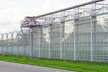
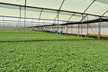
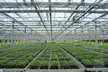
Vertical farms that rely on stacked systems and LED lighting are especially prone to tipburn in leafy greens. "Tipburn is known to occur when lettuces experience undue abiotic stress such as long photoperiods, high light sums, high light intensity, and conditions that limit transpiration, such as high relative air humidity and low water availability," explains Dr. Margit Olle, Chair of NPO Veggies Cultivation in Estonia.
Dr. Olle is the author of 16 scientific monographs, 15 of them in English, covering protected cultivation, sustainable substrates, and plant nutrition. She leads NPO Veggies Cultivation, a non-profit organisation based in Tartu that develops and commercialises solutions for greenhouse and indoor production. Her research career has included EU collaborations on legumes, waste valorization, and effective microorganisms, but in recent years she has focused on models that predict calcium uptake.
"Calcium deficiency is a common problem for growers," she says. "Many vegetables develop unique symptoms: black-heart in celery, tipburn in lettuce, tipburn in chervil, tipburn of Chinese cabbage, blossom end rot in tomato, and calcium deficiency in greenhouse cucumbers." According to Olle, calcium deficiency strikes unpredictably, and because there are no effective control measures, it presents a serious challenge.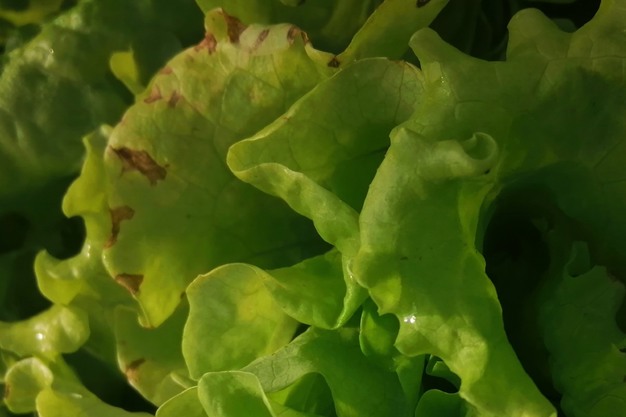 © Margit Olle | NPO Veggies Cultivation
Lettuce leaves showing tipburn, a common calcium deficiency disorder in vertical farms. Photo courtesy of Dr. Margit Olle / NPO Veggies Cultivation
How the models work
"To address this, I developed two mathematical models," says Olle. "The lighting model predicts how every light spectrum influences calcium uptake, while the temperature model gives growers regimes that are favourable for uptake. Every light spectrum has two assumptions, and the result of that is predictable."
Her data highlights the impact of filtering out far-red light. "Plants had significantly lower tipburn injury on leaves, and contained 26 percent more calcium," she explains. "The yield can increase up to 20 percent or more of production to cover the loss normally occurring due to calcium deficiency disorder."
Model outcomes
Olle points to several outcomes from using the models. "Tipburn is reduced or absent, pests and diseases are less frequent, and crops grown under our system maintain freshness longer," she says. "The storability of plants can increase up to 50 percent. If the normal storage period is ten days, the prolongation means that storage can be up to fifteen days." © Margit Olle | NPO Veggies Cultivation
Dr. Margit Olle
Commercialisation and ROI
The Indoor Plant Models are offered as an intellectual property rights package. "It is an IPR package, not a patent, because a patent opens it all," says Olle. "As the model is costly, and ROI is good, I am interested in selling the full package to an investor or company, and let them resell and license it further."
According to Olle, the models are suitable for all indoor facilities. "They are scalable and versatile, and suitable for vertical farms, greenhouse builders, and plant lamp manufacturers. They work across multiple crop types, but the focus has been on leafy vegetables. The model can also be adapted for tomatoes and is beneficial for all greenhouse crops."
For more information:
NPO Veggies Cultivation
Dr. Margit Olle
+372 558 5164
[email protected]
www.npoveggiescultivation.com