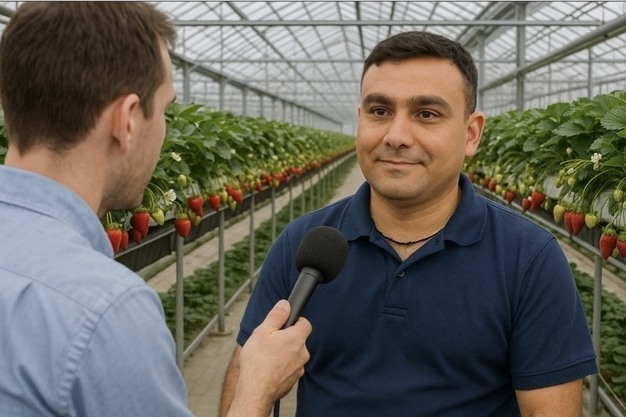
Focused on strawberry breeding, Dr. Sanjaya Khanal of the Kagawa Prefectural Agricultural Research Experimental Station in Kagawa, Japan, is combining the latest genetics with innovative cultivation techniques, addressing both local and global demands, balancing aesthetics, flavor, and sustainability.
His recent breakthroughs focus on traits critical to commercial growers. "In my recent work, I've focused on improving disease resistance, shelf life, and adaptability to varying climates," he explains. A standout achievement is the development of cultivars resistant to Botrytis cinerea, a pervasive strawberry pathogen. "This advancement can help commercial growers reduce losses and decrease the need for pesticides, making strawberry farming more sustainable and cost-effective." Additionally, his team has enhanced post-harvest longevity, a boon for global shipping and reducing food waste.
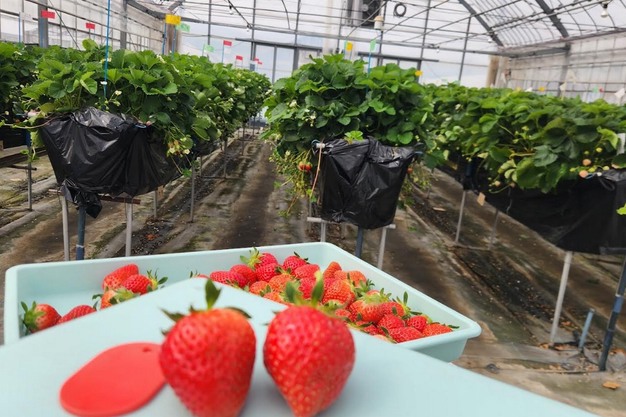
Beyond genetics, Dr. Khanal is exploring innovative cultivation systems. "I've also had the opportunity to work on cutting-edge projects like tower cultivation in controlled environments, which is allowing us to explore more space-efficient, high-yield growing systems that could revolutionize commercial production globally," he says. These systems are particularly suited for urban agriculture and regions with limited arable land.
 © Dr Sanjaya Khanal
Meeting diverse grower needs
Japanese strawberry growers prioritize fruit size, sweetness, and visual perfection, driven by consumer demand for premium-quality produce. His breeding programs cater to these preferences, particularly for controlled environments like greenhouses and tower systems.
He elaborates that in contrast, growers in regions like Europe and the Middle East focus on yield and disease resistance to cope with diverse climates. "My research aims to balance these factors, tailoring breeding programs to meet the unique demands of each region," Dr. Khanal says. His work ensures that cultivars perform well under varying conditions, from traditional fields to high-tech systems.
Targeting key traits
Dr. Khanal's breeding programs emphasize disease resistance, shelf life, and flavor. He integrates novel technologies to enhance these traits. "A significant portion of my research also addresses how cultivation techniques like tower systems and nano-bubble technology can enhance these traits," he notes. Nano-bubble irrigation, for instance, improves water uptake and nutrient absorption, leading to better fruit quality and extended shelf life. "We're seeing improvements in water uptake and nutrient absorption, which directly contribute to better fruit quality and shelf life," he adds.
Navigating genotype-by-environment interactions
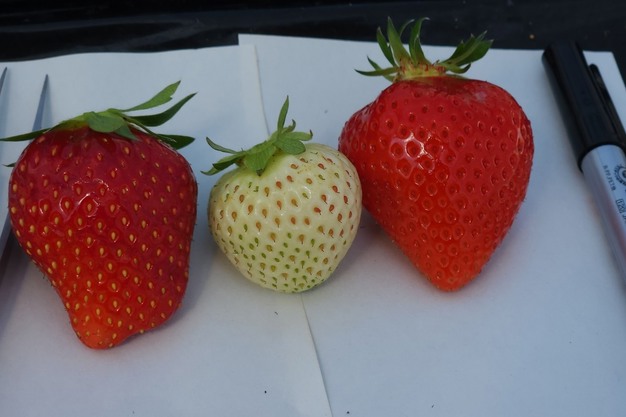
Controlled environments like greenhouses and tower systems introduce unique challenges. Dr. Khanal has observed significant genotype-by-environment (GxE) interactions affecting fruit quality. "Certain cultivars might perform well under natural sunlight but show reduced fruit quality or uneven ripening when grown under artificial lighting or in high-density tower cultivation," he explains. Technologies like nano-bubble irrigation can mitigate these issues by improving root health and plant vigor, enhancing disease resistance and fruit uniformity.
 © Dr Sanjaya Khanal
Adapting to high-tech systems
To develop cultivars suited for artificial lighting, I'm focusing on selecting genotypes that show strong resilience and productivity under specific light spectra, especially with LED-based systems," he says. Combining traditional breeding with technologies like nano-bubble cultivation, his work supports vertical farming and urban agriculture, ensuring strawberries thrive in year-round, controlled conditions.
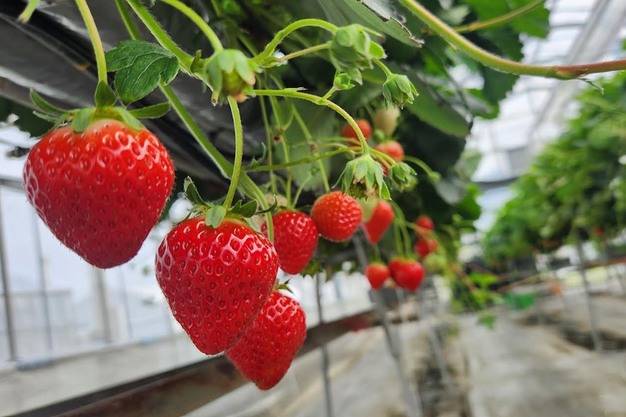
Cultivars behave differently under year-round greenhouse production compared to seasonal cycles. "We've observed that cultivars grown under year-round greenhouse conditions, including in tower cultivation systems, exhibit different runner production patterns and flowering behaviors compared to those grown in seasonal cycles," Dr. Khanal notes. Excessive runner production in continuous systems can reduce yields, while seasonal conditions promote synchronized flowering. Nano-bubble irrigation helps stabilize plant vigor and disease resistance, improving fruiting consistency.
 © Dr Sanjaya Khanal
Overcoming breeding challenges
Strawberry breeders face the challenge of creating cultivars that perform across diverse environments while balancing flavor, yield, and disease resistance. "One of the biggest challenges is creating cultivars that can perform consistently in a variety of growing environments, from traditional fields to high-tech systems like tower and hydroponic cultivation," Dr. Khanal says. "Advances in molecular breeding tools like CRISPR and marker-assisted selection are allowing us to more precisely select for these traits," he explains, accelerating the development of superior cultivars.
His research is yielding cultivars poised to enter the commercial market. These varieties boast disease resistance, extended shelf life, and enhanced flavor, ideal for long-distance shipping. "The integration of nano-bubble technology in the cultivation process is improving overall fruit quality, which is something I'm particularly excited about," he adds. These cultivars are in field trials and expected to reach growers soon.
 © Dr Sanjaya Khanal
Global collaborations
Dr. Khanal's work extends beyond Japan through collaborations with institutions like the Total Controlled Environment Agriculture (TCEA) in AliAin, Emirates, where he leads the strawberry cultivation, and researchers in Korea exploring nano-bubble irrigation. These partnerships integrate cutting-edge technologies, creating sustainable, high-yielding cultivars for global markets.
Molecular tools are central to Dr. Khanal's breeding efforts. "CRISPR, for example, allows us to make precise genetic edits to enhance traits like disease resistance or improve fruit quality," he explains. MAS accelerates the identification of desirable traits, streamlining the breeding process. Combined with technologies like nano-bubble irrigation, these tools enable precise tracking of plant responses, enhancing cultivar development.
Dr. Khanal encourages young scientists to embrace interdisciplinary approaches. "The future of fruit crop genetics will increasingly rely on tools like genomics, CRISPR, and precision agriculture technologies," he advises. "Working with other researchers, growers, and industry leaders will give you a broader perspective and help you make a real impact in the field."
For more information:
Dr Sanjaya Khanal
Profile. sanjayarajkhanal