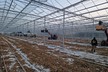
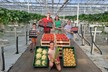
Norway is widely known for its advances in renewable energy and electric mobility, so when images of a floating greenhouse began circulating on social media in August 2025, many thought the country might be behind another green innovation. The concept, dubbed Ocean Bloom, was presented as a futuristic circular island able to produce food, fish, and clean energy, integrating aquaponics, solar panels, wind turbines, and desalination.
But according to Norway's Ministry of Climate and Environment, no such project exists. The viral images were generated with artificial intelligence, something made clear by tell-tale distortions like blurred faces and disproportionate details. The case highlights not only the spread of manipulated digital content, but also how it can fuel expectations around technologies that do not (yet) exist.
Still, the idea of a floating, self-sufficient greenhouse is more than science fiction. By using marine space, such structures could avoid deforestation and reduce pressure on land ecosystems. Aquaponics, a system that combines fish farming with plant cultivation in a closed water loop, could serve as the production model, recycling fish waste into plant nutrients while significantly reducing water use compared to conventional agriculture.
Equipping the structure with solar panels and wind turbines would provide renewable power, while desalination could turn seawater into freshwater for irrigation or even local use in times of drought.
In the face of climate change, floating greenhouses could represent an alternative for coastal regions losing arable land. They could also serve as experimental hubs for circular economy models and self-sufficient food and energy production. While Ocean Bloom was nothing more than a viral hoax, it captured attention because it touches on real concerns, and opportunities, for the future of food production.
The confusion generated by AI-generated content underscores the importance of verification, but also points to the potential for innovation. What today is just a digital fantasy could, in the near future, become part of the toolbox for food and energy security in an increasingly threatened world.
Source: noticiasambientales.com