"We have strengthened our leadership by developing varieties tailored to each reference area, working closely with growers and conducting ongoing monitoring that combines agronomic expertise with a genuine understanding of local land challenges," stated María José Berruezo, Pepper Crops Specialist at Semillas Fitó.
 © Semillas Fitó S.A.U.
Semillas Fitó has been working for years at its improvement station in the Campo de Cartagena, one of the most representative crop areas, to develop more efficient, resistant, and productive hybrids, especially in a context of climate change and increasing pressure from pests and diseases.
"We are committed to developing increasingly sustainable varieties that help reduce water and carbon footprints. We focus on stronger root systems, improved resistance to powdery mildew, nematodes, and spotted wilt, among other pests, and maintaining impeccable seed health," Berruezo stated.
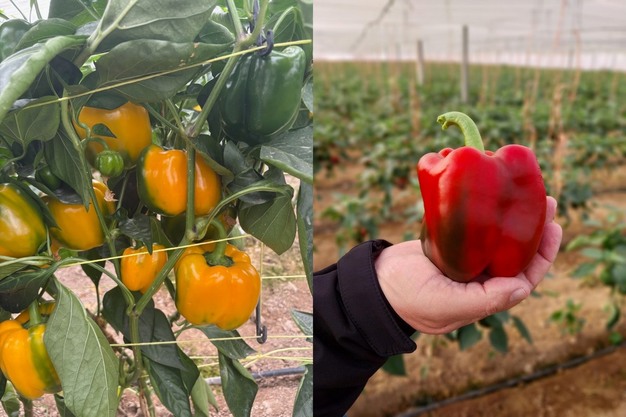
This approach results in a catalog that adapts to both water-stressed conditions and depleted soils, with recent releases such as Nelto (red California) and Ardil (yellow California).
Nelto introduced resistance to powdery mildew and nematodes into our portfolio, which was in high demand by growers in the Campo de Cartagena. We completed our tricolor range with Ardil, a yellow variety that we launched this year with tolerance to powdery mildew, L4, and spotted," she added.
Pepper adapted to the new weather and post-harvesting
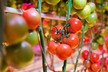
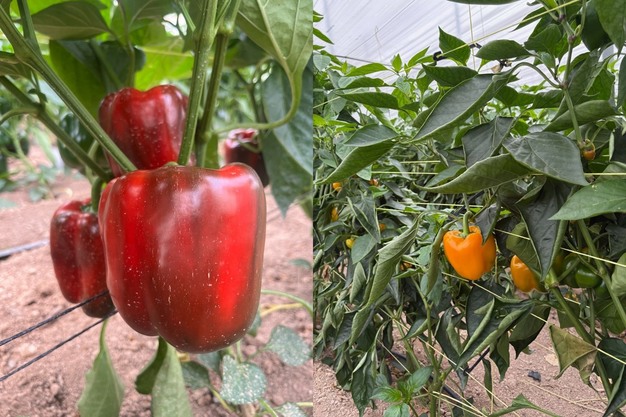
Varieties like Mikonos, Madagascar, and Martinique have proven their ability to sustain high production standards in Almeria, even as conditions become more extreme with longer summers and hotter autumns.
"We developed easy-to-harvest peppers with thicker walls and greater homogeneity. This allows growers to produce more high-quality fruit and reduce waste, while also providing retailers with a product that is uniform in color, brightness, and size, which better preserves its qualities and shelf life," Berruezo stated. "These characteristics are also key to meeting the logistical and commercial demands of an increasingly sophisticated agri-food chain.
 © Semillas Fitó S.A.U.
Collaboration with producers is key to success
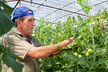
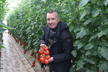
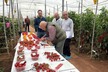
One of the main aspects of our work is our ongoing relationship with local farmers, both during the research phases and in the multiplication of varieties. It's the only way we can produce truly adapted, resistant, and productive hybrids," Berruezo said.
"This direct involvement allows Fitó to anticipate field needs and guide its investment in R&D&I effectively. This proximity has also been crucial in addressing structural challenges such as increased crop mechanization or the optimization of manual harvesting," he added.
Future challenges and commitment
Pepper cultivation in Iberia faces several challenges. From water scarcity and quality issues to a growing global population and limited phytosanitary tools, pressure on agriculture is intensifying. "Our goal is clear: to invest in quality plant breeding to provide sustainable, adapted, and cost-effective solutions. Maintaining environmental commitment without sacrificing performance is our motto," Berruezo stated.
 For more information:
Semillas Fitó
Tel: +34 648 128 243
Email: [email protected]
www.semillasfito.es