Why does parent choice matter? In tomato, most of a hybrid's ceiling is set the day you decide which two inbreds become the parents. Smart choices compress timelines, de-risk development, and make seed production scalable. Here's a field-tested framework—techniques, factors, strategies, and methods—to pick the right parents, faster.
Begin with a crisp Target Product Profile (TPP)
Translate market needs into numeric trait cut-offs: growth habit (determinate/indeterminate), earliness, heat/set ability, disease package (e.g., Fusarium races 1–3, Verticillium, TYLCV, ToBRFV risk management), fruit type (blocky/apple, salad, cluster, cherry), and quality metrics (°Brix, acidity, firmness, color). Use standardized descriptors so scores remain comparable across seasons and sites.
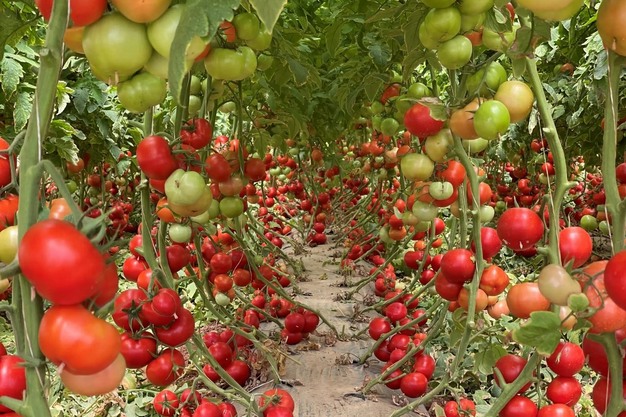 © Trust Seeds
Build a purposeful germplasm funnel
In the pursuit of agricultural advancement, it is crucial to cast a wide net with intentionality. This involves utilizing elite lines to establish baseline performance, while also exploring pre-breeding donors and wild relatives to introduce novel alleles that address biotic and abiotic stress. Local landraces should be considered for their unique qualities, such as flavor, resilience, or niche traits, which can provide important contributions to crop diversity. To enhance the breeding process, it is important to remove linkage drag early through structured backcrossing, ensuring that any undesirable traits are mitigated before advancing donors as parent lines.
Pair phenotyping with DNA: MAS, MABC & genomic prediction
Marker-Assisted Selection (MAS): Rapidly verify and stack qualitative resistances (e.g., Ty genes for TYLCV, Mi-locus for nematodes) in early generations.
Marker-Assisted Backcrossing (MABC): When converting an elite parent for a single trait (e.g., shelf-life), MABC preserves background while tracking the target allele.
Genomic Selection (GS): For polygenic traits (heat tolerance, yield stability, flavor balance), GS predicts breeding values from dense markers + phenotypes to accelerate gain.
Make seed health and identity your first gate
ToBRFV reshaped risk: it can be seed-associated and easily spread. Treat seed-health testing and hygiene SOPs as non-negotiable before any line becomes a parent. Confirm identity with genetic fingerprints to avoid pedigree drift and accidental admixtures.
Quantify combining ability early (and cheaply)
To effectively evaluate parental contributions in plant breeding, employing diallel or line × tester designs is essential for estimating both the General Combining Ability (GCA) and the Specific Combining Ability (SCA). The GCA provides insight into the additive value a parent contributes across various matings, indicating its overall genetic potential. Meanwhile, the SCA reveals the cross-specific, non-additive value, highlighting unique interactions between specific pairs of parents. Through these analyses, breeders can identify "workhorse" parents that consistently perform well across different crosses and those pairs that offer unique genetic boosts. This approach is particularly beneficial in crops like tomatoes, where heterosis, or hybrid vigor, significantly influences yield and fruit number. By measuring these combining abilities, breeders make informed decisions rather than relying on assumptions, ultimately enhancing the breeding program's success.
Optimize for stability, not just peaks (G×E tools)
Across hot/cool seasons and management regimes, use AMMI or GGE biplots to visualize stability and mega-environments. Parents that repeatedly feature in stable, high-performing crosses are worth fixing and advancing.
Don't underweight fruit-quality profiling
Beyond °Brix, track pH/titratable acidity, firmness, carotenoids (lycopene, β-carotene) and postharvest behavior. Sensory and nutritional acceptance often decide market success and processing yield. Prioritize parents that deliver quality without sacrificing agronomics.
Consider seed-production practicality up front
The selection of parent plants plays a crucial role in determining the cost of goods in seed production. When utilizing male sterility systems, whether genetic or cytoplasmic male sterility (CMS), it is vital to confirm restorer compatibility and ensure the stability of sterility within the specific production climate. Additionally, attention must be paid to various biological factors, such as emasculation efficiency, stigma exertion, anther dehiscence, and pollen load, as these small details can significantly impact economic outcomes on a large scale. Furthermore, it is essential to validate the synchronization of flowering periods and the field behavior of plants within your seed production zones to ensure efficient and successful pollination. By carefully evaluating these factors, producers can optimize their breeding strategies and manage production costs more effectively.
For more information:
Trust Seeds
Email: [email protected]
trustseeds.com/