Pooja Tripathi, a PhD student at Ohio State University, is deeply engaged in the field of Horticulture and Crop Science, particularly focusing on controlled environment agriculture. With a Bachelor of Science in Agriculture from Nepal and a Master's degree in Plant Biosciences from South Korea, she has positioned herself as a notable researcher in a USDA-funded, multi-institutional project aimed at improving indoor strawberry propagation. Her research is designed to develop clean, high-quality transplants suitable for sustainable indoor fruit production, capturing the real-world needs of agriculture and emphasizing accessible growth systems adaptable to challenging conditions.
Tripathi's journey into plant science was inspired by her upbringing in Nepal's capital city, where urban landscapes limited exposure to plants. Her curiosity was piqued by the inefficiencies in food importation, considering Nepal's suitable climate and soil for agriculture. This motivated her to delve deeper into plant science during her academic pursuits. During her bachelor's studies in general agriculture, she visited farms and uncovered her fascination with controlled environment horticulture. This interest solidified during her master's program in South Korea, where she explored both indoor and field agronomy research and discovered a preference for indoor cultivation.
 © Conviron
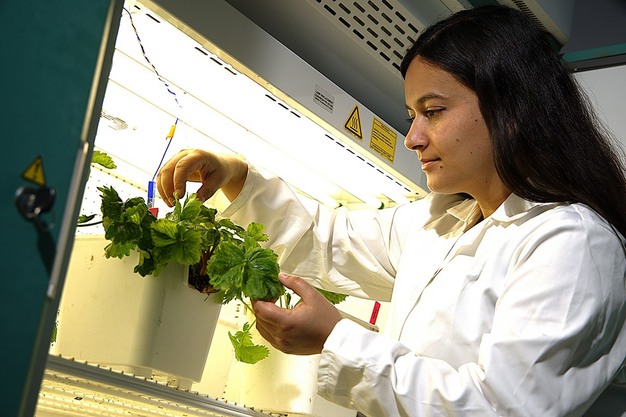
Presently, as a PhD candidate at Ohio State University, her research zeroes in on the optimization of conditions for propagating strawberries indoors. This effort is part of the Precision Indoor Propagation Project (PIP-CAP), a large-scale collaborative endeavor involving multiple U.S. universities like North Carolina, Florida, and California. Tasked with utilizing Controlled Environment Technology, this project strives to establish indoor propagation protocols for diverse strawberry cultivars. Tripathi's work addresses the significant challenges of field-based strawberry production, such as soilborne diseases and unsuitability for indoor growth, and aims to meet rising demand for clean, high-quality transplants.
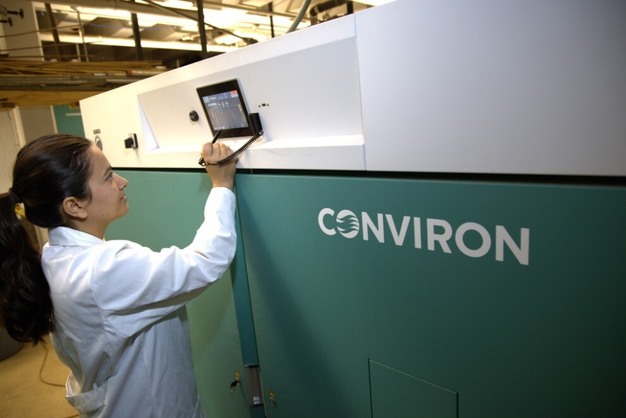
One critical aspect of her research is exploring the chilling requirements of strawberry cultivars, typically met through natural outdoor conditions. Tripathi investigates whether artificial chilling methods can replicate these conditions indoors, aiming to understand the underlying physiology. Using high-tech equipment like Conviron chambers for growing transplants and custom-built coolers for artificial chilling, she meticulously moves plants through stages—initial indoor growth, chilling, and greenhouse evaluation. Her work, unique in its scope within the U.S., is at a research-scale with potential future commercial applications.
 © Conviron
Tripathi's daily routine involves methodical checks on plant growth chambers and greenhouses, followed by time dedicated to writing and data analysis. Her collaborative project meetings provide insight into broader research efforts, ensuring her work aligns with the cutting-edge goals of plant science, which increasingly tie agriculture to climate change, food security, and sustainability. The focus is gradually shifting from merely increasing production to enhancing efficiency and assessing long-term environmental impacts, including water and nutrient usage, carbon footprints, and overall sustainability.
She acknowledges the evolving nature of plant science, which not only involves botany but has branched into innovative areas like sensors, automation, AI, data science, and engineering. Tripathi advises aspiring plant scientists to find passion and purpose in their work, reminding them of the inevitable challenges and the refrain to focus on the bigger picture. She stresses the importance of professional networking and continuous self-improvement, particularly through feedback and active engagement with mentors.
In her perspective, the future of agriculture is inherently tech-driven and will require a multidisciplinary approach, drawing on diverse academic backgrounds to address the complex issues of modern-day agriculture and food production systems. Her dedication to her work aims not only to solve current agricultural challenges but also to prepare the agricultural sector for a sustainable and technologically advanced future.
For more information:
Conviron
www.conviron.com