Emseni Farming, located near the rural town of Kranskop in KwaZulu-Natal's Valley of a Thousand Hills, is growing world-class peppers while focusing on change, community development, and the latest agricultural practices.
As CEO at Emseni, Dietmar Joosten's journey with the operation spans more than four decades. "I came here in 1981," he recalls. "We started with small tunnels, planting directly into the ground. It wasn't always productive, but we were learning."
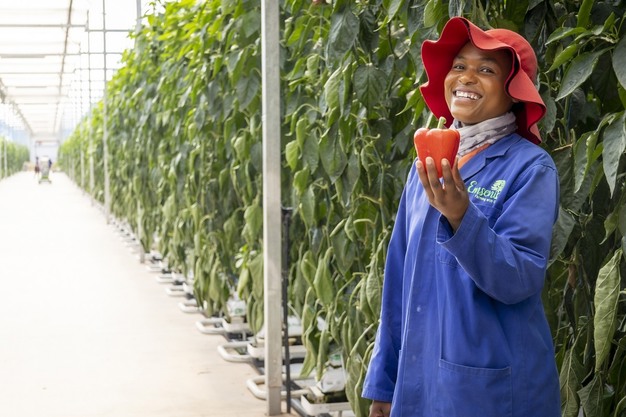 © Emseni Farming
A mission-driven beginning
Emseni Farming is part of the KwaSizabantu Mission, a Christian mission station founded in 1970 by Rev. Erlo Stegen. His vision was to uplift and support local communities through practical means like agriculture, education, and business development.
Rev. Stegen, a man of remarkable vision, played a pivotal role in shaping the mission's agricultural focus and was instrumental in pioneering the idea of planting peppers. His leadership and belief in sustainable farming laid the foundation for what Emseni is today.
"The idea was that self-sustaining farming activities would surround a church to support it," Dietmar explains. "That's the model we followed, and it still guides us today."
Emseni began with just six dedicated co-workers, and their efforts, as documented in the Mission's history, were the spark that led to today's advanced farming operations. Today, the farm's work supports the broader mission and community programs, with profits reinvested into development projects and outreach.
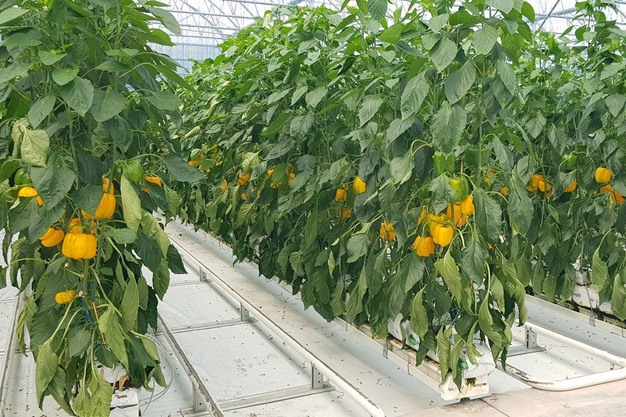 © Emseni Farming
Building expertise: "You need a grower helping a grower"
Recognising the knowledge gap in hydroponics in 1990s South Africa, Dietmar sought international guidance. Rijk Zwaan introduced him to Mr. Fink, a seasoned Dutch grower. "He was a down-to-earth farmer, who visited us at least six times, invited us to the Netherlands, and helped lay the foundation of our project. I believe that's the key to our success, getting help from someone who's already doing it."
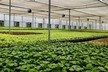
Thanks to this mentorship, Emseni has grown to cover over 14.5 hectares of sophisticated, heated plastic greenhouses, some of the most advanced in the region.
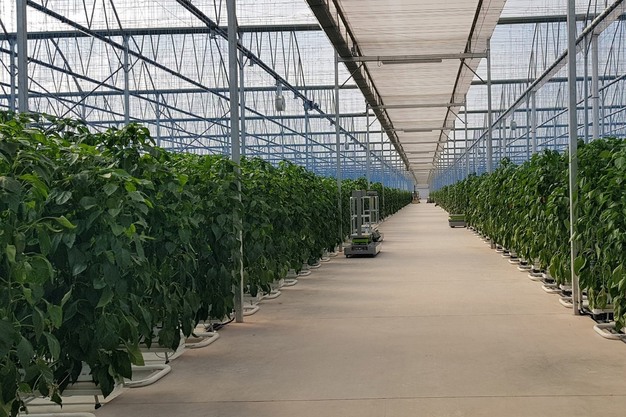 © Emseni Farming
Pepper demand leading to a surprising market
"We never fully understood the pepper market, and so we couldn't meet the demand," he explains. "Every year we think we've reached our ceiling, but we're still short. The market is growing, especially among South Africa's local population, where there's more awareness about eating healthily."
Their greenhouses run year-round, a significant advantage in the country. "At 1,000 meters above sea level, our climate allows for 12-month production. In winter, we use CO₂ enrichment, increasing yields by 20–30%."
High-tech greenhouses, world-class nursery, and automation
From humble beginnings, Emseni now partners with major technology providers like Netafim, Vegtech, and Priva. The most recent six hectares are fully fitted with Priva systems. "Priva doesn't just manage heating; it integrates everything for us, from yield data to water usage," Dietmar notes. "We're even retrofitting older systems to match the new ones."
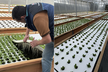
Emseni has also developed a world-class nursery, producing high-quality seedlings on-site. This initiative enhances self-sufficiency and ensures optimal growing conditions from the start of the crop cycle.
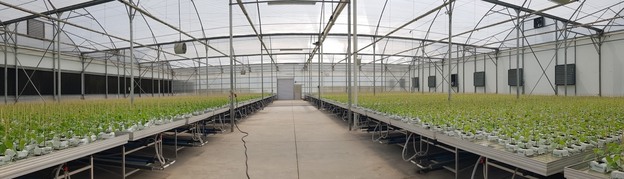 © Emseni Farmin
Emseni Farming's pepper nursery
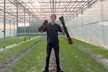
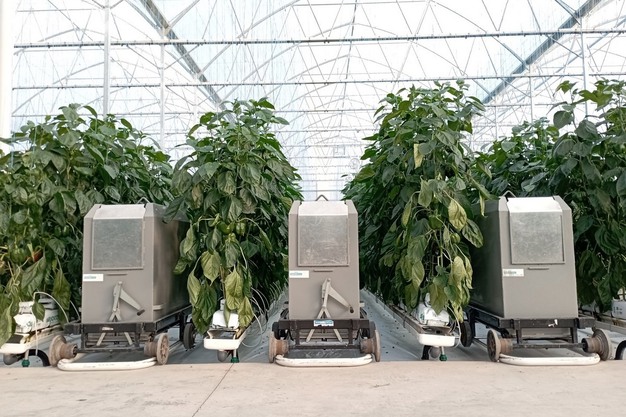
Automation has changed labour dynamics on the farm, too. "We used to climb ladders in the greenhouses, which was quite dangerous. Now we have electric wagons running on pipe rails," he says. "It's safer, faster, and more efficient, but we still value our workforce."
 © Emseni Farming
Picking wagons at Emseni Farming
A balance between technology and jobs
In a country where unemployment is high, the role of agriculture as a job creator cannot be overstated. "We employ over 800 people, and that's just us," he says. "There's a whole community here that thrives because of the farm. Government should recognise that farming sustains those who can't go anywhere else."
While automation enhances safety and efficiency, Dietmar is deliberate about maintaining employment. "Farming here will always involve people."
Adhering to standards, leading by example
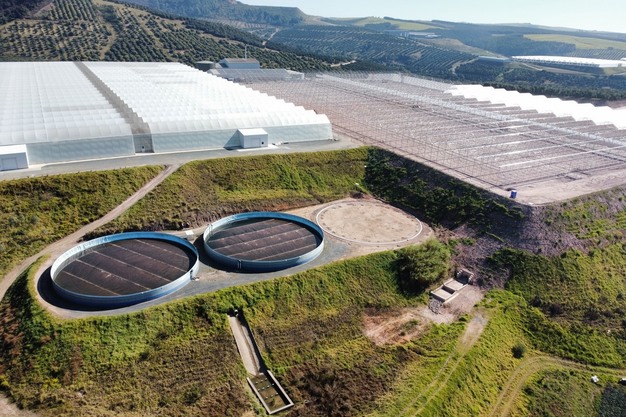
"We use 80% rainwater, harvested from our greenhouse roofs," he explains. "And we recirculate all our irrigation water, similar to what is done in the Netherlands."
To safeguard water quality, Emseni has invested in UV filtration and a Belgian system that produces safe, oxygen-rich peroxide for water disinfection. "You can put your hand in it and it won't burn," he shares. "It's effective and natural."
 © Emseni Farming
Irrigation tanks at Emseni Farming
Emseni supplies major South African retailers including Woolworths and Checkers. Woolworths, known for its rigorous Farming for the Future programme, has played a transformative role. "In the beginning, their standards were hard. Today, we share advice," Dietmar adds. "If it weren't for Woolworths, we wouldn't be where we are now."
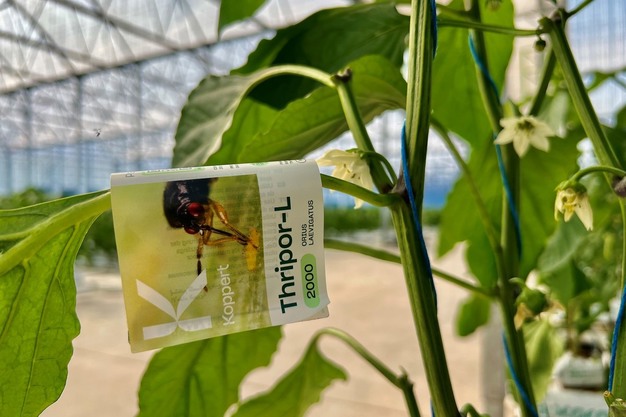
This relationship also pushed Emseni to adopt strict integrated pest management systems. "We use biological controls from Koppert like Encarsia and other natural methods. Woolworths demands it, and we agree, it's better for everyone."
 © Emseni Farming
Community growing
Beyond greenhouse walls, Emseni's impact extends far into the surrounding community. "We're still a church organisation at heart. We help local families start gardens and teach them to grow on their land. It's a long-term project, but it's already bearing fruit."
The farming work helps sustain the mission's broader spiritual and humanitarian outreach, echoing the original vision of Rev. Erlo Stegen: using practical means to uplift people, physically and spiritually.
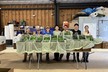
And as for the people behind the commercial operation? "We've got one of the best pepper growers on the continent," Dietmar says proudly. "Our peppers match the quality of anything grown in the Netherlands. It's all about good management."
He concludes that when you combine the right technology, the right people, and a purpose beyond profit, you can grow more than vegetables. "You grow a future."
For more information:
Emseni Farming
Agnes Stegen
[email protected]
www.emseni.co.za