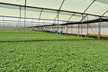
Cocopeat is among the most frequently utilized substrates in soilless farming. Nonetheless, the extraction of Cocopeat generates a detrimental carbon footprint, highlighting the necessity for alternative, sustainable substrate options.
To tackle this issue, researchers examined the effects of substituting Cocopeat with a blend of various Rice straw, Sawdust, and compost on cucumber growth and yield over two growing seasons, 2021–2022 and 2022–2023. The treatments included Cocopeat 100% (control), sawdust 100%, rice straw 100%, compost 100%, combinations of Cocopeat and sawdust (1:1, v/v), combinations of Cocopeat and sawdust (3:1, v/v), combinations of Cocopeat and rice straw (1:1, v/v), combinations of Cocopeat and rice straw (3:1, v/v), combinations of Cocopeat and compost (1:1, v/v), and combinations of Cocopeat and compost (3:1, v/v). The highest yield was recorded with rice straw at 100.55 ton ha− 1, followed by the Coco 50%: Compost 50% treatment yielding 74.32 ton ha-1 and 69.26 ton ha− 1, respectively, while the lowest yield was noted for sawdust at 22.23 ton ha− 1. Across both growth seasons, rice straw achieved the highest irrigation water productivity (IWP) of 51.56 and 51.91 kg m− 3, respectively, followed by Coco 50%: Rice straw 50% at 38.08 and 38.37 kg m− 3, whereas sawdust resulted in the lowest IWPs of 6.93 and 11.48 kg m− 3. In both growing seasons, the rice straw showed the greatest rate of photosynthesis, with readings of 23.34 µmol m–2 s–1 and 22.14 µmol m–2 s–1, respectively. Conversely, the lowest photosynthesis rates during both growing seasons were observed with the Coco 75%: Compost 25% treatment, at 3.23 µmol m–2 s–1 and 3.03 µmol m–2 s–1, respectively. The treated rice straw substrate media ranked as the most profitable and resilient option in terms of net present value (NPV) and benefit-cost (B/C) ratio metrics, followed closely by the compost treatment.
It seems that treated rice straw-based media is a promising substrate in soilless culture systems as a viable alternative substrate for cucumber cultivation instead of Cocopeat substrate.
Gab Allah, E. A., Shahein, M. M., Abuarab, M. E., Shaker, V., & Abdeldaym, E. A. (2025). Enhancing greenhouse cucumber production and quality utilizing organic residues as potting media through various cultivation modes and assessing application economics. Scientific Reports, 15(1), 1-26. https://doi.org/10.1038/s41598-025-05242-3
Source: Nature Magazine