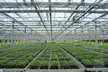
To ensure a sustainable future of farming, urban horticulture (UH) will need to be a key part of our everyday life. There are increasing demands for higher productivity and more locally produced food, even close to densely populated urban areas, to address environmental pressures and accelerate the resilience of modern food systems. UH is a broad term and can include numerous cultivation methods: rooftop gardens, public spaces, vertical walls, indoor vertical farms, as well as an array of crops including salads, soft fruits, and trees.
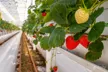
Crops such as strawberries are expected to soon make a significant contribution to UH. Urban strawberry production promises all-year-round fruit availability, reduced reliance on imports, increased self-sufficiency, lower food miles, a supply of high-quality fresh fruits from hyper-local spaces, increased employment opportunities, welfare benefits, and an opportunity to promote a sense of community. Strawberry is a complex perennial crop with agronomical challenges, which requires specialist knowledge that is not always available to new urban farmers. Achieving an urban version of a strawberry field will require knowledge exchange between the commercial rural strawberry producers and the newly entered urban growers. Plant physiology, management of plant pathogens, choice of propagation material, fertigation, pollination, and environmental requirements are the most common challenges for urban strawberry production.
This review aims to consolidate the common bottleneck challenges of UH for new urban strawberry facilities.
Zacharaki, Katia & Monaghan, James & Bromley, Jennifer & Vickers, Laura. (2024). Opportunities and challenges for strawberry cultivation in urban food production systems. PLANTS, PEOPLE, PLANET. 10.1002/ppp3.10475.
Read the full research at nph.onlinelibrary.wiley.com