In the Belgian city, a group of tireless activists have one life-changing aim: to ensure most of their food is local and organic. What can we learn?
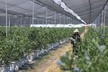
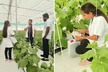
In 2013, a group of activists who wanted to make food and city life better, greener, and fairer brought 600 people – all with an interest in food production – together. It asked them to imagine what could be different in Liège within one generation. It’s an interesting question, the fundamental one really: what change can we concretely effect within our lifetimes? What they arrived at was this: “In 35 years, one generation, the majority of food consumed in the Liège region would be grown locally in the best ecological and social conditions.” That’s a nice, if wordy, aspiration. But the thing is, they’ve tried to make it happen and even – to a degree – have succeeded.
That moment spawned a movement that is now coordinated by a non-profit called the Liège Food Belt: six employees, funded by a hand-to-mouth combination of local, regional, and European money.
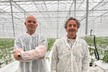
“People say it’s a revolution,” says Christian Jonet. “It’s not a revolution yet, but it has the potential: we’re at the start of the story.” Along with his colleague, Elisabeth Gruie, this energetic but exhausted-looking man is generously squeezing my visit into his packed calendar. Gruie used to be a banker, and Jonet’s story is similarly unexpected: he spent eight years selling airplane engine repairs, gradually, he says, becoming aware “that I was taking part in the problem, not the solution.” Increasingly conscious of the challenges presented by the climate crisis, he started to get involved in sustainability initiatives as a volunteer, rapidly realizing food was one of the crucial challenges for the new millennium. Today he’s the coordinator for the Food Belt.
Read more at theguardian.com