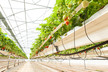
In recent years, hydroponic farming has increased in popularity in Indonesia. Yasir Ramadhan (28) changed his profession from accounting to hydroponic farming to grow crops, especially melon. He works for Farmhill, a company that was established in 2018. As of now, Farmhill manages 30 greenhouse units spread over 4 locations in Central Java.
"I joined Pak Kabul's company Farmhill gardens in early 2020. At first, I was asked to work for the finance department, as that was my expertise. This took me and my team four months to fix. However, after that I was asked to help improve the production of the plants. So I was forced to dig deeper into the subject." Currently, The Farmhill is able to produce hydroponic melon production of 6-9 tons per week or 25-35 tons per month throughout the year. Compared to the yields of 2020, produce has doubled.
"This was not achieved instantly as previously we struggled with high crop failure rates, relentless pest and disease attacks, unstable fruit quality, and relatively little experience in managing large modern gardens. However, with the determination of the farmers and also the combination of knowledge and experience that we have, the garden is growing rapidly, both from the results obtained and from all aspects in it," says Yasir.
Right now, the process flow system is more structured, as the cultivation techniques have been perfected. "We created a controlling system, then we did data collection and analytics. This was previously taboo by farmers but is slowly becoming a farmer's weapon to get optimum results. Now our production results can be regularly scheduled with the appropriate quantity."
Source: www.hortikultura.sariagri.id.