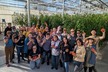
On a frigid day in the middle of Boston, Kannan Thiruvengadam was plotting how to defeat the deep New England winter and grow more plants. “I want to build a food forest,” Thiruvengadam proclaimed, laying out his vision for the expanding Eastie Farm. “Something that that you walk into, then there’s mulberries, and there’s peaches and there’s pears and persimmons that you can harvest and eat as you go.”
Thiruvengadam’s nonprofit Eastie Farm has been on Sumner Street in East Boston for 7 years, filling in a “missing tooth” vacant property on Jeffries Point. There, the largely volunteer-driven organization grows various kinds of food with an eye on providing sustenance to those who might otherwise go without. The farm has about six other outposts throughout the peninsula neighborhood, largely in connection with schools where Thiruvengadam said kids happily “get their hands dirty” learning about how to grow and preserve food.
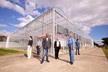
Hence the greenhouse. Over the next couple of months, Thiruvengadam and company will assemble it in the shadow of two billboards right outside of the Sumner-Callahan tunnels that connect Eastie to downtown. It’s supposed to be a carbon-neutral building, heated — and cooled in the summer — by a geothermal system 450 feet deep to around 58 degrees.
“We’ll have about 1500 square feet more of growing space that is conducive for plant growth throughout the year,” said Thiruvengadam, the son of a south Indian farmer who now serves on Boston’s Conservation Commission and Community Preservation Committee. And in terms of the educational programs, “We’re really missing the kids in a couple of seasons, so this greenhouse will bridge that gap.”
The 14-foot-tall greenhouse theoretically will allow Eastie Farm to begin to grow perennials, tropical fruits and maybe even some trees that otherwise can’t thrive through New England’s chilly winters.
Read the complete article at www.bostonherald.com.