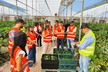
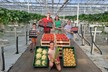
With decades of experience in the Spanish fruit and vegetable sector and after having passed through UC DAVIS as a post-harvest graduate, Antonio Ripolles Viciedo packed his bags and started growing in Slovakia a couple of years ago. Despite many challenges, bumps, and trips, he is now looking to expand his strawberry and Tomberry greenhouse, as he sees it as an opportunity to reduce his cost price and respond to market demand.
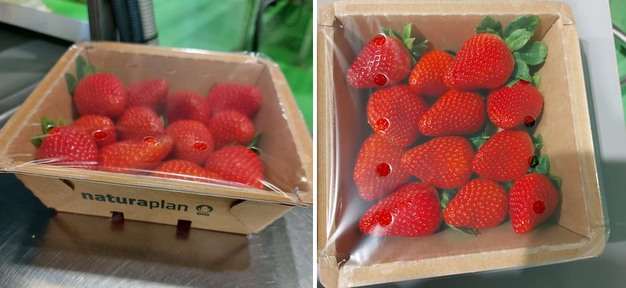
Fresher product
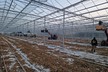
Of Lubomir Soky's 3.5-hectare greenhouse, in which Antonio grows, 2.5 hectares will be filled with strawberries plants supplied by Viveros el Pinar. “Supermarkets want our products to be available in winter too. Until now it was only in summertime. The cost of growing a strawberry in Spain or Morocco may be lower at the moment, but the transport time and duration make it just as expensive as growing berries here. And of course, our product is fresher: that is definitely what consumers seek after. We harvest during the day, and at night we deliver to the supermarket. Our quality, flavor, and flexibility distinguish us.”
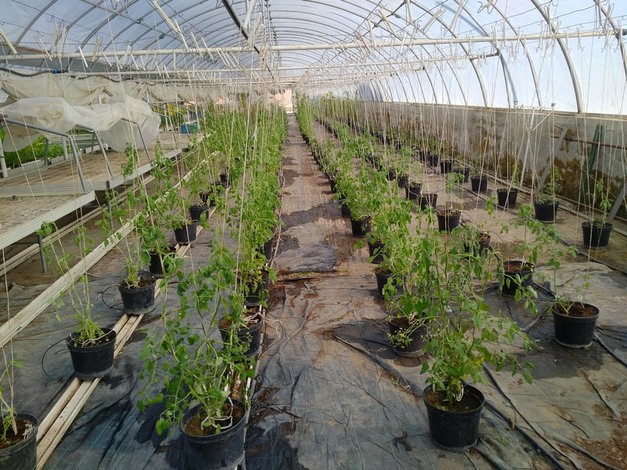
Tomberrry
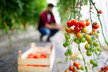
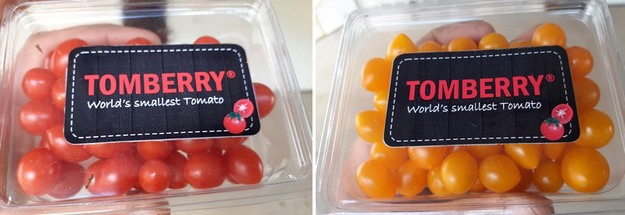
The entrepreneur is also focusing on a different kind of berry: the Tomberry. "That's my spoiled child", he laughs. This little tomato weighs about 2 grams and is a product of the Dutch seed house Eminent Seeds, which Antonio grows on 1 hectare.
“We have exported to Singapore and Hong Kong in 2020, but the pandemic created too many challenges to continue the business and travel there ourselves, plus air freight costs increased too much,” says Antonio. "The next year, in 2023 we hope to resume again with Singapore, and Hong Kong." Now, most of his produce goes to Austria. For supermarkets in Slovakia, the Tomberry is too expensive.
"That aside, supermarket buyers are not interested - I left them some sample boxes in a supermarket, at the reception. Out of curiosity, I passed by after 10 days, and the boxes were still there. That wasn't because the buyer didn't see them, so I decided not to waste time with him. Consumers see here that it is a smaller cherry tomato, but the Tomberry is a different product with different organoleptic characteristics, and also a cost price that is more expensive due to the labor, the cultivation process, and the packaging. It's a special category."
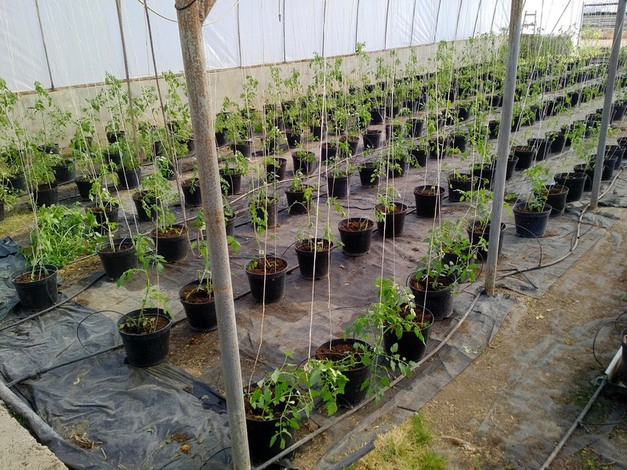
High energy costs
In addition to the pandemic, high energy costs are also a challenge for Donsol. “Fuel became very expensive and we absorbed this increase in our accounts. We settled a closed price for the whole year, and at no time the chain was told that the price would have to be increased." Yet, it makes it hard. "In 2020, the price per mwh is 12 euros. Yesterday it was 50 euros: 400 percent more.."
According to Antonio, this is also why growers need to offer a specialty: a product that stands out from what is offered in Morocco or Spain. "Traditional crops cannot be grown because of these costs. Cucumbers, tomatoes, peppers, lettuce are not profitable and will be too expensive for supermarkets."
That's also why the company wants to invest in its facilities. “With grow lights, we can grow all year round, which is what the market asks me for. With new systems we can reduce operational costs.” He calculated that between 1.5 and 2 million euros are needed, and negotiations are under way with a Spanish investment fund.
"The problem is not getting the money, but getting the right production conditions," he laughs. “We are also talking to additional buyers for our products and are always looking to connect with more as we have a product on the shelves that deserves attention as well. For this, they have spoken with Cartonajes La Plana for the new containers, in addition, 95% of the plastic in the containers that are placed in retail will be eliminated. And also a fertilization plan is being designed by Edypro, in which the use of Nitrogen fertilizers is going to be reduced, just as Nutricontrol is going to install sensor systems like the ones installed on the farm of Murcia. There are a lot of opportunities for berries in the market, both for strawberries and for Tomberries!”
For more information:
Antonio Ripollés
Donsol
Kopcianska, 10 (Vienna Gate)
85101 Bratislava -Slovakia
T: +421944941336
[email protected]