This may not be the right time to bring this up, but let’s just say it: there’s strong reason to believe illnesses like COVID-19 might become more prevalent in coming years. When we encroach on previously untouched areas—such as wild lands, dense jungles and tropical forests—we unleash unknown viruses that our bodies have no protection against. As the human population grows and natural habitats shrink, this cycle will likely continue. Other catastrophic dangers to Earth include collisions with asteroids and comets, global thermonuclear or biochemical warfare, and of course the long-term effects of global warming.
By Edward Guinan, Scott Engle, Alicia Eglin
To lessen these dangers, we might need to get away. Far away. Like all the way to Mars. The primary reasons for going are to explore and to search for life, both past and present. But settlements on Mars also provide a safe haven for humankind in the unlikely event that something catastrophic happens to the Earth. Going to Mars isn’t just fanciful, pie-in-the-sky thinking. NASA is under presidential orders to land humans on Mars by 2033, and the organization is studying ways to build human habitations on the Red Planet. In 2016, SpaceX publicly announced a comprehensive vision to begin building settlements on Mars, proposing a high-capacity transportation infrastructure. This two-phase mission could put people on Mars by 2026.
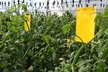
This potential colonization is why astrobiology students at Villanova began their Mars Gardens project, investigating which plants and vegetables can grow in iron oxide–rich Martian soil simulant (MSS). Over 45 different kinds of plants have been tested since the program began in 2017—and, given that these are college students, it’s unsurprising that the tests included hops and barley.
Read more at Scientific American.