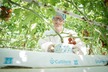
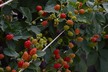
Going from a production of 12 kilos per square metre to 24 kilos is not a far-fetched dream, but in normal soil it would be impossible. Victoria Madrid, President of Agricultura y Exportación, a company based in Murcia specialised in bell peppers for export, still remembers when his father's farm was all dry and they even cultivated vineyard.
The professionalization and introduction of irrigation started after the water transfer. They started with year-round crops and wood-framed greenhouses, taking it step by step and always reinvesting.
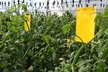
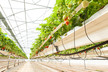
From a very modest and precarious warehouse they moved to a better and bigger one, and then to the one they currently own, which is still small because it is only used for product handling, but which has the best conditions and advanced technologies. They cultivate 40 hectares of greenhouses, some larger than others, but all with the same level of technology; with perimeter corridors, concrete roads, CO2 diffusion systems to feed the plants, heating to maintain the ideal temperature, Dutch pruning, etc.
And the soil? No soil. These 40 hectares are entirely devoted to soilless hydroponics production, making use of coir substrate. "We are limited when it comes to soil disinfection; it has plenty of fungi and we could not achieve the current production over such a long production cycle," explains Victoria Madrid.
4.5 million euro investment
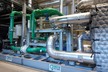
The key step was taken between 2010 and 2012 and involved an investment of 4.5 million euros on the farm. Three of those millions went to the implementation of cogeneration, with 26% of the funds coming from the European Union, the Ministry of Agriculture, and to a lesser extent, from the Region of Murcia. The other 1.5 million euros were used to modernise the greenhouse infrastructure, implementing heating systems, the concrete, the drip irrigation and CO2 diffusion systems, the coir substrates, etc.
The cogeneration system was brought to a halt with the approval of the Decree regulating renewable energy in early 2012, which suspended the incentives and made it unfeasible. "We cannot work with the same levels of CO2 or heating as when we had our integrated system, but we would still lose more if we started the engine instead of spending our operating costs in buying gas and CO2. It would cost roughly twice," explains Victoria. And with natural gas and CO2 brought in, and paying for the water from the transfer, hydroponics has doubled the pepper production.
Cyclical work system
The work system is cyclical. The seeds are planted in nurseries in mid-October and are transplanted to the greenhouse in early December, which takes two to three weeks. In late March, we start harvesting ripe produce and this lasts until September and October. All the production harvested up to late August is intended for export. What is harvested in September and October mainly goes to freezing processors. In late October, when the new seeds are already in the nursery, all plants are removed and preparations start with the greenhouse, substrates, etc., for transplantations to be carried out in December. "The substrate is completely renewed every four or six years," explains Victoria Madrid. This has a cost of about 5,000 euros.
In addition to constant micro-irrigation and a good substrate, the plants are also fed with CO2. It is purchased pure, in cryogenic form. It arrives frozen in the tanks and it is then vaporised and released in the greenhouses through micro-perforated plastic pipes, with holes every 50 centimetres, distributed across the entire structure. "Although we are an area rich in CO2, the exterior reaches 340 parts per million; releasing carbon dioxide feeds the plants and improves the colour, size and quality of the fruit. This, however, needs to be done in good measure. CO2 levels are reduced at given times to allow them to perform optimally at all times."
The biggest problem for greenhouses and hydroponics systems is water. "You cannot stop watering for a single day, or even for three hours. If you stop watering for three hours, all peppers will be spoiled and the harvest is lost, but if you stop watering for an entire day, the plants themselves will be done for. Constant micro-irrigation is necessary. Of course, not a drop is wasted," he adds.
As for the aid granted in the framework of the Common Agricultural Policy (CAP), in the region no subsidies are given for cereal and rainfed crops or for unprofitable plantations to survive. The funds are devoted to support modernization and investment in machinery or technology. To benefit from them, Agricultura y Exportación's structure is that of a Fruit and Vegetable Producer Organization. "We present our investment plans for the next three to five years and, depending on billing for our own products, a subsidy rate is offered for these investments," added Victoria Madrid.
For new agricultural entrepreneurs in Eastern Spain, the role model is the Netherlands, their main rival in the market. In that country, they enjoy greater aid policies, but the weather comes as a disadvantage, as it increases the cost per square metre cultivated. "With a little ingenuity and a lot less money, we are doing fine. That is, we adapt the Dutch model, but at our own pace, based on our particular situation and access to funds."
Source: eleconomista.es