According to the head of Namik Kemal University’s Agriculture Faculty, Prof. Dr. Servet Varis, “Implementing soilless culture in greenhouses can produce 30-40 tons of tomatoes per decare, if disease and pests are well controlled and if a good level of nutrients is maintained, whereas currently in our country, in normal soil greenhouses we are getting just 15 tons of yield per decare.”
In a statement to an Anadolu Agency reporter, Varis explained that applied “soilless culture” means that plants are fed with treated volcanic rock or liquid nutrient solutions. Replacing soil with soilless cultures has a number of benefits in Varis’ opinion, normal soil needs to be sterilised for continued use, the sterilisation method is expensive and the existing sterilisation method cannot sterilise the soil fully.
In order to alleviate the problem of soil exhaustion, we need to implement the use of soilless cultures, “Cultivating the same plants on the same land for a long period of time increases disease and pests related to that plant and decreases the nutrients for the plant’s consumption, finally the soil will be fatigued and disposed of. The only way to avoid this is to apply soilless cultures in the greenhouse,” states Varis.
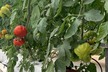
Soilless culture applied in a tomato greenhouse can be worked at like a tomato factory, says Varis “If you start with a clean environment, you can set the desired level of nutrients, everything is under your control, so as not to make any mistakes, diseases and pests must be well controlled, and if the right level of nutrients are maintained 30-40 tons of tomato produce can be achieved from a decare. At the moment on normal soil our country is getting 15 tons to the decare, but on the ideal soil 20-25 tons is produced.”
“Soilless culture mediums can cause currency loss in imports,” says Varis, greenhouse soil is being disposed of because of exhaustion and pollution, and because the yield from the resulting application of soilless culture increases before one’s eyes it has gained importance in Turkey, but there has been a mistake made in the medium of soilless culture being used. The most commonly used type of soilless culture is the compressed coconut husk (cocopeat) which is imported from Holland, but according to Varis, using this is a big mistake, “Imported mediums are causing loss in foreign currency exchange. Moreover, imported mediums are more expensive compared to local ones. For example, cocopeat is imported from Holland. Generally, its use causes the loss of foreign exchange in the country. The reason is that it is used once a year, and a daily nutrient solution is applied 15-20 times. In place of cocopeat, a local soilless solution, volcanic aluminium silicate (perlit) should be used, In Turkey there are 7 billion tons of natural perlit, using this would be more advantageous than cocopeat. Perlit needs a nutrient solution applying only 3-4 times a day, it’s light on materials, growers control everything, and it can be used in greenhouses for 7-8 years. For these reasons it’s very good to use and it gives the country’s economy a boost.”
Source: www.sondakika.com