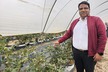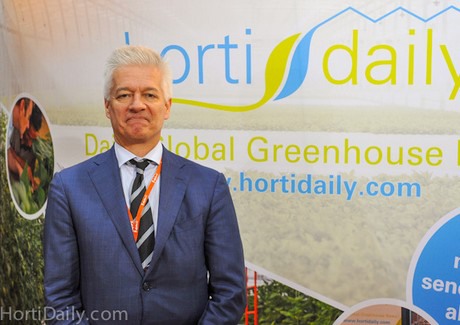
Recently, Beijing based CoHort consultant Oscar Niezen started in a part time function for Axia Seeds. In this new role he will be responsible for the business development of the breeder in Asia.
Axia Seeds created a joint venture with the Chinese Shouguang Vegetable Industry Group to develop a breeding program for the Chinese market. "We are cross-breeding local material with external material and implementing disease resistances and other properties in order to make better varieties available for Chinese growers", Niezen said.
According to the Asia expert, the Dutch breeder makes a good chance in the market because it differentiates itself from the current breeding industry in terms of breeding speed. "Despite the fact that the company has just entered the industry, they already have a few interesting commercial varieties available which are being grown on a decent scale by Dutch growers". Niezen said that this is not only a result of the extensive experience of the breeders at Axia Seeds (...who were responsible for major success varieties at other commercial breeders in their past careers...), but also due to the progressive approach.
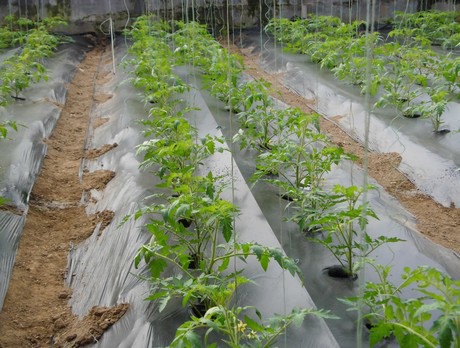
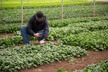
Plants are transplanted directly into the soil, with or without mulch poly
"The hybrid breeding at Axia is going fast due to the use of supplemental lighting in our Dutch breeding program", said Niezen. "The combination with additional breeding activities in countries in China, North America, Thailand and Italy, generates quick results. That is why we are now also looking at developing special varieties for upcoming markets, and China is one them."
In the beginning, Axia Seeds' Asian breeding program will be mainly focusing on tomato growers, but peppers and cucumbers are also in the planning. "The Chinese greenhouse industry is immense, you are talking about tens of thousands of hectares. The current varieties that are being used are not good enough, there are a lot of problems with tomato yellow leaf curl virus (TYLCV) and most of the Chinese breeders do not have resistant varieties available. The market is large, but underdeveloped."
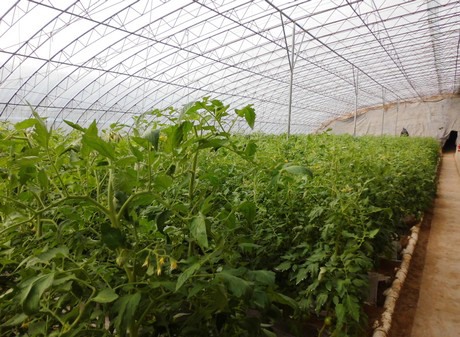
Chinese solar greenhouse
In order to serve a market, you will have to know it first. Niezen explained that in Northern China, 70 % of the Chinese greenhouse cultivation runs from August to May. The other 30% of the growers start a spring cultivation that starts end of February and runs through the summer. The average harvest of Big Red and Big Pink tomatoes in solar greenhouse lies between 12 to 15 kilo per square meter. "In our breeding program we will focus on the development of better varieties with more disease resistances and better production, so the grower can achieve better quality, shelf life, homogeneity, and has to use less chemical crop protection. This is something completely new for most of them."
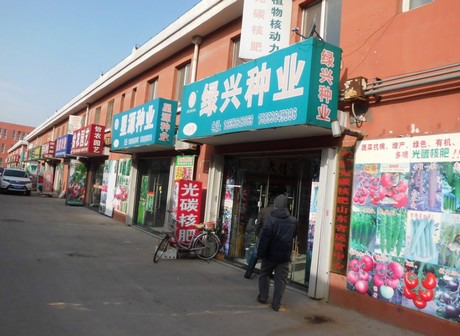
Traditional Chinese seedshop
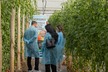
Axia Seeds and the Chinese Shouguang Vegetable Industry Group are testing crossings and varieties locally in solar greenhouses. First results are promising, but it will take some time before the program produces commercial varieties. "There is a chance that we will first enter the Chinese market with specialties, like small or cherry tomatoes, they provide chances as well."
 For more information:
 Axia Seeds
Oscar Niezen - Business Development Managar Asia
[email protected]
www.axiaseeds.com